


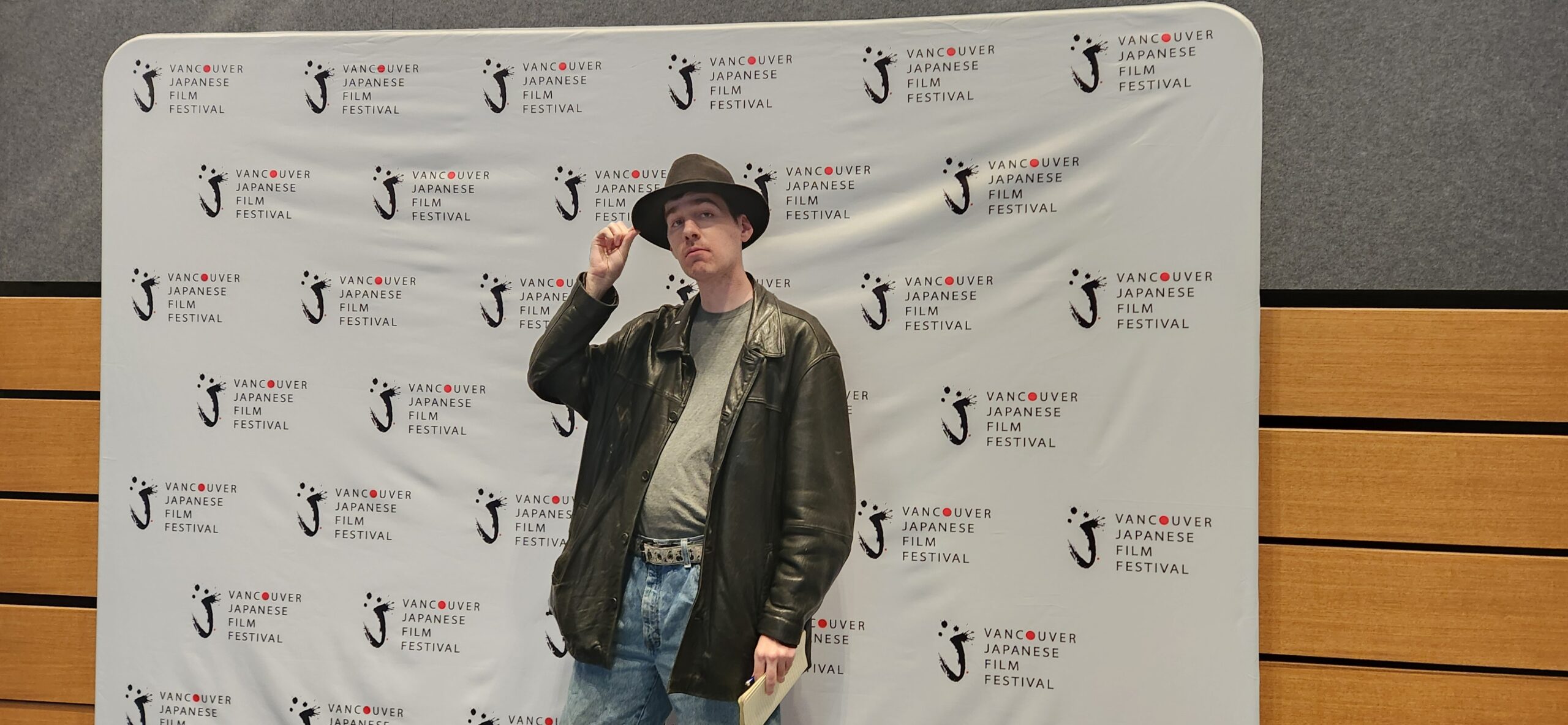
Say hello to a brand new film festival in town, the Vancouver Japanese Film Festival. It seemed to come right out of nowhere and it was lucky I found out about it so fast. I was in Burnaby one night at a karate dojo watching my young friend Phoenix participate in a tournament. After it was over and I was meeting up with her I noticed a poster on the wall for the film festival, and went into a frenzy wondering how I never heard of this festival and going to the official website to ask for media passes. Since the festival is only starting out however, the event mainly consisted of screeners at VIFF theatre. But it was still a good start for a festival, especially since film festivals are supposed to have screenings. I’ve never been to a film festival that didn’t have one. What were the screeners about? I’ll tell you about each one in capsule reviews. But first, I have to give some shoutouts to James Heron for founding, directing, and organizing this great new event, Yuko Matsuki for helping provide some good assets to use in this article, the awesome volunteers and employees at VIFF for all their help (it was awesome to see David C Jones there), and everyone who came out to see what this festival was like, including the lovely Mexican lady who conversed with me before the screener of One Last Love Letter. Here’s how everything went.
Opening Reception – Lots of film festivals have an opening night reception where you can connect with people, eat food, and enjoy the vibe of a film industry function. There was plenty of sushi, and the calm relaxing Japanese music which gives me peace of mind during overstimulating times. There was a decent amount of people and while this fest is relatively new, I have a feeling it will get bigger by next year. The opening film of the night was Tokyo Taxi which had been sold out almost instantly and I probably wouldn’t have been able to attend if it hadn’t been for some last-minute cancellations. I got the royal treatment of being able to sit front and center to see James give a speech who spoke in English and Japanese (he did that for all his speeches), following other speeches from people who helped organize including Bill Shu of RBC which is a company that helped sponsor, Suzanne Tabata, and the Deputy Consulate General. Then all event organizers donned happis for a ceremony to open the festival in a traditional Japanese way each enjoying a drink. Tokyo Taxi came on right afterwards
Tokyo Taxi – Koji is a nice quiet taxi driver who usually takes the night shift and sleeps through the day. When his colleague is too stiff and sore to do a long distance well paying drive, Koji has to do it instead. Since he’s already financially struggling with tuition fees for his daughter’s high school application, he takes the job driving an elderly Ms. Sumire to a retirement home far away from her house. On the way, she has him stopping at different spots around Tokyo as she reminisces about her past. Her first lover who unknowingly gave her a son, her abusive husband who she got revenge on by scalding his crotch, her 9 years in prison for doing so, her mother working at a restaurant. It’s a long driving journey for the whole movie but plenty of emotion and heartening moments as Koji and Sumire get to know each other. A great movie with a beautiful ending that made me cry, as I remembered a friend and the connection we made.
Kakukaku Shikajika – Anyone know the manga artist, Akiko Higashimura? This is the story of how she discovered manga got into making it. It all started when she found discarded manga books on a roadside one day and spent her time reading them eventually learning to draw just like a manga artist. Her parents are supportive of her skill and another student at her school recommends the cheap but strict art teacher Hidaka. He’s loud, intimidating, pushy, and even brandishes a bamboo sword. At first, Akiko can’t handle this instructor, wanting to bail but she learns of his soft side. Eventually, Akiko also tutors a delinquent 1st year student at her school and Akiko also applies herself so her grades go up, but does so with a certain cheating method they refer to as dowsing. Eventualy Akiko gets into Kanazawa College of Art after being denied Tokyo Gakugei University. Of course, the courses mean more stress and less drawing, until Hidaka pushes her over summer break to finish a series of paintings that are due after break. The story was hilarious, inspiring, intense, and even had some sad moments. There was a family right next to me, and when one of the little girls started crying at an emotional moment, I felt things got more emotional then and there.
Blue Boy Trial – I don’t know if anybody’ll know the Bluenose in the Sun, but everybody will now know about the Blue Boy Trial after this film based on actual events. A story about trans-women in the 60’s in Japan. When Transgender women working as prostitutes get busted by cops due to a strict law, they get to leave the station next morning because they used to be men. So the police end up arresting the doctor instead, since he’s responsible for performing sex changes on these guys known as the Blue Boys, and Dr. Akagi Masuo finds himself in one of the biggest long-lasting trials of all time. Luckily he has a lawyer named Kano who is willing to fight for his client even though he doesn’t know much about the particular subject. So Kano reaches out to patients in hopes they’ll be witnesses. One named Sachi refuses to at first, but sometime after reconnecting with the other blue boys reconsiders. Another named Ahko is able to set people straight with a heartfelt speech in an attempt for the surgery to become legal, but is soon found dead after. The whole film had questionable content, but a powerful message at the end which made for a great movie.

Aruku (I Walk) – On Shikoku Island, there are 88 Buddhist temples. Many travlers walk around the entire area to visit all the temples and finish having become better people. In this documentary, we follow Shiho Kataoka as she documents a range of pilgrims on assorted journeys. Himoe Nagai who had been a pharamacist, a young unemployed aspiring filmmaker named Shoji Takaoka, an elderly man named Mukoh Miyama who collects litter on his journey, and an optimistic nature lover named Li Kai. A nice amount of variety in this one with fantastic stories and interesting content.
How Dare You – This sounds a little like a film I watched years ago and a lot like something an ex-girlfriend had said to me. In his opening speech, James had to apologize for a proofreading error as the Japanese description was for another movie altogether. He then promoted one of their supporters, a Japanese language school. Speaking of school, this is where that film takes place. Yuisha is a young boy who goes about days in school, doing a very specific report about what his daily life is like, and hanging out with other students to collect wood lice for the class lizards. However, after one beautiful girl named Miyake does her report talking about global warming and how she is an environmentalist, Yuisha falls in love with her and follows her example in hopes she’ll get more involved with him. Miyake does loan him books to educate him and at one point after Haruto the hyperactive bully-type knocks things offer Miyake’s desk, Yuisha stands up to him. Eventually the three students form their own secret club in an abandoned house where they design posters with magazine clippings to encourage adults into maintaining a better environment. They do so while running around town in disguises, reminding me a little bit of a music video for Black Eyed Peas. Then they go to extremes in spreading awareness launching a toy plane with an anti-meat message and bottle rockets at a butcher’s shop, then go further by making their way to a farm where some cows are held. But after letting them cows out, things get more troublesome for the city, and eventually this young group of activists. Wow, and to think Phoenix’s friends clubs are centered around art, truth or dare, and the element of surpise. While this film was a bit noisy at times seeing as children in school and other areas was the main focus of story, it was also pretty funny.
One Last Love Letter – Honestly, the intro and the subject matter give me School Days vibes, which isn’t exactly a good thing, but this film was still pretty heartwarming. When a student named Mai asks her mother Nakuna about what it’s like to fall in love, Nakuna starts to write to her old high school crush, a boy named Shinsuke who focuses on his grades but also plans to be a boxer. Back then Nazuna couldn’t muster up enough courage to talk to Shinsuke and once they both were ready, they missed each other completely. Shinsuke had to take another train after missing the one Nazuna was on, and to make matters worse, love derailed soon after when Shinsuke got killed in a train accident. But thanks to some unintended passing around, Nazuna’s letter goes to Shinsuke’s grieving parents who make a bit of a connection when Nazuna who is revealed to be battling cancer. There was some funny, but mostly sad for this film and I will admit I heard some people crying and sniffling during the most intensifying scenes. Or maybe I was doing all of it.
Samurai Vengeance – The year is 1810, and a young kabuki actor gets revenge on a tough guy for killing his father. It’s the greatest fight in all of a small town beween rough-and-tough Sakubei and the young Kikunosuke who at first deceives his enemy by disguising himself as a woman then the two duel it out, ending with them taking their fight into an old shack and Kikunosuke emerging with Sakubei’s severed head. 18 months later, Kikunosube’s brother in law Soichiro comes to the town to find out what really happened because he believes no such man would do no such thing. He asks a lot of the locals and unveils a lot of details through conversing. Pretty interesting backstory goes on and I gotta say our Soichiro sure gets hungry a lot through the whole film. Great movie to end VJFF with.
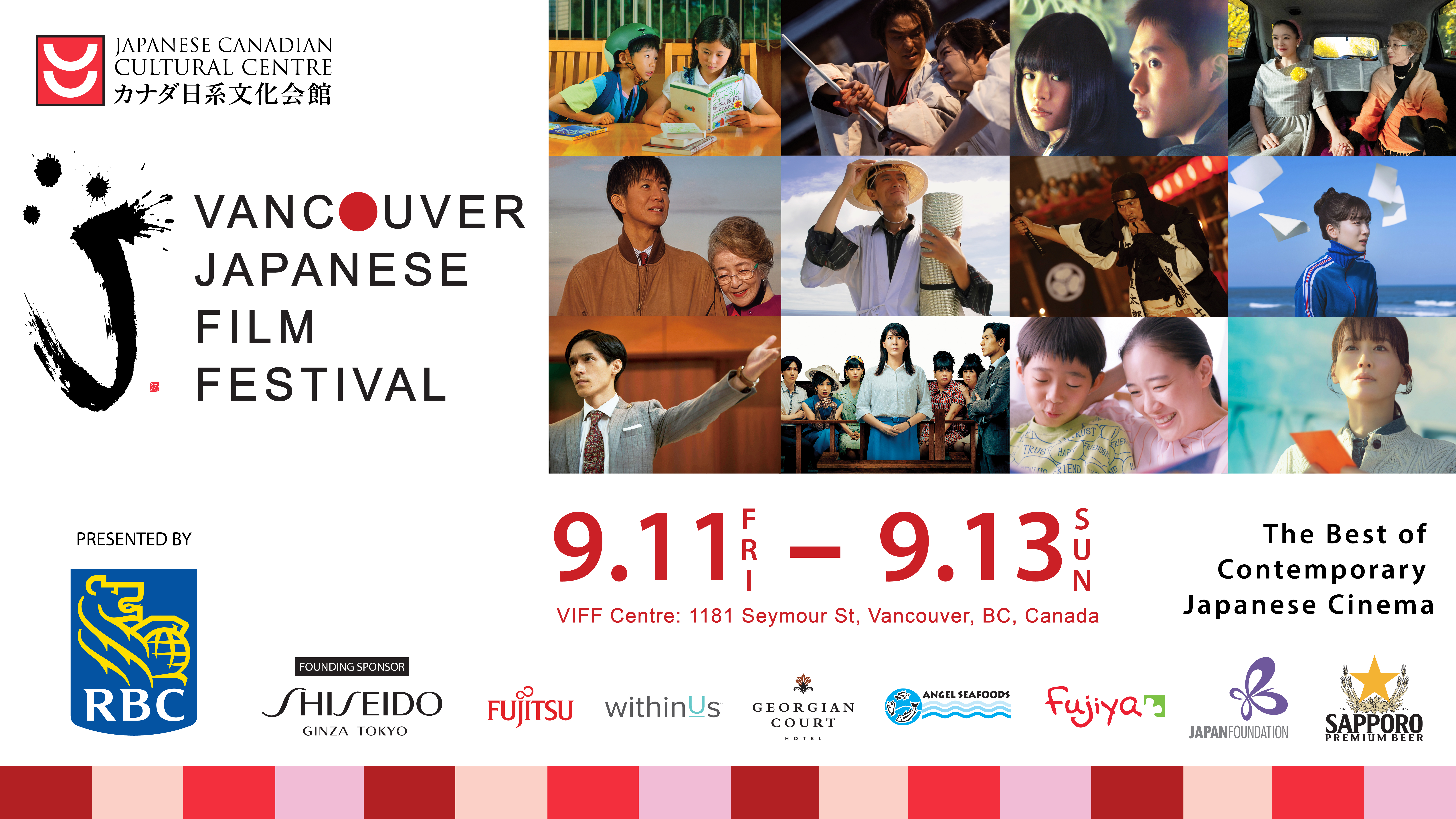
In conclusion, Vancouver Japanese Film Festival was great for its very first year. I can’t wait to see how it expands and improves next year. I recommend everyone check it out and attend next year, it’ll be sure to be even better.