


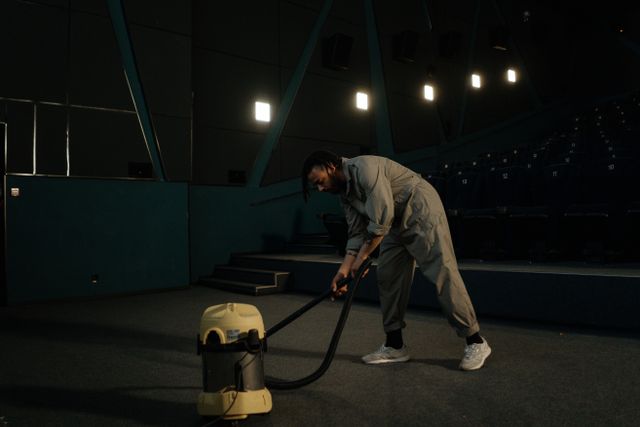
In film and television, attention naturally goes to what audiences see on screen. Behind every production, however, there is a network of offices, studios, production spaces, meeting rooms, workshops, and shared facilities that have to function smoothly. Keeping those environments clean is not necessarily the most visible part of the operation, but it can have a meaningful effect on how efficiently a workplace runs.
For production companies, studios, agencies, and other creative businesses, professional cleaning is about more than keeping floors and desks presentable. It can influence staffing, budgeting, workplace standards, and the amount of time managers spend dealing with routine facility issues.
The Invoice Is Only Part of the Cost
When businesses compare in-house cleaning with an outside service, the easiest figure to look at is the wage bill. That comparison can miss several indirect costs associated with running a cleaning operation internally.
| Cost element | Handled in-house | Handled by a contractor |
|---|---|---|
| Wages and payroll taxes | Direct business expense | Included in service cost |
| Recruiting and training | Managed internally | Managed by provider |
| Sickness and holiday cover | Management arranges replacement | Provider manages coverage |
| Equipment | Purchased and maintained by business | Generally supplied by provider |
| Cleaning supplies | Ordered and stored internally | Usually managed by provider |
| Supervision | Requires staff management time | Included in service delivery |
This becomes particularly relevant in creative environments where schedules can change quickly. A production office may become busy during a shoot, while a studio or post-production environment may operate outside conventional office hours.
An external cleaning provider can take responsibility for scheduling and routine staffing, allowing the business to concentrate on its primary work.
Turnover Can Become a Management Issue
Cleaning is a people-intensive service, and staff turnover can affect both internal teams and outside contractors.
Outsourcing does not eliminate turnover. Cleaning companies face the same labor-market challenges as other employers. The difference is that recruitment, scheduling, and finding replacement workers become the provider’s responsibility rather than an additional task for the production coordinator, office manager, or facilities team.
For a busy creative business, that distinction can matter. A staff member being unavailable should not necessarily mean someone from the production team has to spend part of the day arranging cleaning coverage.
The best contracts establish expectations around staffing and replacement coverage before problems arise.
A Clear Standard Makes Quality Easier to Manage
Cleanliness can be surprisingly subjective.
One person may consider a production office clean enough, while another may notice overflowing bins, dusty surfaces, or an untidy common area. In workplaces shared by crews, employees, clients, and visitors, those differences can quickly become a source of complaints.
A defined cleaning standard provides a more practical solution.
Facilities-management systems such as APPA’s cleanliness levels offer a framework for describing different levels of appearance and maintenance. Businesses do not necessarily need to become experts in the terminology. The important point is to establish a standard that everyone understands.
For example, a provider such as CP Cleaning Services can work from a defined scope of work that identifies the areas to be cleaned, the expected standard, and the frequency of service.
That makes the relationship easier to manage. Instead of discussing whether a room “looks clean,” a manager can assess whether the agreed service has actually been delivered.
The Workplace Behind the Production
A film or television production can involve numerous people moving through the same spaces. Production offices, conference rooms, kitchens, washrooms, entrances, and other shared areas may experience significantly different levels of use depending on the schedule.
Creative agencies and entertainment businesses face similar challenges. Meetings with clients and collaborators may take place alongside ordinary office activity, making the condition of the workplace part of the overall professional impression.
Cleaning is therefore connected to the experience of the people using the building.
A well-maintained environment does not guarantee a successful production, of course. It can, however, remove one more avoidable distraction from a workplace where schedules, deadlines, and creative demands already compete for attention.
What Professional Cleaning Changes for Managers
The biggest change may be less visible than the cleaning itself.
With an in-house team, managers can become responsible for staffing, schedules, supplies, equipment, inspections, and day-to-day problems. Outsourcing moves much of that operational responsibility to a specialist provider.
The manager’s role becomes more focused on defining expectations and monitoring results.
Instead of asking whether a particular employee completed a particular task, the manager can ask whether the agreed areas were cleaned to the required standard and whether the provider is meeting its contractual obligations.
That is especially useful in creative businesses, where managers may already be balancing production schedules, client requirements, employees, and multiple projects.
Cleaning as Part of Workplace Operations
For entertainment businesses, professional cleaning should not be viewed only as an aesthetic service.
A clean and organized workplace can support smoother day-to-day operations, particularly in environments where different teams share facilities or where activity changes substantially from one production period to another.
The same principle applies to studios and production offices across Canada’s entertainment sector. The cleaning provider may work behind the scenes, but its role can affect the people working in front of them.
Frequently Asked Questions
Is professional cleaning better than an in-house team?
There is no universal answer. The right choice depends on the size of the business, operating hours, staffing requirements, and the level of cleaning required. Outsourcing can reduce the administrative burden associated with recruitment, supplies, equipment, and staff coverage.
How should a production office measure cleaning quality?
Start with a clearly defined scope of work. Identify the areas that require cleaning, the expected standard, how frequently tasks should be completed, and how inspections will be handled.
Can cleaning schedules adapt to production demands?
They can, provided the service agreement allows for changes. Production environments may require additional cleaning before or after busy periods, events, shoots, or other high-traffic activities.
The Work Behind the Work
Film and television depend on hundreds of details that audiences never see. Cleaning is one of them.
For production companies, studios, creative agencies, and entertainment businesses, professional cleaning can move routine facility responsibilities away from already-busy teams and place them with a specialist provider.
The most effective approach is to treat cleaning as part of the wider operation rather than an afterthought. Define the standard, establish responsibilities, agree on inspection procedures, and make sure the service can respond to the changing demands of the workplace.
When those pieces are in place, professional cleaning can do what good behind-the-scenes work should do: keep everything moving without becoming part of the production problem.