


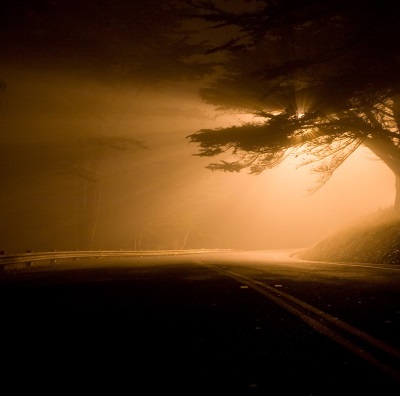
You know the moment. A hallway goes still. The music stops. Nobody speaks. Your gaze is to the dark corner and thence to the half-open door and thence to the dark corner. It’s worse that nothing happens. That is why silence can scare harder than a loud cut. A jump scare shocks the body for one second. Silence keeps the mind working before the threat arrives.
Why Quiet Scenes Now Feel More Dangerous Than Loud Scares
Quiet scenes feel dangerous because they make the viewer do part of the work. In horror, silence is rarely empty. It can hold breath, floor noise, wind, distant metal, or a small sound that should not be there. That kind of sound design appears across American, British, Japanese, and Canadian Cinema, because the basic fear is easy to understand: when sound disappears, people start listening harder.
Film research on acoustic startles notes that silence can clear the sound field before a loud hit and put the viewer into an anxious waiting state. That means the silence before the scare is not wasted time. It is the trap being set.
What a Jump Scare Does: The Mechanics of Sudden Shock
A jump scare works through speed. It often combines three parts:
- a calm or low-sound moment
- a sudden image or movement
- a sharp sound, called an acoustic blast or stinger
This can be a scream, a door slam, a music hit, or a creature entering the frame. Scholars describe the acoustic blast as one of horror cinema’s most common sound tools because it is built to create a startle response.
The weakness is clear. Once the shock passes, the viewer relaxes. The scare has already spent itself.
What Silence Does Differently: The Mechanics of Dread
Silence does not hit and vanish. It stretches fear. It asks a direct question: what am I missing?
That question changes how the viewer watches. Instead of waiting for the monster, the viewer starts scanning the room, the woods, the ceiling, the background. A small sound becomes evidence. A pause becomes a warning.
The best horror silence does three jobs:
- It slows the scene.
- It makes tiny sounds feel important.
- It lets the viewer imagine the danger before seeing it.
That last point matters most. What the mind builds can be worse than what the camera shows.
Case Study One: A Quiet Place and the Horror of Making Any Sound
A Quiet Place made silence the rule of survival. In the Abbott household, it’s not only frightening but deadly when noises are out there to hunt. The film also includes sign language as Regan Abbott is deaf and in real life, actor Millicent Simmonds is deaf. That way, the silence has a story purpose instead of a style purpose.
The sound work was widely noticed. In 2019, A Quiet Place was also nominated to win an Oscar award in Sound Editing (Ethan Van der Ryn and Erik Aadahl).
Case Study Two: The Blair Witch Project and Fear Without Visual Proof
The Blair Witch Project proves that viewers do not need to see the threat to fear it. The film’s found-footage style limits the frame. At night, the characters hear sounds outside the tent, but the camera gives no clear answer.
One famous detail is practical: sounds of children outside the tent were recorded and played through boomboxes during filming. That choice works because the silence around the sound is unstable. The viewer hears something, then gets no proof. The fear stays open.
Case Study Three: Alien and the Fear of Quiet Space
Alien employs silence in another manner. Its catchphrase In space no one can hear you scream makes fear identified with isolation even prior to the movie.
The ship is too big, too empty in the silence that pervades the Nostromo. The risk can be near, and the crew is not always able to find it. Long corridors, low machine hums, and pauses before movement turn the setting into a listening test. The alien is frightening because it can be present before anyone knows where it is.
Summary
Silence became more terrifying than jump scares because it lasts longer. A jump scare gives one hard shock. Silence builds attention, doubt, and dread. A Quiet Place turns noise into danger. The Blair Witch Project uses unseen sounds to block certainty. Alien makes quiet space feel hostile. The moral of the horror movie/maker is this: the scariest instance is not always the scream. It is the second before anyone dares to make one.