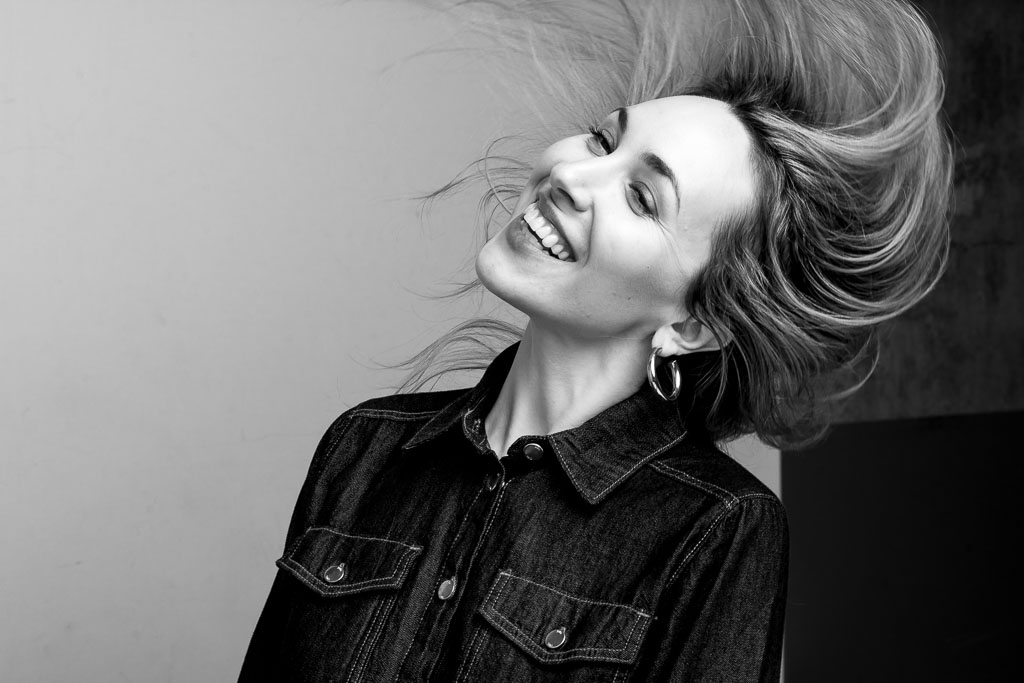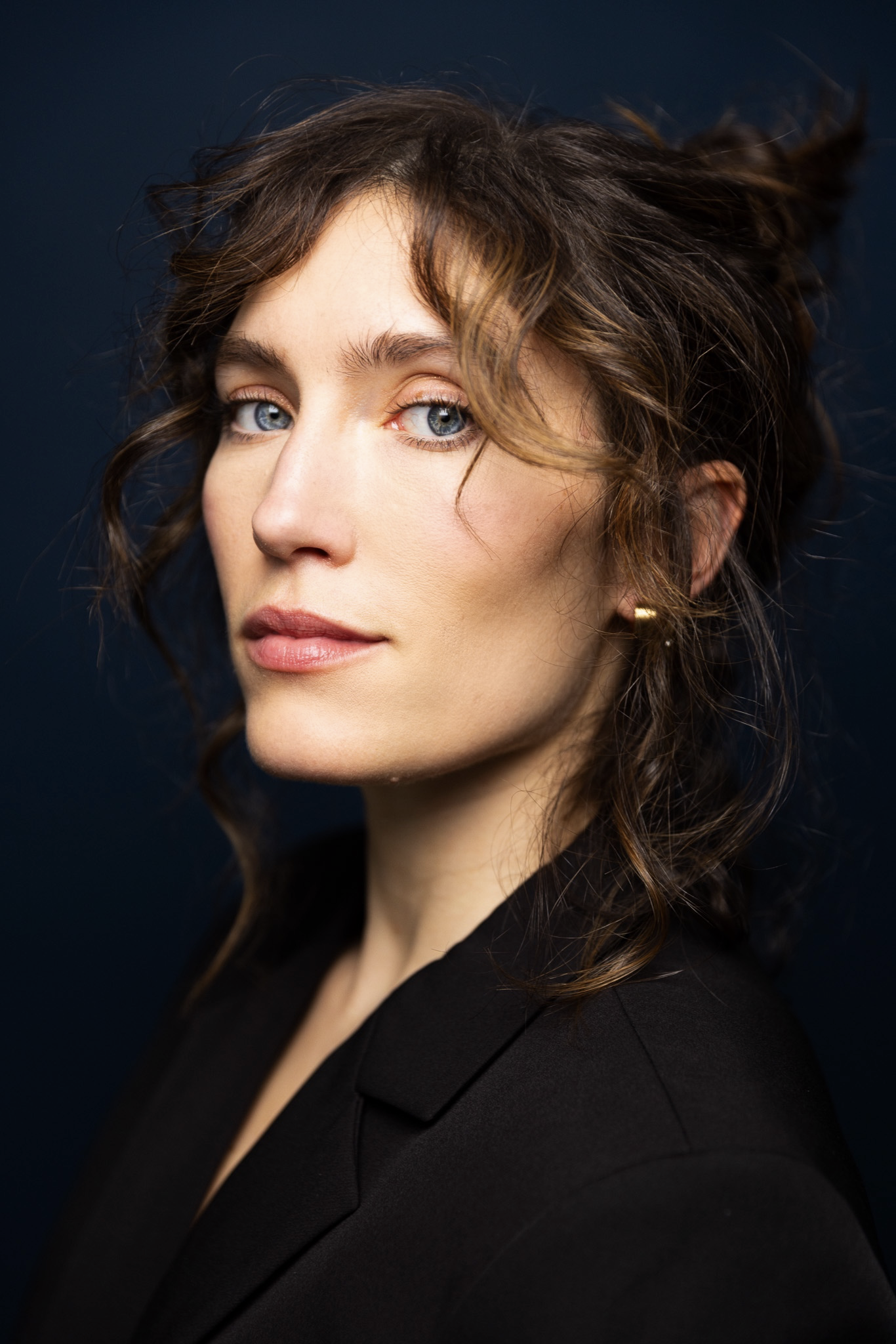


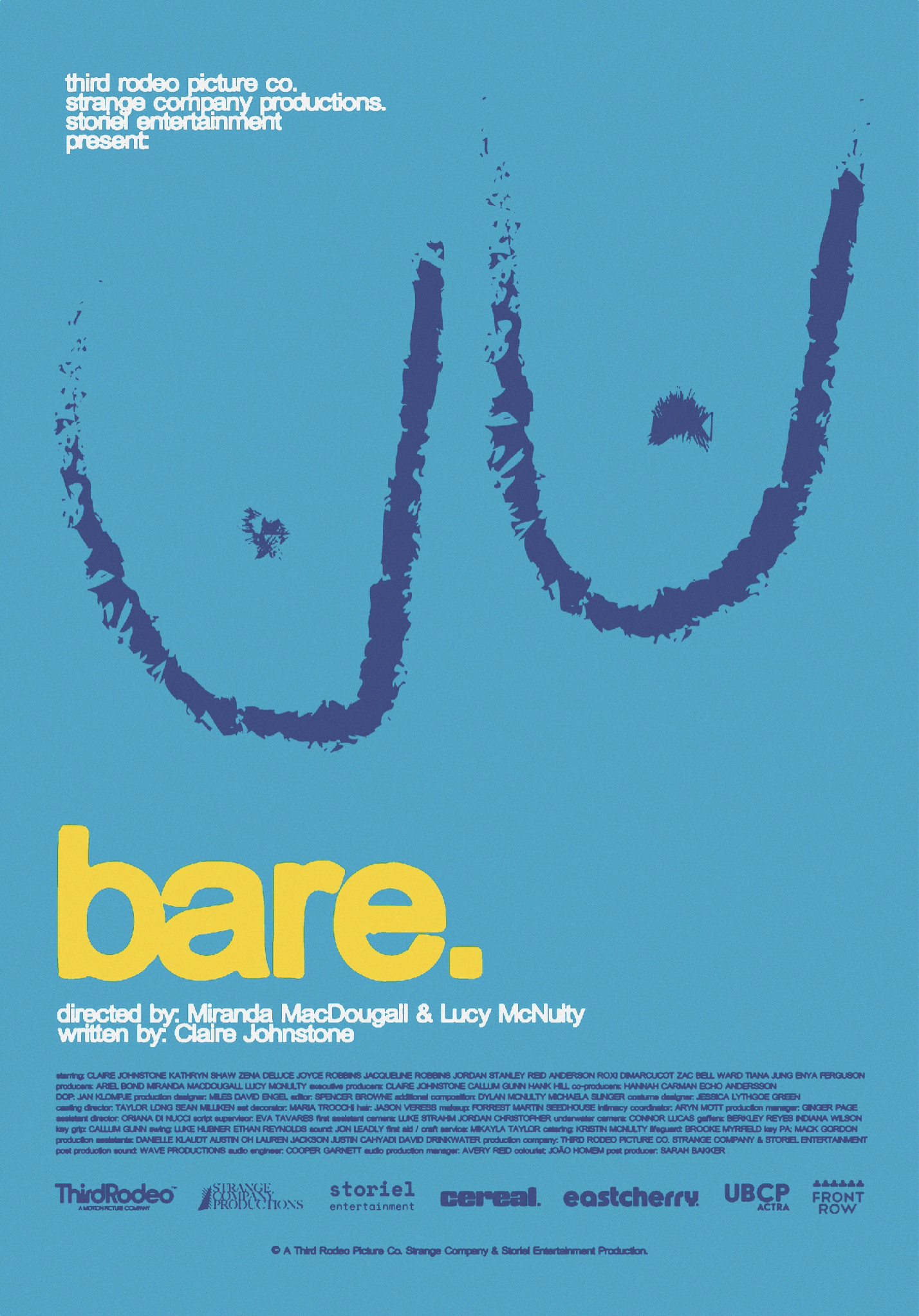
When Bare premiered at the Cannes Film Festival this spring as part of Telefilm Canada’s Not Short on Talent showcase, it represented more than a career milestone for co-directors Lucy McNulty and Miranda MacDougall. It was the culmination of a project built on friendship, artistic community, and a shared desire to tell stories about women that rarely make it to the screen.
Written by actor Claire Johnstone and inspired by experiences from her own life, Bare follows a woman whose search for the person who accidentally received an intimate photo sends her on an unexpectedly revealing journey. Equal parts hilarious and heartfelt, the short explores vulnerability, aging, body image, and female friendship with honesty and humour.
For MacDougall, the Cannes screening marked a first.
“I’ve never been before,” she says. “I’m excited to just dive in and make the most of it.”
McNulty, meanwhile, watched from Toronto, where she was in production on another film.
“It is breaking my heart not to be there,” she admits. “But Miranda, Ariel, and the team are incredible representatives of the film. I know there will be another opportunity.”
The film’s journey to Cannes began with a conversation about representation. Johnstone had been speaking with veteran actor Kathryn Shaw, who stars in the film as Dolores, about the limited and often uninspired roles available to older women.
It was a familiar frustration.
“I’d had that conversation with my own mother, who’s an actress, countless times,” says McNulty. “Claire wanted to create a role for Kathryn, but she also wanted to celebrate women as we age.”
That mission resonated immediately with both directors.
McNulty and MacDougall first connected through Vancouver’s theatre community, where both began their careers as actors before expanding into writing, directing, and producing. McNulty, a Vancouver native and Studio 58 graduate, found her way into filmmaking during the pandemic.
“When the world shut down, I spent a lot of time writing and journaling,” she recalls. “That’s when I made my first short film, and it completely changed the direction of my career.”
MacDougall’s path began in Windsor, Ontario. After theatre training, studying in New York, and working with Anne Bogart’s renowned SITI Company, she relocated to Vancouver in 2015. Alongside acting, she developed a thriving directing career through music videos and commercial work, collaborating with brands including Lululemon and Arc’teryx.
The pair had long admired each other’s work and were looking for an opportunity to collaborate when Bare arrived.
“We were both incredibly busy,” MacDougall says. “The solution became obvious: let’s direct it together.”
The result was a production powered almost entirely by community. Friends, family members, and fellow artists volunteered their time, stepped into crew positions, delivered meals, and helped solve countless challenges along the way.
“It was one of those projects where everyone showed up because they believed in it,” says MacDougall. “There was just so much heart.”
That spirit became one of the defining characteristics of the film.
“We had this incredible story written by a woman,” McNulty says. “It was directed by women, produced by women, and featured a largely female cast. There was a real sense of everyone supporting one another.”
The film’s themes are deeply personal, but they are also universal. One memorable sequence involving a Brazilian wax has become an audience favourite precisely because of its uncomfortable familiarity.
“I did it once,” MacDougall laughs. “Never again.”
Humour, however, is only part of what Bare is trying to accomplish.
“The thing we really wanted to show was the female form in all of its mundaneness and beauty and glory and everydayness,” says MacDougall. “We wanted women to feel seen.”
That commitment to authenticity extends beyond this project. Both filmmakers are vocal advocates for Canadian storytelling at a moment when domestic productions are receiving increasing international attention.
For years, Canadian creators were often encouraged to disguise local settings as American cities in order to appeal to broader markets. McNulty and MacDougall believe that mindset is finally beginning to shift.
“Canadian filmmakers are realizing they don’t have to become American to succeed internationally,” says MacDougall.
McNulty sees the change from both a creative and producing perspective.
“We’re finally being allowed to tell stories authentically,” she says. “The challenge now is building stronger support systems for Canadian talent so we can continue creating work that reflects who we are.”
As Bare continues its festival journey, the filmmakers hope audiences connect with its humour, warmth, and honesty. More than anything, they hope it sparks conversations about how women are represented on screen—and who gets to tell those stories.
For both directors, the film stands as proof of what can happen when artists stop waiting for permission and begin creating opportunities for themselves and each other.
And while Cannes may have been the destination, the real achievement lies in the community that brought Bare there in the first place.