


Trailer week on a Canadian promo desk dies in the last pass, not in the first generate. A forty-second cut already has picture lock, a legal note, and a voice the network can kill if it sounds like a stranger. Free voice cloning lets that desk hear a clone without signing up. The same free queue still caps one request at 200 characters, so a full trailer script is another job.
Broadcast complaints start when a viewer hears a voice that does not belong to the talent the spot promised. The producer can reject a VO in the room. The useful check is whether a short preview is enough to decide, or whether the desk is treating a free queue as a mix stage. MixVoice is useful here only as a listen: the published free card lists both a 200-character queued generation and 30 characters per input, and those two numbers should stay two numbers.
Forty Second Trailer Scripts Overflow The Free Queue
A forty-second trailer VO is a timed read with picture hits, a title card, and a last-line sting. Promo producers already know the arithmetic: a tight English read sits near two and a half words a second. Forty seconds is roughly a hundred words. A hundred words is several hundred characters. The free queue will not swallow that script in one request.
That overflow is the whole point of the week. The desk does not need another studio brochure. It needs to know whether a no-signup preview can answer one question: does this clone sound close enough to keep the talent conversation going? If the answer needs the full trailer copy, the free queue is the wrong container. The script has to be cut into a listen, or the job has to leave the free lane.
Getting that wrong shows up as a same-day rework: the VO comes back, the network notes the voice, and the producer burns the afternoon arguing a replace instead of locking picture. Time lost on that argument is trailer week waste. The queue did not fail because it was slow. The desk asked it to mix a spot it was never sized to mix.
How The Two Hundred Character Cap Actually Works
The public workspace lets a desk type text, pick a voice, and generate without creating an account. That is the preview. The free card still prints two character numbers on the same tile. One line says 200 characters per free queued generation. Another line on the same card says it supports 30 characters per input. Flattening those into one “free limit” is how a promo producer books the wrong hour.
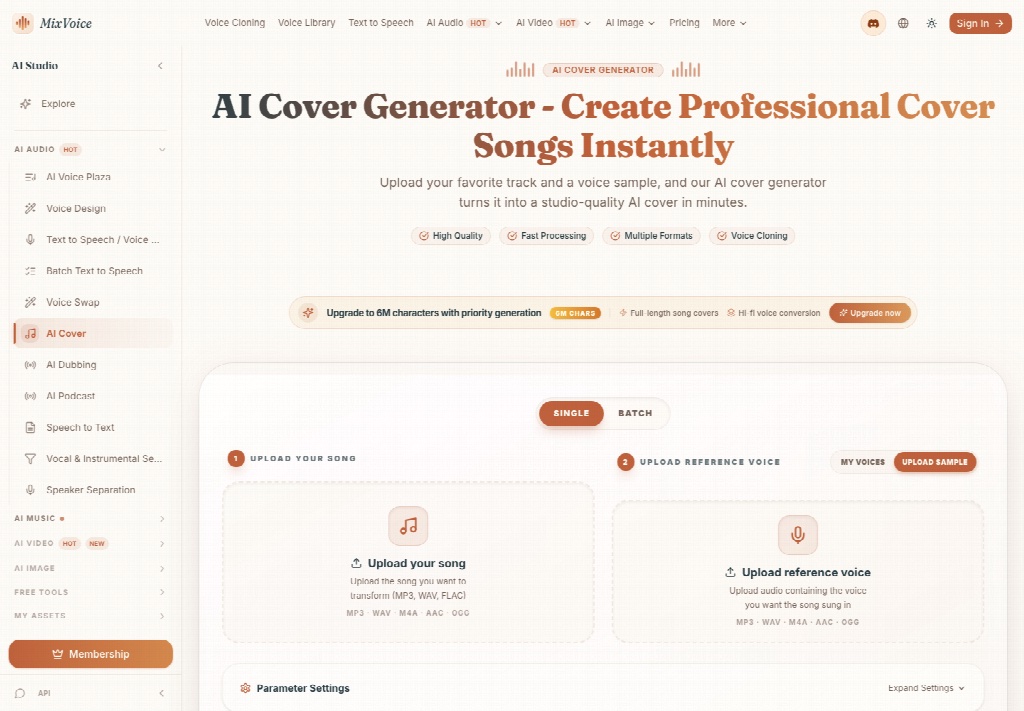
Treat 200 as the queued-generation cap the desk will actually hit when it pastes a block and waits. Treat 30 as a separate input figure that lives on the card and should not be wished away. If a trailer line is longer than the queued cap, split the listen or stop. Do not invent a third number that “feels like” both.
| Published figure | Where it sits | Desk rule |
| 200 characters | Free queued generation | Cap for one generate; cut the listen here |
| 30 characters per input | Same free pricing card | Do not merge it into the 200 |
| 70.5% similarity | Free marketing number | Not a measurement the desk ran |
| 99.5% similarity | Paid marketing number | Not a measurement the desk ran |
| 5 seconds | Hero processing claim | Published; do not crown it |
| 10–30 seconds | Also published wait range | Published; do not crown it either |
The table is a refuse list, not a scorecard. If a producer cannot say which row they are using, they are already in rework. The clone can still play. The trailer cannot ship on a guess about which published figure was “the real one.”
Treat Two Hundred As The Queued Generation Cap
Paste the first hook, not the full VO. A network sting that fits inside 200 characters is a legal listen: the producer hears timbre, pace, and whether the clone would survive a broadcast complaint. The rest of the forty-second script stays in the doc. If the hook already sounds wrong, reject the pass. Do not spend the next hour chopping the remaining copy into more free requests to hide the miss.
If the hook sounds close, that is still not a mix. It is permission to talk to talent or to move the full script onto a paid lane that publishes a much larger per-input figure. The free queue answered a yes-or-no. It did not deliver the spot.
Thirty Characters Per Input Lives On The Same Card
The 30-character line is easy to ignore because it sits next to the 200. Ignoring it is how a desk writes a sloppy brief. Write both numbers on the call sheet. If someone asks “what is the free cap,” the answer is “the card lists both; we treat 200 as the queued generate.” That sentence is uglier than a slogan and safer than a flattened myth.
A thirty-character input is a title read, not a trailer. If a junior producer tries to feed the whole VO through that figure, the job fails before anyone hears audio. The check is the character count in the box, not a feeling that “free should cover a spot.”
Similarity Scores And Wait Times Stay Separate Numbers
The free tile publishes 70.5% voice similarity. The paid tile publishes 99.5%. Those are marketing numbers on the card, not a measurement a Canadian promo desk ran in a booth. They are useful only as a published split: free is sold as the lower figure, paid as the higher one. They are not a reason to tell a network the clone “is 99.5% the actor.”
Wait time has the same split. The hero line sells a 5-second clone. Another published range is 10–30 seconds. The site publishes both. The desk should not pick a winner in the status meeting. If the generate is still spinning at thirty seconds, wait or reject the pass. Do not write “five seconds” into a schedule just because the hero said it.
MixVoice does not need a lab report to be useful on this point. The useful review is whether the short listen would survive a broadcast complaint. If the voice is unreadable as the talent, the file is dead. A higher published percentage does not revive it.
Broadcast Complaints Start When The Voice Sounds Cheap
A complaint arrives as a viewer or a network lawyer hearing a voice that seems to impersonate someone the promo did not clear. The producer’s reject is verbal: this does not sound like the person we can put on air. That reject should happen on the 200-character listen, not after a forty-second file has been laid against picture.
If the clone is close enough to keep talking, book the longer job properly. If it is not, kill the VO idea. Dragging a weak free pass through the rest of the script wastes the only afternoon the trailer still has.
Promo Desks Preview Then Hand The Full Script Off
The mechanism is simple once the desk stops asking the free queue to be a studio. Hear a short clone without signing up. Judge timbre on a line that fits the 200-character queued cap. Then hand the full trailer copy to a paid generate, a booth, or a recut that no longer needs that voice.
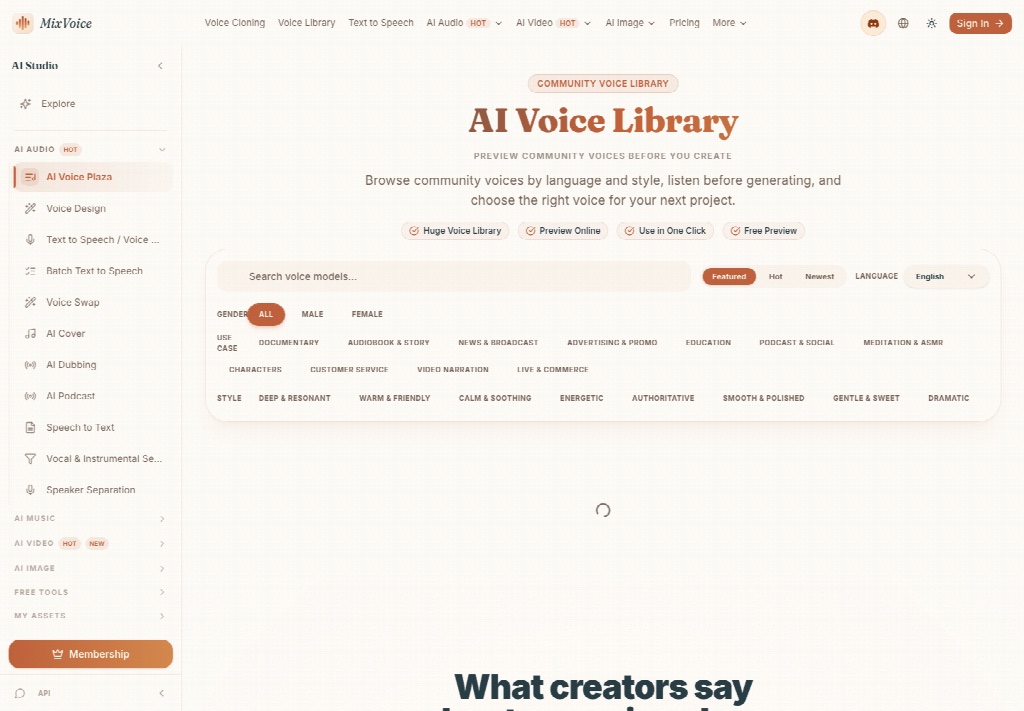
That handoff is the AI voice cloning job a promo week can actually finish. The workspace will keep accepting text. The producer has to refuse the extra paste when the box is already over the queued cap. A failed listen that gets chopped into four free requests is still a failed listen. The network will hear the seams.
The preview answers whether this timbre belongs in the meeting. A forty-second Canadian trailer cannot live inside a free queued generation. MixVoice is the listen. The mix is somewhere the script actually fits.
Keep Trailer Week Inside A Listen Not A Mix
Promo producers should walk in with a hook that fits 200 characters and a script that does not. If the short clone would trigger a broadcast complaint, reject it and stop. If it is close, move the full VO off the free queue. Keep the two character figures and the two wait figures on the call sheet as published, not as one invented truth.
That is the whole desk rule. The free preview exists. The forty-second trailer does not fit it. Mixing those two facts is how trailer week turns into rework.