


Festival week in Vancouver still runs on paper that programmers can defend. The slate at the head of a trailer — title, year, runtime — is that paper in motion. When a generated push-in invents a cousin card, the program book and the clip no longer describe the same screening. Seedance API Online is only worth a pass on that desk after the locked card is already in the start and end frames, because extra camera style will not restore a runtime the catalogue never printed.
Premiere notes go out while the lobby still smells like wet coats. Editors are not hunting for a more expensive orbit. They are hunting for a file that will not force a correction email to pass holders. SeeAPI keeps generate and compare on one path so the same card can be tested as a still, then as a short move, without opening a second vendor tab during the crush.
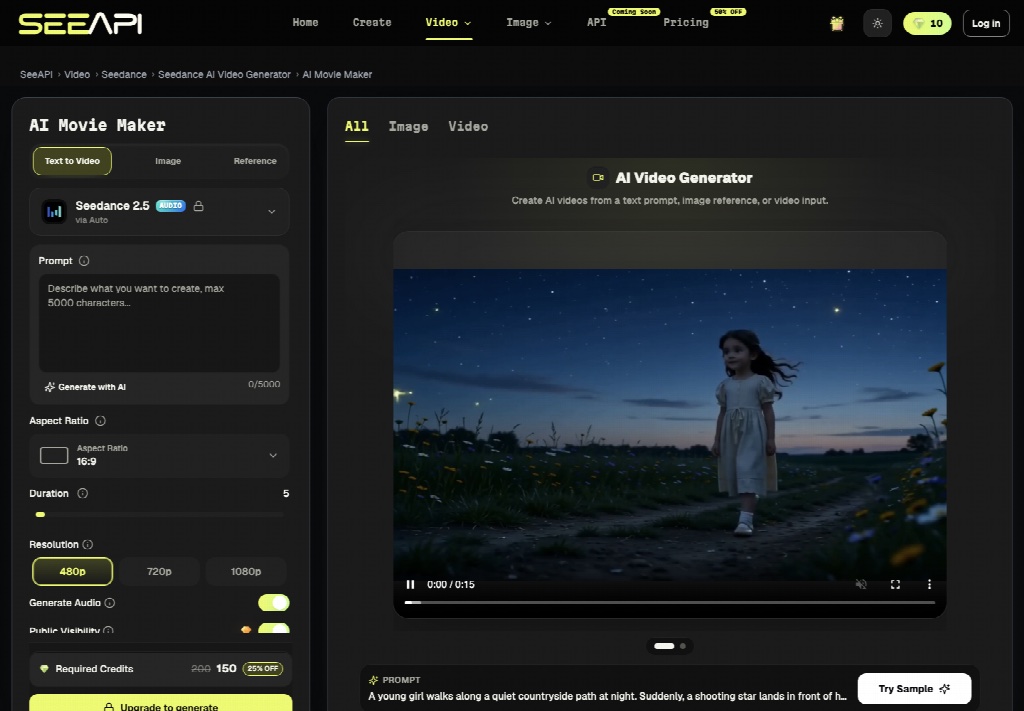
Festival Week Dies On A Cousin Runtime Card
The trouble is rarely a soft title treatment. The trouble is a second card. The program PDF says 98 minutes and the generated open says 104. The English title stays close enough that a tired eye lets it pass, then the Japanese title on the lower line belongs to another film in the same block. Pass holders notice because they bought a seat, not a mood.
That cousin card is expensive because it is public. A still on a desktop can be deleted. A trailer that has already sat in a newsletter is a correction. Programmers then spend the next hour writing “the runtime in the clip was a draft” to people who already left for the venue. Motion that looked lively in a laptop player is the reason that email exists.
Canadian festival copy already argues that premieres still matter in a streaming pile. The argument only holds if the object on screen is the same object in the book. A prettier hallway does not rescue a card that names the wrong work. First-year events are especially exposed, because the audience has no older trailer to compare against. The program book is the only map they brought.
Guest directors notice the same mismatch from the other side of the lobby. They flew in with a runtime they already defended to sales agents. When the house loop shows a longer number, the Q&A starts with a correction instead of the film, because the desk let motion write a second catalogue line.
Why Program Editors Guard The Slate First
Slates are contractual in a small way. Distributors send a title treatment. The festival typesets a runtime. Guest notes repeat both. If the trailer disagrees, the guest notes look sloppy even when the film file is correct. The desk’s job is to keep those three objects in one family.
Guarding the slate is also faster than guarding every frame of motion. A push-in can change, a lobby can be restaged, a light can be warmer. The card is the one object that cannot be “close.” Close is how a 98-minute feature becomes a 104-minute rumor in the queue outside the theatre.
Place the generated open beside the program PDF and freeze the largest card. If a second editor cannot read the same title and the same runtime, the file is a reject. Soft grain can pass. A second duration cannot. The same hold applies to year: a 2025 title card on a 2026 premiere reads as a leftover file from last season, and pass holders treat leftovers as a sign the slate was never checked.
Bilingual blocks need a second pause. Many Vancouver Japanese Film Festival titles carry English and Japanese on one card. If the generated open keeps the English and replaces the Japanese with a neighboring film, the English-only editor will miss it. Have one person who can read both lines do the freeze. Two-line slates need that second reader as a minimum check, not as extra taste.
Start And End Frames Cost The Same As Text
On the published API table, Seedance 2.5 start and end frames use the same per-second credits as text-to-video: 34 at 480p, 74 at 720p, and 135 at 1080p. That is the cheap reject math. The desk can lock the official card as both frames and spend a short Fast pass to see whether motion invents a cousin, without treating 1080p as the first experiment.
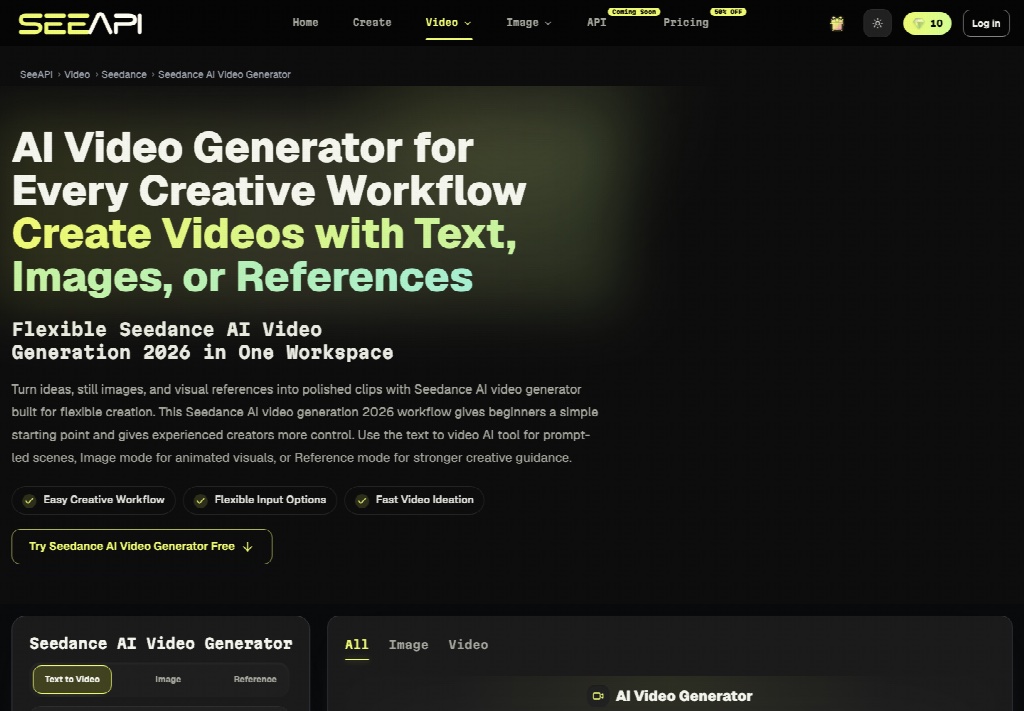
The path in the workspace is still the same: choose Fast, Quality, or Lite, write the prompt, add the frame stills, generate, compare. The frames are the argument. The model option is only the spend rate. SeeAPI keeps those options in one account so a festival week desk does not open a second login while the lobby is already filling.
Seedance 2.5 remains a Next-Gen preview on the site. That status is a reason to practice the lock on Seedance 2 now, not a reason to pretend the public card has already been replaced by a longer one-take. The ledger question can wait. The slate cannot. A 1080p experiment on an unsigned crop is how festival week burns the afternoon before doors, because the expensive file still has to be discarded when the minutes do not match.
Lock The Card Before Asking For A Push In
Export the slate as a still from the same file the programmers signed. Do not screenshot a social crop. Social crops already trim year or runtime to fit a square, and the model will treat that crop as truth. If the still is missing the minute count, the generated card will invent one, because trailers like numbers.
Write the prompt so the card stays. Name the title and the runtime in plain words, then ask for a short move around the lobby or the curtain. Adjectives about “festival glamour” are how a second film title sneaks onto the lower line. The model fills empty language with a prettier cousin.
How A Desk Uses Those Frames In One Pass
One pass is enough when the stills are honest. Start frame: the signed card. End frame: the same card, or the same card over a darker curtain if the desk wants a hold. Mid-motion can be a hallway, a coat check, or a street wet with rain. The card has to return as itself.
- Lock the program PDF and the slate still in the same folder before generate.
- Run the first pass at 480p so a cousin card is cheap to throw away.
- Compare the largest card frame to the PDF, then decide on a slower option only if the card survived.
That order matters because Quality will not invent a better runtime. It will only make a wrong card more expensive. Festival week does not have a second afternoon for that lesson.
Reject A Clip With A Second Runtime Card
The reject rule is one line beside the export. If the largest card does not match the PDF, the file is discarded. Do not send it to the intern for “a tighter crop.” Cropping a cousin runtime still leaves the cousin in the file. The clip cannot go to the newsletter, the website, or the lobby loop.
Name the discard after the film and the fault: title-x-runtime-104, not trailer_final2. The next editor on the night shift should see why a lively hallway never shipped. Rework that starts from the same signed still is cheaper than a public correction after doors open.
Lobby Motion Can Change The Room Not The Card
Once the card holds, motion can be useful. A wet Granville sidewalk, a queue, a curtain that actually belongs to the venue — those are atmosphere, and atmosphere is why people still go out in a streaming year. The desk can ask for that atmosphere after the card is safe.
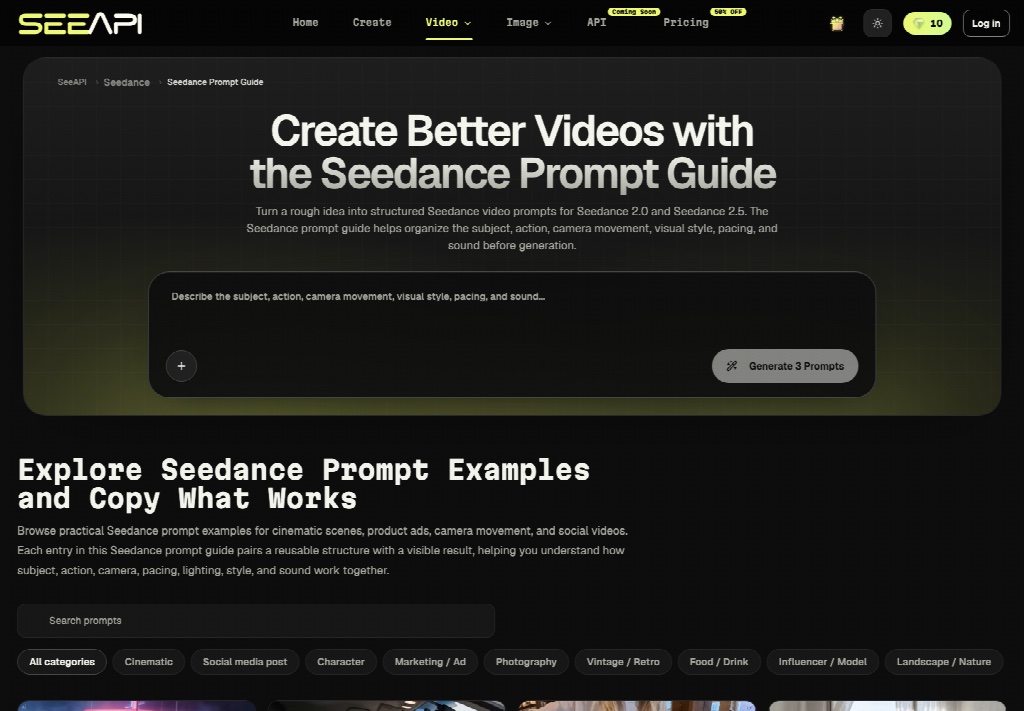
What the desk cannot ask is a new program line. “Also mention the secret screening” is how a second title arrives. Guest notes and the trailer have to stay in one family, even when the camera finally moves like a real lobby. SeeAPI will generate the hallway. It will not sit in the theatre and apologize for a runtime the book never listed.
Hold The Slate Before The Trailer Leaves The Desk
Before a festival trailer leaves the machine, freeze the largest card against the program PDF. If title, year, and runtime are not the same object, the file stays off the site. Compare exists so that decision happens before pass holders are already on the SkyTrain.
Lock the still. Spend the cheap 480p reject. Keep SeeAPI on the same card for the next pass, rather than hoping a warmer lobby will forgive a cousin runtime.