


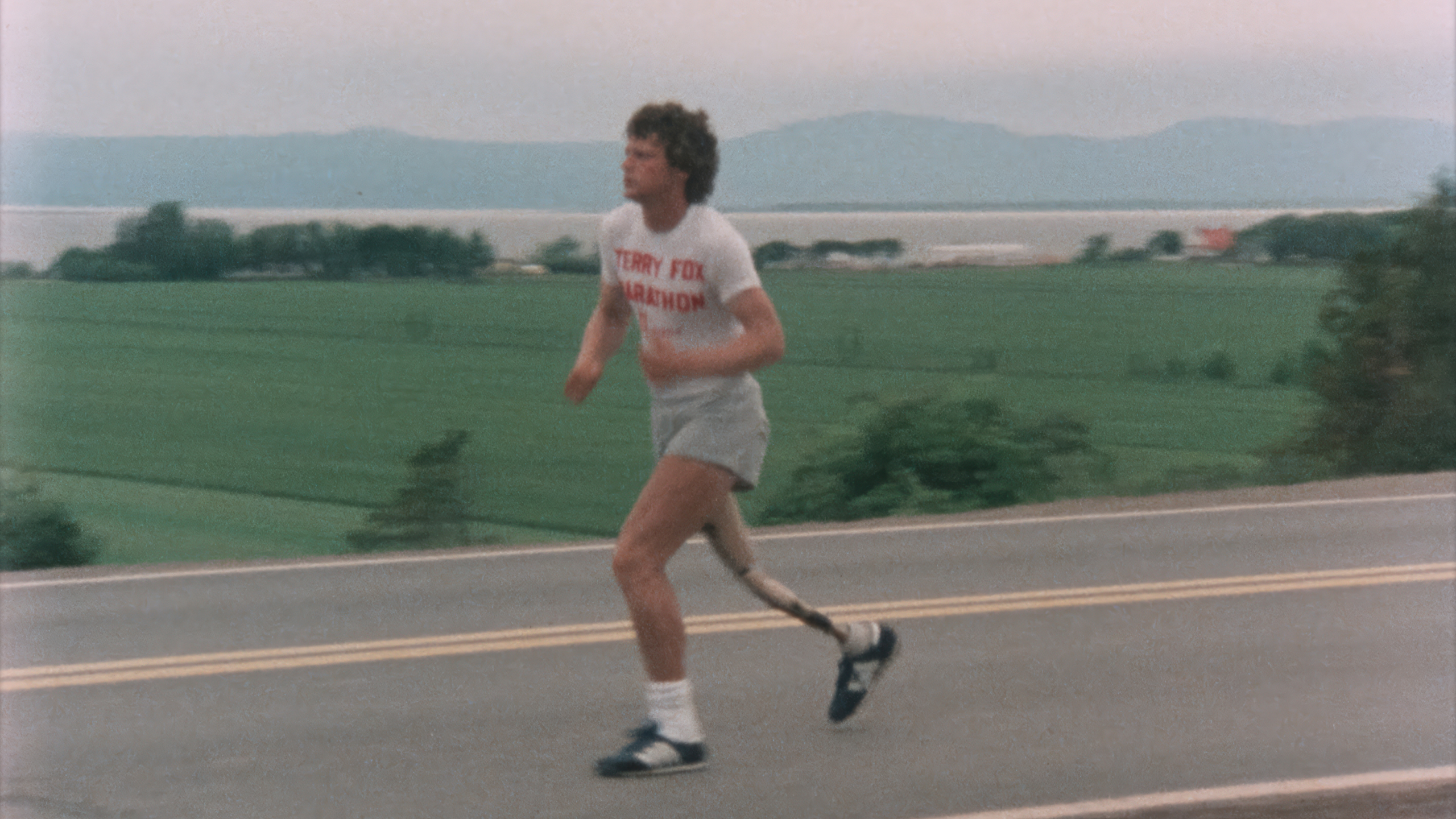
One man. One Journey. One Mission. On One Leg.
Everyone in Canada knows about Terry Fox, or at least they ought to. He’s one of Canada’s greatest heroes, and it’s not like he was the fastest Canadian in the world, but he had persistence, resilience, and dedication to taking a journey as far as he could across Canada to raise funds. What for? Cures for cancer. He had a bad case of it himself and had to get his leg amputated. But that didn’t stop him from putting his best foot forward and trekking the country as he hopped along with one real leg and one prosthetic. The fact that he went as far as he did can’t be stressed enough that he truly is a hero, and if he hadn’t done it, money for cancer research wouldn’t be gathered like it is today and we wouldn’t have those runs to raise awareness while giving us quite a workout. 
Admittedly, I didn’t learn about Terry Fox until highschool, which I blame my elementary for. The first time I did see something about Terry, was a picture of him in my hometown’s library. I was 4-5 at the time, and for some reason or another, my little self felt like running up to that support beam where the picture hung. Maybe it was to get a closer look, maybe it was because his spirit was inspiring me to go fast. Maybe it was my strange nature being the autistic that I am. I don’t know what it was, but I feel it drove me.
Flash forward to years later, I went to a private highschool for students with learning disabilities. My second year there, we watched a documentary about Terry Fox and what he had done. And of course, the school made it a habit to have their own Terry Fox run every year. A student’s drawing of Terry Fox with the van driving in the background hung up in the school’s main hall for a long period of time. While doing research on him for a school assignment, I also discovered another man with two prosthetic legs who could run ridiculously fast. I think I debated over whether or not this could be classified as cheating.
Later on when I was getting more and more into writing reviews, I found myself covering a fictional film about two brothers who tried to do something similar in raising funds for their cancer-infected grandfather. Great concept, but needed more work, and I’m not sure how the Fox family feels about it.
Now about today, it’s an important day because this particular film that had a special premiere at VIFF has gotten a wider release as of October 9. What’s more, I got the chance to talk to the director Sean Menard and Terry’s brother Darrell in their hotel room at Sutton Place about the film. Once it gets a digital release, I can see it being played at schools for years to come. Unlike my younger years, it seems that elementary school children are learning about Terry Fox and engaging in runs around school property that are organized by the school, while learning about him, and quite possibly debating whether his prosthetic leg was a toy or a robotic appendage.
Well, as long as they’re learning, the spirit of Terry Fox continues to run, and everyone runs for Terry to make his dream come true and achieve the goal he wants to see finished. As I spoke to Sean and Darrell, I found my spirit running faster and faster as I was driven to the hopeful message this movie delivers. So put on your running shoes, and let’s trek this talk together, because this is an interview that goes on quite a distance. If time weren’t so limited, it could be long enough to cover all of Canada.
HNMAG: So, Sean, why did you make a documentary completely out of archival footage and use voiceovers?
Sean Menard: Well, it was originally shot on 16mm. So the beautiful part about film is that I get to be able to take those negatives and be able to bring them up to 4K. The reels of film are that aspect ratio. I wanted to stay true to that and see what the camera guys were seeing way back then. Then I wanted to create as much of an immersive experience as possible, so scripted films use this technique. It feels like you’re in 1980, and it never leaves to a sitdown interview. With Darrell as great as he looks, the blonde hair and the shorts…
Darrell Fox: Forget the short-shorts thing. But the young thing is good.
Sean Menard: Yeah, but we don’t time travel in this movie. So that was the goal, to create this definitive story, talk to the people that were in the van, and bring the people back to 1980.
HNMAG: And how did you upgrade the footage to 4K?
Sean Menard: I brought the negatives that we found over 90 reels. There were probably 40 or more film reels, then the rest were audio reels. Because when you shoot film you have to record separately. I wish they were all labeled, but they weren’t. But we brought them to a film lab, they helped restore them, they helped digitize them, and I hope future generations continue this because when you have that negative and all that information, you can then choose any size you want to make it. Maybe one day, we’ll do the 70mm Imax version, but for now we’ll live with 4K and we’re able to bring all the colour and information back. It’s great.
HNMAG: And I’ve noticed the trek was more widescreen compared to the footage. Didn’t you want to try and keep it in the same aspect ratio?
Sean Menard: I hired a miniature artist to create a map of Canada. I wanted to stay true to the analogue feeling of the 1980s where I thought that computer animation wouldn’t be used. When we had that aspect ratio, we weren’t seeing the vastness of Canada. We decided when we filmed the miniatures, we’d cut to that full frame then bring it on back.
HNMAG: And the Ballad of Terry Fox. Did you know about that before?
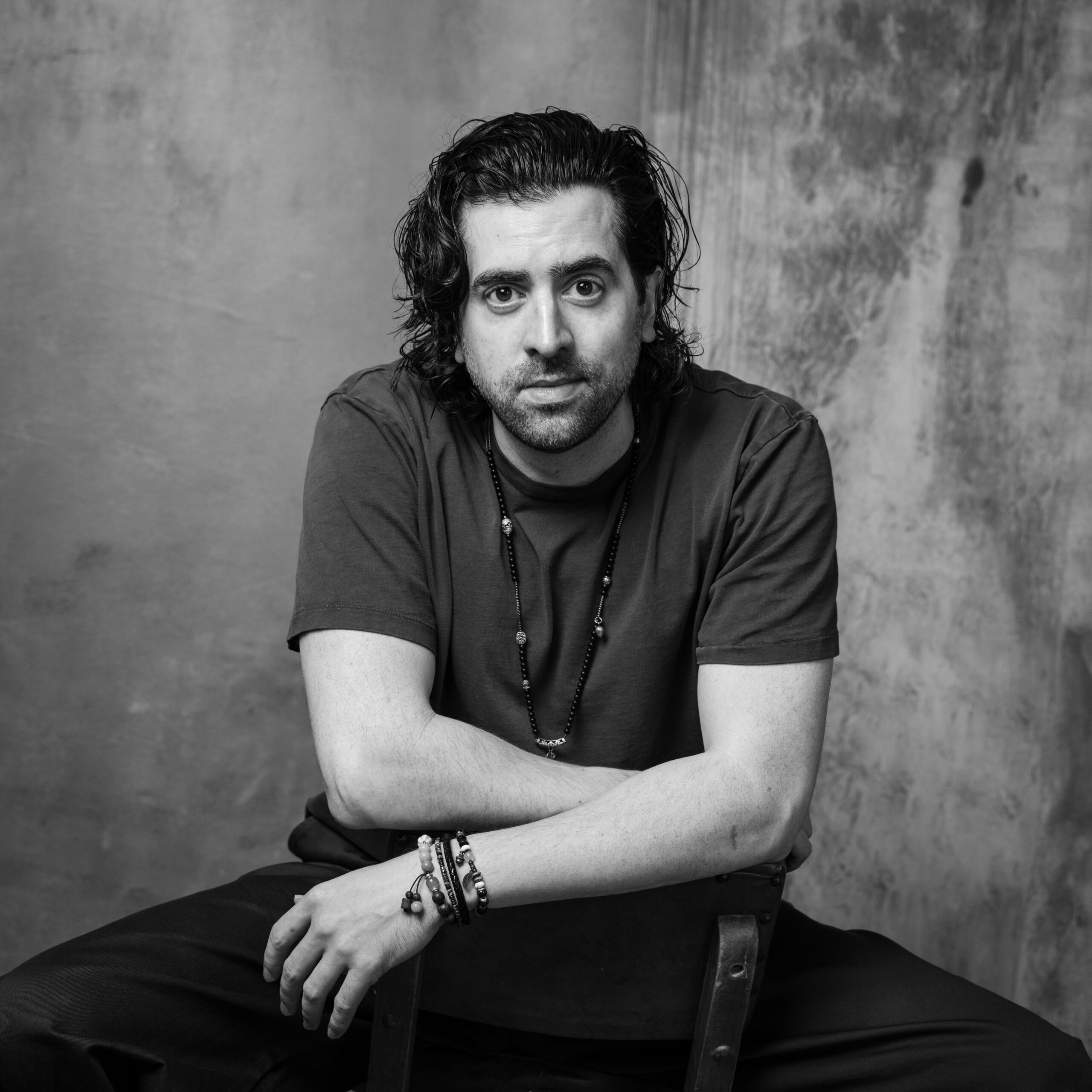
Sean Menard: It was news to me, I randomly got a phone call from Bryan Adams about 7-8 weeks ago and he said “I heard about your movie, I’m very inspired and working on an album about Canada and so I ended up writing a song you can use for your film.” At first I told him, “No. I don’t have room for this, I have the picture locked.” Then he sent me the song and thought this would be a great thing to have in the credits. To have a guy who’s sold over a hundred million records call you and say he wrote a song for your movie is pretty surreal. To have a legend like Bryan, it just seems to go really well with the film.
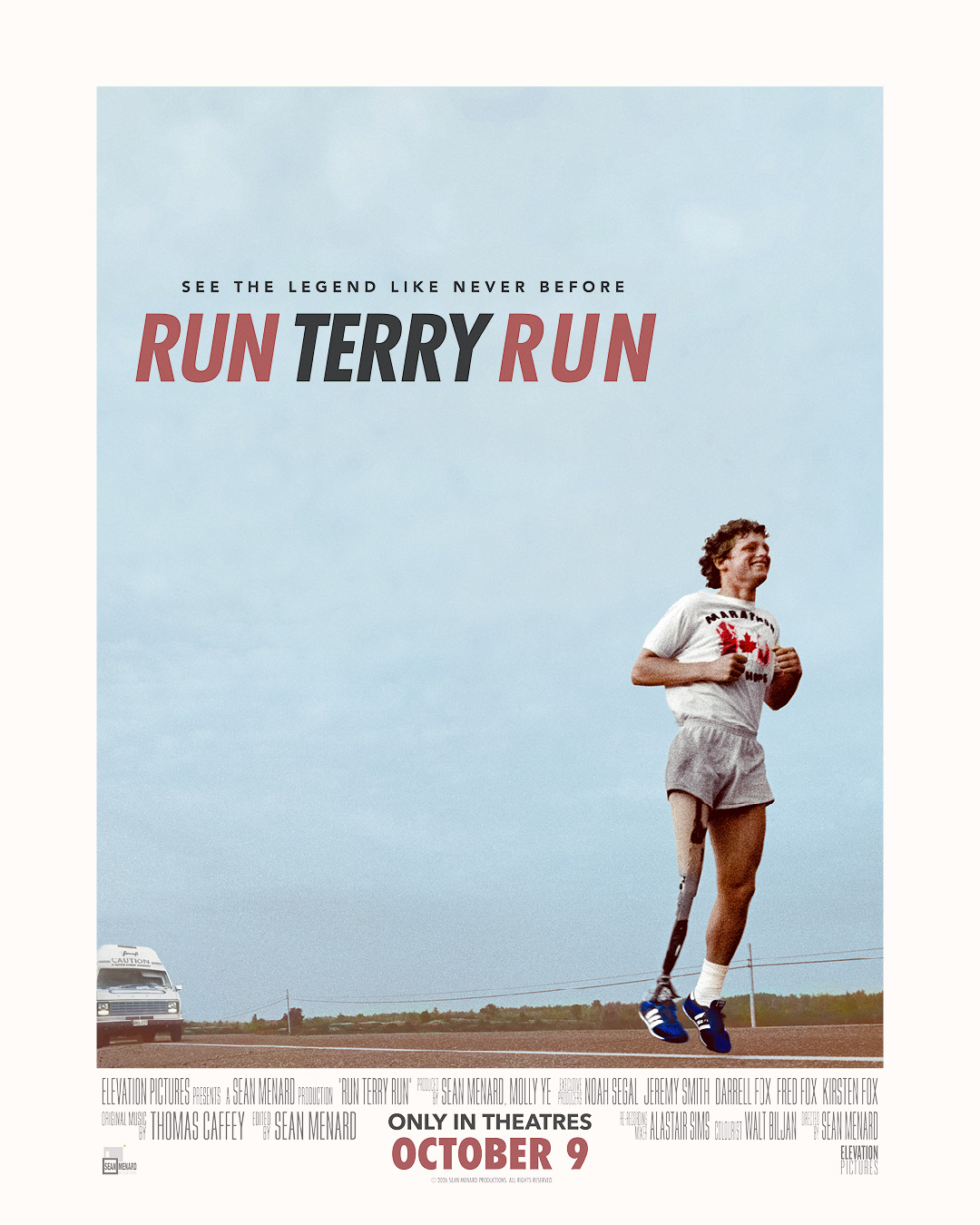
Bryan Adams is a true Canadian legend just like Terry Fox. Of course, that wasn’t the only song that surprised me in this documentary. It turns out the title was inspired by a jingle called ‘Run, Terry, Run’ that I had never heard before. I don’t even know why. Has anyone heard it played at any of the official Terry Fox runs? I’d like to know. Honestly, these two songs would be great soundtrack for such an event. Nothing against The Proclaimers, but that particular song has been overplayed.
HNMAG: And how did you manage to obtain the footage?
Sean Menard: I called up Darrell, and spoke to him with the rest of the family and asked permission to make the rest of the movie. I’d put up the money and we’d make sure that we gave some money back to the Fox Foundation. I asked, “Is there anything that makes this special? Is there any way we can show some footage that people haven’t seen?” I just noticed every clip of Terry on Youtube at some point originated on film but was transferred to VHS. People were just using this really compressed and stretched out version. It just wasn’t the real stuff so I asked Darrell where the original negatives were and the film on Terry. It eventually lead to a storage facility, about 5 streetlights in Toronto away from my house. When I showed up, they said, “I hope you brought a truck” and then I was able to get that stuff and take it over to the film lab.
HNMAG: Now, Darrell, regarding the footage, who managed to get it all?
Darrell Fox: The credit goes to John Simpson, he was a director/producer back in the day and on his own dime. He went out to New Brunswick and caught a couple of shots of Terry and brought it back to Toronto. Then brought it to the Canadian Cancer Society, who Terry was running for and pitched the idea of a documentary. They financed John and so he would come out every once in a while and spend time with us. He got Scott Hamilton who was behind the camera and they befriended Terry and became part of the entourage when they were there. We’re lucky that they went out early because we wouldn’t have that now. To find 96 reels of footage that we thought was gone. John said that he had thrown it out, but he didn’t. He gave it to us, and had it in the storage facility for 4 decades waiting for someone to find it.
Sean Menard: There were some CBC newsreels by freelance camera guys, and things that didn’t go to air, were kept. Then at some point, gathered all this material and put it in this storage unit.
Darrell Fox: If we didn’t find it, it would’ve been lost. It needed to be digitzed.
Sean Menard: Yeah, the film technicians noticed they were all red, along the footage which is the last bit of information before you lose it on these negatives. If they hadn’t done it another decade, the film still wouldn’t be preserved.
At this point, I remembered how I once saw a documentary on Terry Fox in my younger years which featured his brother Darrell admiring the statues in Vancouver with his daughter while shedding a tear for Terry. While it featured footage of Terry running, I wasn’t sure if it was the same or not, so I had to ask about it. Darrell remembered it being from The Greatest Canadian (1998)
HNMAG: Has the footage been used elsewhere?
Darrell Fox: John Simpson did create an hour-long documentary, it was called I Had A Dream in 1981. There was a 60-minute version and 30-minute version. We would dub them to VHS copies and send them to all run organizers across the country and in schools. The foundation was what we saw, quality was not very good but it was stil Terry’s story so we appreciated it and we valued it but this is next level. Watching on a huge screen is so incredible. It almost takes you back to 1980 again.
Sean Menard: I was able to track down John Simpson, he was 99 years old. We invited him out to our first screening in Toronto, with the Toronto City Orchestra. Played live and being able to call attention to him and have a full house for John and his work while having him be able to sit there and see it preserved, restored. I don’t think he’s ever seen that in 4K.
HNMAG: How did John feel about it?
Darrell Fox: Very emotional. I feel responisble and bad for this, but he was down in Costa Rica for the longest time and I usually have a connection with people who are lined with Terry’s story, but not John. I think he was aware his footage was being used for other docs over the years and I think he would’ve just appreciated a call. I wasn’t able to do that, so what happened last year was the ultimate for him.
Sean Menard: From one filmmaker to another to call him and say “Hey, that stuff you shot 4 years ago, I found it. We’re going to save it and I’d love for you to see the film.
HNMAG: And working with John back then, was it fun and interesting, Darrell?
Darrell Fox: (laughs) I was 17, so like Terry, I was a little bit of an introvert, I’m not an extrovert. I was incredibly shy. It was hard to get 2 words out of Terry, and hard to get 1 word out of me in 1980. I was running away from the camera and you can see the scenes. What I do recall is how Terry had a sense of humour. We loved to play around with the camera people and now that I know more about what was involved in there, and since film costs money John was not too impressed with us fooling around. But it made things easier in terms of that environment and it was an incredible experience.
HNMAG: And one of those moments must’ve been the birthday cake scene?
Darrell Fox: Of course.
Sean Menard: There were elements of a lot of pranks and stuff like that.
Darrell Fox: Yeah, yeah. I was absolutely looking forward to that moment. I remember very clearly that I was going to be able to throw this black forest cake into Terry’s face. That was the plan, who WOULDN’T want to do that?!
Yet it was taken away from me, and the tables were being reversed, but what is also interesting at the end of the scene, you can see Terry picking up a piece of cake and he throws it at Scott Hamilton but he didn’t hit Scott, he hit the camera. Scott was not very happy about that. (laughs)
HNMAG: Now with working on the footage, what was the biggest struggle, Sean?
Sean Menard: Yeah, just trying to fit it all under two hours. It’s definitely always the struggle, because every clip or moment that Terry says you want to include it, but people haven’t heard it before. But then you just try to make the best story possible. I never looked at it as a struggle though, it was a privelege every day to sit down with that footage.
HNMAG: I heard it really did well at VIFF this year. People really enjoyed it. What’s your biggest hope for other audiences who watch this?
Sean Menard: I just want people to feel like they get to know him more, I don’t want him to be forgotten. The principles he had and the reason why he was doing what he was doing to never be forgotten or compromised. I hope it inspires other people in whatever they do in life. He was one person who wasn’t the best athlete, or best student. But look at the difference he made.
I agreed with Sean’s statement on Terry, even saying how I admired him for what he had done, and he continues to inspire. He took quite a journey doing so, and today we have runs dedicated to him in his honour, statues of him in notable areas of our country, one of his prosthetic legs on display at a history museum, and even a local library in Port Coquitlam named after him. Know anything else dedicated to Terry? Comment below. While Sean thinks those things are great, it’s important for the story to go with it. We’re not finished this one yet, I’ve got more answers from these two gentlemen.
HNMAG: What was the most interesting fact you learned while making this documentary?
Sean Menard: Gosh. Every time I watch the movie, and sat down I felt like I watched something new. I think that’s the beautiful part about this film, when you view this film. Darrell has seen it 5 times, and I think there’s something that you pick up every viewing. It’s so hard to pick one, I guess I wasn’t aware of the sense of humour that Terry had. Everything I’ve ever seen depicted of Terry is he’s got this determined struggled face and when you see this, he’s got this great smile and very contagious laugh. To be able to hear that stuff and feel it, you get to know at the end of the day he was just a 21 year old kid trying to make a difference.
HNMAG: With all the marathons and Terry Fox runs that have gone up to this day, would you say that the majority of participants have covered every last square mile of Canada by now?
Darrell Fox: Definitely, and then some. I think we’re onto running over the world by now in terms of people who have ran the last 46 years now. That box has been ticked, but the box that hasn’t been ticked is eradicating cancer. That’s the journey we’re still on and we’ll continue to run until that cure has been found. We’ve come a long way. That’s what’s so exciting in the last 4-6 years. We have a program called the Terry’s Team. They wear red t-shirts on Run Day and when you go to a run site, guess what? You see more red t-shirts.
HNMAG: And do you think that Terry’s spirit is still with you in some sort of sense? Like he could be with us right now?
Darrell Fox: I agree completely with you, as I say, Terry’s not here, he’s EVERYWHERE right now. I believe he needs us right now. We’re following him, and we continue on and I think as long as we follow his path, we adhere to his values, I think we’re going to keep growing strong and whenever we fray from that I think we’re going to be in trouble. So that’s a responsibility of famliy members. I feel him everyday, and watching this, I get two hours of Terry. It’s an incredible experience of time.
Sean Menard: It sounds so absurd to say there’s 96 reels of this guy no one really knew existed, and as I searched for them across the country, they could’ve been anywhere. I remember looking up the intake forms, and actually dropped off in 1984. Someone gathered all this stuff from the foundation and the family. I was born in 1984, so I just feel like sometimes things were meant to happen. We feel now more than ever it’s important to come together, and this film happens to come along at a time I was looking for a subject matter and I feel ike it found me, and I feel like the footage was waiting for me to come across.
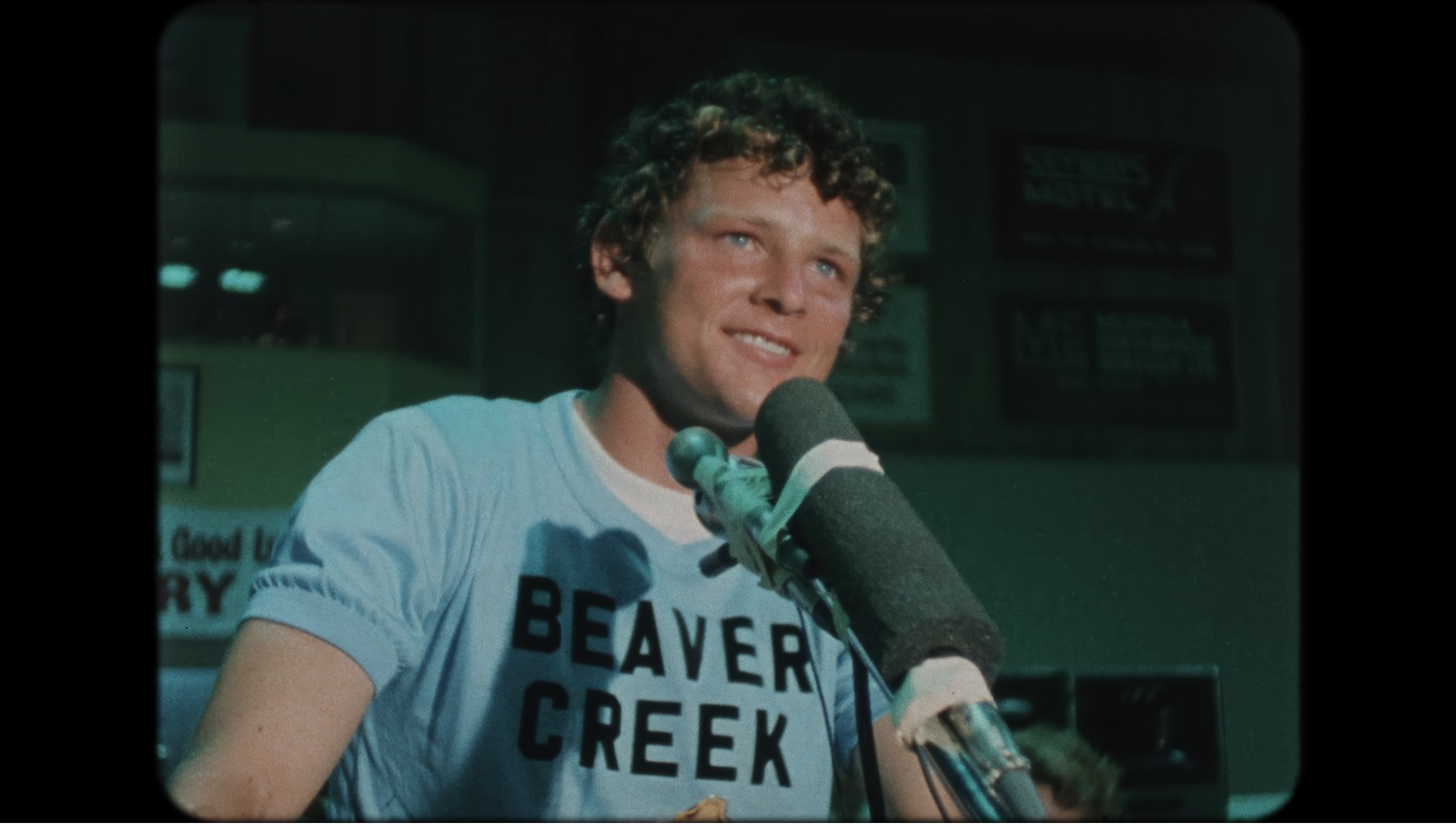
Darrell explained how powerful things have progressed with the latest in technology AND research. If what we had today back when Terry was alive, he’d never have that leg amputated. With more people surviving the menace of cancer, especially of the breast variety, Terry’s marathon of hope is showing hope. But until the day cancer is nothing more than an astological sign, we must keep fighting the fight. As someone who has lost both paternal grandparents and a close friend to this nasty condition, I say we keep going and going because if there are ways to cure some forms of cancer, there are more methods that will be found out soon. I don’t know how, but I’m confident I’ll learn what they are in a matter of years. Since I’m also feeling a bit out of shape, I just might attend every single run I can in my local area.
One more thing, I visited the old library after my interview and went to the one support beam, only to discover the picture of Terry was long gone, much like the VHS rack. But the memory of that spot still lives on, just like Terry Fox’s legacy. Now go run to your nearest theatre and watch this film.