


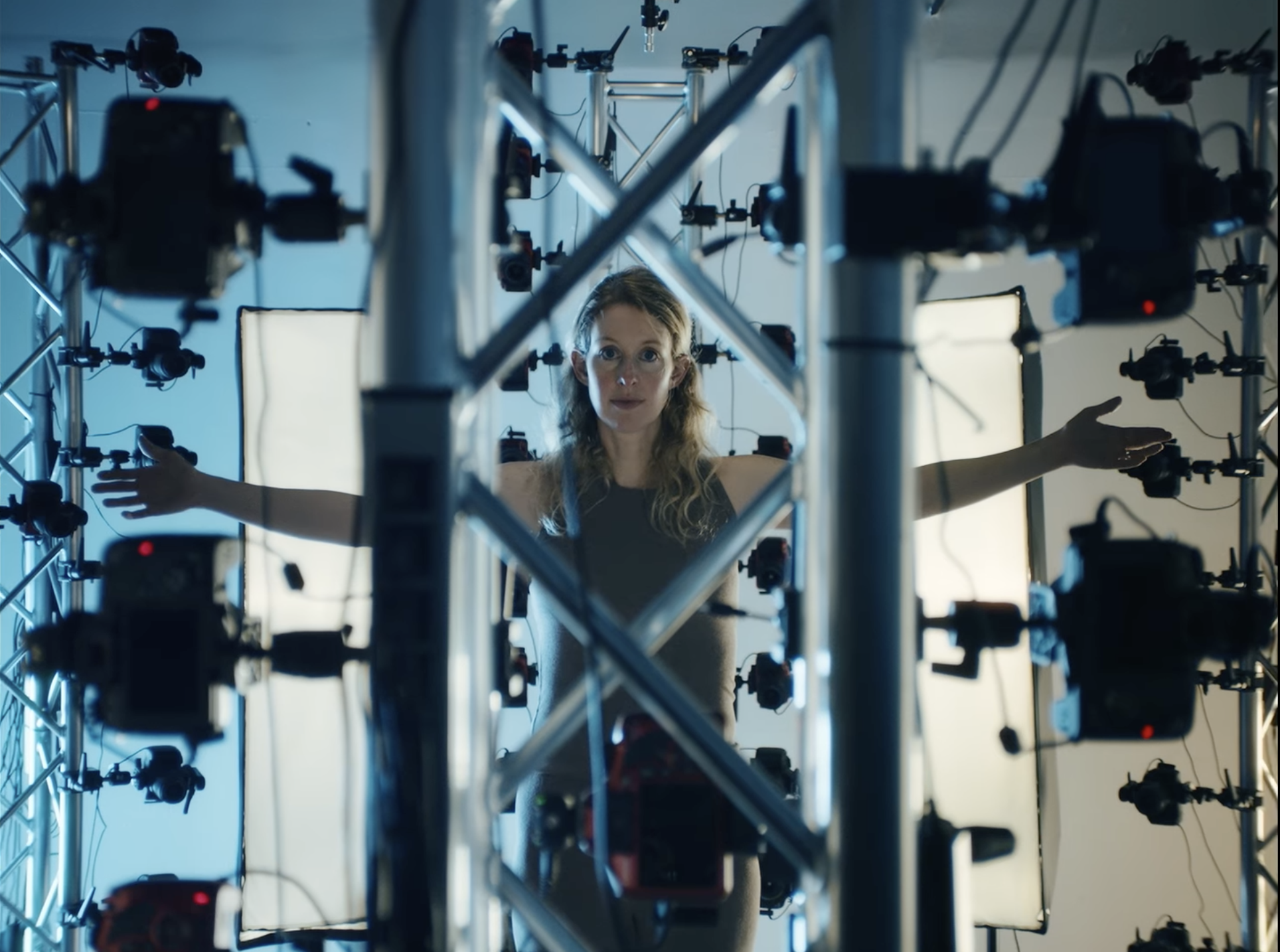
Nathan Fielder’s documentary You Can See Everything – which he co-directed with Lance Oppenheim, in addition to serving as the interviewer of its subject, former Theranos CEO and convicted fraudster Elizabeth Holmes – has had our collective attention from the very moment A24 dropped the short but eerie teaser that first got everyone talking.
The full-length trailer that released just a few weeks later only added fuel to the fire, yet many still wondered if it could deliver on the promise of its deeply fascinating premise, along with any other unexpected shenanigans Fielder is known to pull.
With the reviews from both audiences and critics having poured in, in addition to the documentary clearing its first weekend at the domestic box office, to say the answer is “yes” would be a gross understatement, as You Can See Everything is firmly on track to being one of the most lauded and commercially successful documentaries of not just the 21st century, but of all time.
The ingeniously understated marketing for the film, which reportedly cost less than $10 million, certainly helped bolster its potential at the box office, but its draw of $15 million while showing in fewer than 900 screens has completely exceeded all expectations.
This marks the biggest box office opening for a non-music documentary since Michale Moore’s Fahrenheit 9/11 in 2004, leading to You Can See Everything’s distributor, A24, to call it “one of the largest limited-release openings of the 21st century,” and this is not just exclusive to documentaries. Furthermore, it is the biggest opening for a film screening in less than 1000 theatres since the cultural moment that was 2006’s Borat.
Such unmitigated success in an ever-competitive post-pandemic box office, especially for a documentary, cannot be attributed to pre-release marketing alone, though, as the combination of seemingly unmatched acclaim and word of mouth has been just as – if not more – crucial to its opening weekend success.
Forbes pop culture writer Paul Tassi (a wonderful journalist whose work I recommend you read) astutely predicted as much over the weekend, writing that “estimates were for around a $7-8 million opening weekend, though if reviews are this good, and word-of-mouth travels fast as a result, that may prove to be an underestimate.” I would further argue that the initial estimate is as far as the marketing was going to get You Can See Everything, but to double that number like You Can See Everything has, it comes down to the reviews, and yes, they really are that good.
As things stand, You Can See Everything boasts a score of 98% from 130 critical reviews on Rotten Tomatoes with an average rating of 9.30/10, while its audience score is at 98% based on over 1,000 reviews. This not only places it amongst the best-reviewed films on the website, but the closest I could get to such consensus between audience and critics is the Japanese Oscar-winning production Godzilla Minus One, but even then, its average rating from critics sits at 8.50/10 from 213 reviews.
Even more impressive, though, is that You Can See Everything has score of 97 on Metacritic, which is an exceptionally rare occurrence, with only a handful of media products (spread across movies, music, video games, and TV shows) having ever reached or exceeded this score.
If all this was not enough, audience-exclusive metrics have similarly scored off the charts. PostTrak, which polls audiences as they exit movies, posted that 91% of audiences would give the documentary a “definite recommend,” which The Guardian describes as “unprecedented.” On the major audience-scoring platform, Letterboxd, meanwhile, the documentary currently holds a score of 4.75/5, which essentially makes it the highest-scoring movie ever, as the only three entries ahead of it is a live Radiohead concert and two TV shows, Band of Brothers and Fullmetal Alchemist Brotherhood, respectively.
It is no wonder, then, that the likes of CNN’s David Mack has unequivocally stated that You Can See Everything “has rewritten the rules of documentaries as we know them,” and that it “absolutely lives up to the hype,” while The Guardian’s Adrian Horton describes it as “a modern masterpiece of deceit.”
I have previously written that You Can See Everything is already a front-runner for a Best Documentary Feature nomination, but Paul Tassi has made an even bolder prediction in light of the reviews, wherein he believes it “could be the first documentary film ever nominated for Best Picture at the Oscars,” and that it could even be in with a chance of winning. Stranger things have certainly happened, like the very existence of such a singular documentary to begin with!
Whether such a historical Oscars event is on the cards remains to be seen, but You Can See Everything is already proving to be one of the most significant documentary releases in the history of cinema, and I personally, in my 35 years on this earth, have never been so eager to see a documentary as soon as humanly possible.