


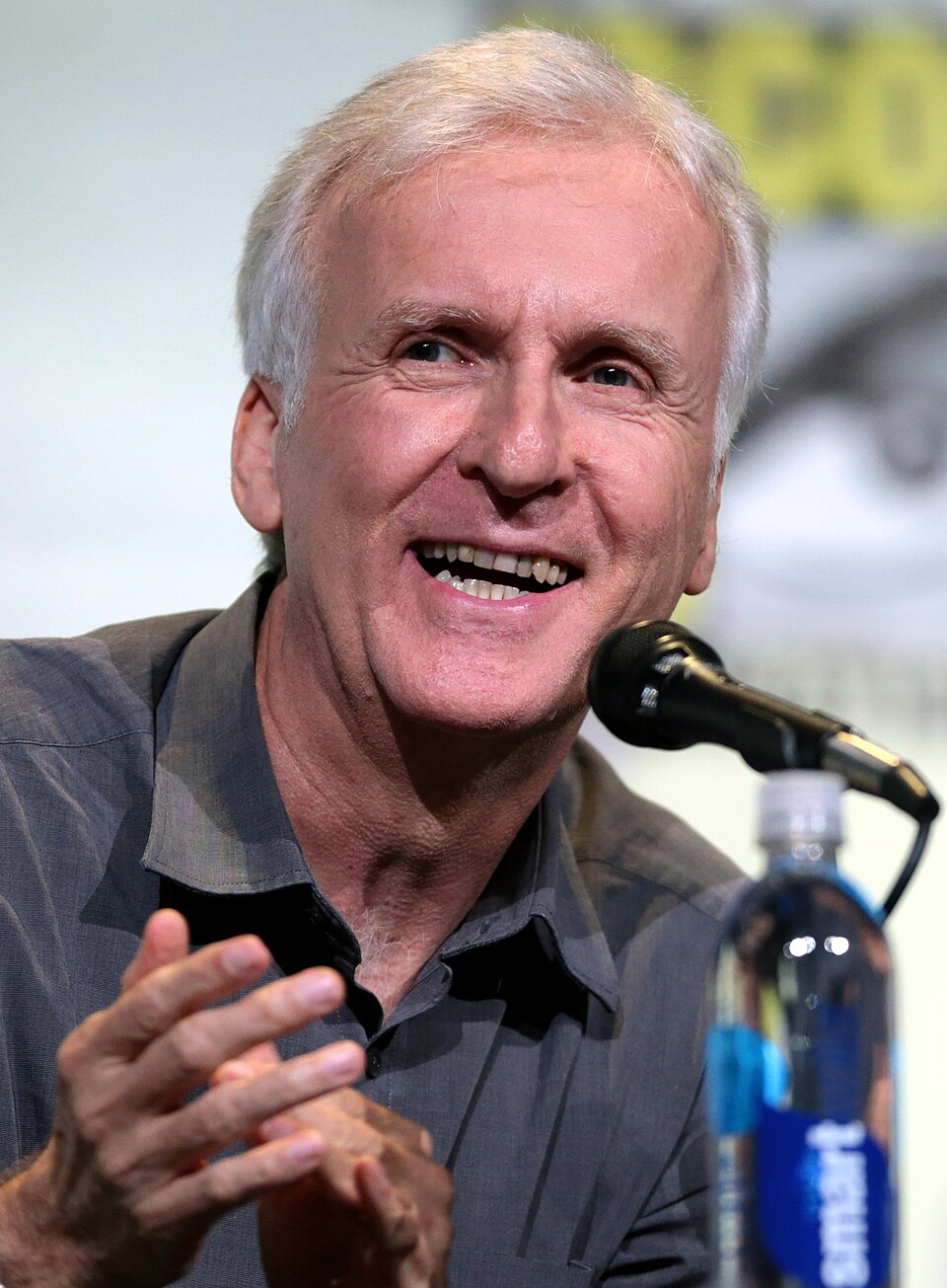
Last week proved to be particularly volatile for legendary filmmaker James Cameron, given that May 8th marked the release of his concert film, Billie Eilish – Hit Me Hard and Soft: The Tour (Live in 3D), which he co-directed with Eilish, but it was somewhat marred by actress Q’orianka Kilcher accusing Cameron of using her likeness in Avatar without her consent.
Kilcher, who is of a Native Peruvian background, is best known for her role as Pocahontas in Terrance Malick’s 2005 historical drama The New World, in addition to her recurring role on the hit Taylor Sheridan TV show Yellowstone. Kilcher is also an outspoken environmental and human rights activist, and it was at a charity event in March 2010 (mere months after Avatar’s December 2009 release) that she claims to have first met Cameron, who praised the actress for the activism before telling her that he had a “surprise gift” for her. Kilcher and her mother later visited Cameron’s office, where Cameron’s assistant gave her a printed sketch of the character Neytiri, who would go on to be portrayed by Oscar-winner Zoe Saldaña. Although Cameron was not present for this, he left a hand-written letter that read, “Your beauty was my early inspiration for Neytiri. Too bad you were shooting another movie. Next time.”
According to Kilcher, in the years that followed she thought of the sketch as “a personal gesture, at most a loose inspiration tied to casting and my activism,” but that all changed when a clip resurfaced and began circulating on social media last year, where Cameron is walking a camera crew through an exhibit showcasing his art and sketches from over the years. He shows them the original sketch of Neytiri he drew for his art department, going over the character’s defining features, eventually revealing that the lower face was taken from a picture of Kilcher in an LA Times promotional piece for The New World, even admitting that he gave her a print of the sketch, and that she has it “up over her fireplace.”
Kilcher was not impressed upon learning the extent to which her physical appearance inspired such a central character in the multi-billion-dollar franchise, stating in a press release, “I never imagined that someone I trusted would systematically use my face as part of an elaborate design process and integrate it into a production pipeline without my knowledge or consent. That crosses a major line. This act is deeply wrong.” The language of the lawsuit itself did not hold back either, with The Guardian singling out a quote alleging that the franchise “presented itself as sympathetic to Indigenous struggles, all while silently exploiting a real Indigenous youth behind the scenes.”
As such, according to THR, Kilcher is seeking “compensatory and punitive damages, disgorgement of profits attributable to the use of her likeness, injunctive relief and corrective public disclosure,” with her lead counsel Arnold P. Peter further elaborating that “What Cameron did was not inspiration, it was extraction.” It is worth noting that Kilcher’s lawsuit also extends to The Walt Disney Company, 20th Century Fox, and Cameron’s own Lightstorm Entertainment.
This all begs the question, though, as to whether Kilcher and her legal team have a case or not. According to two lawyers that IndieWire spoke with, “the lawsuit is “frivolous” and with some “very serious weaknesses”, such as the fact that neither Kilcher, nor the public at large, noticed any overt resemblance between the actress and Neytiri until Cameron mentioned it in the aforementioned video.
It can also be argued that her likeness acted as nothing more than an early template at most before casting Saldaña in the role, whose likeness is used in the final product through motion capture. Cameron said as much himself in the video, telling the interviewer, “Not that [Kilcher] was the inspiration for the character, but I just wanted to show how a specific person’s look could come through in the character. And that was important, cos then the second we cast Zoe…Neytiri suddenly looked like Zoe. So, the question is, how did we get to that point.”
Regardless of the strength of the case, it has nonetheless revived an important debate on the use of an individual’s likeness in media, particularly in this new age of AI implementation, as highlighted in the IndieWire article, but that is another deeply nuanced topic for another day.