


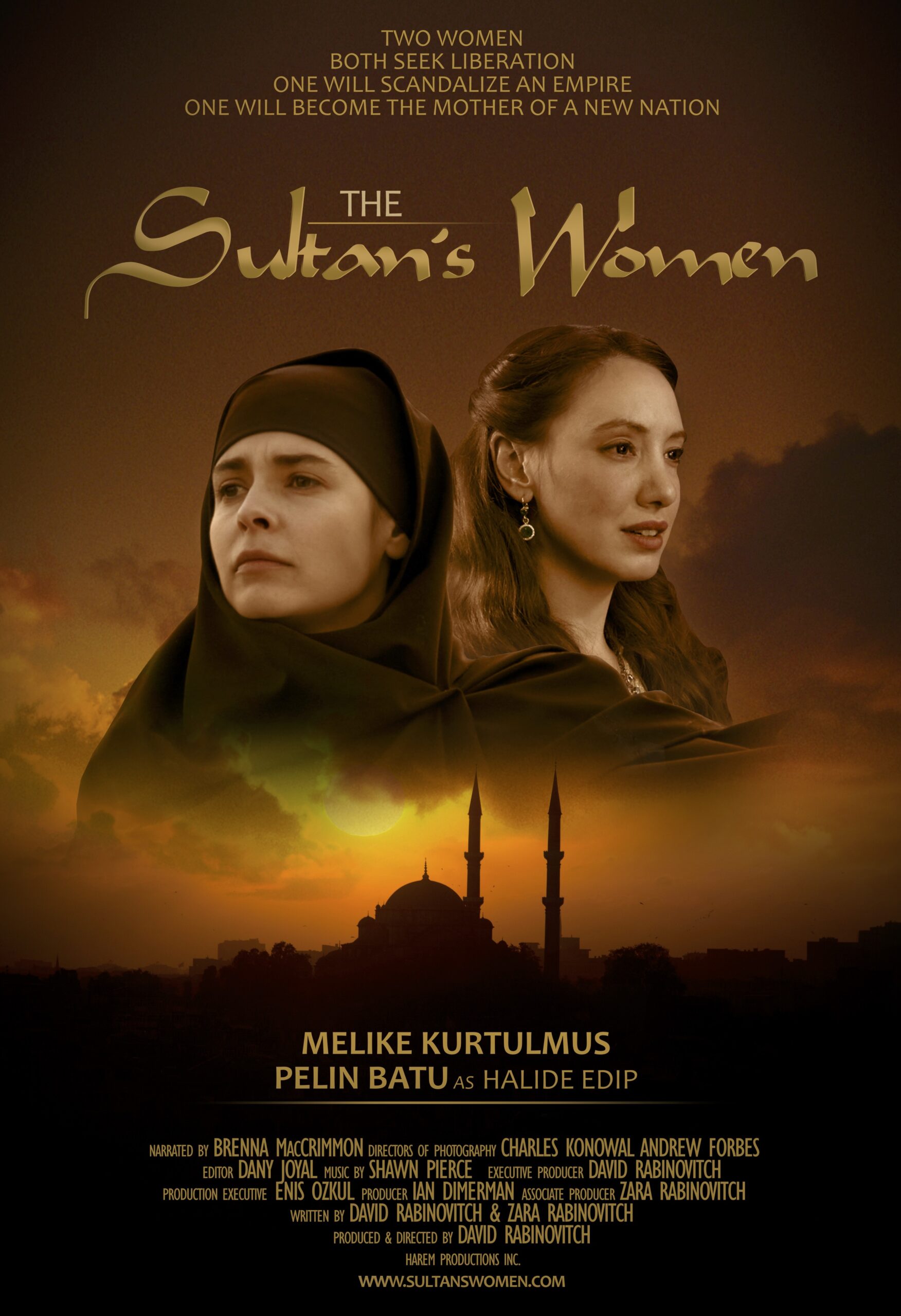
Istanbul. The Captial of the Ottoman Empire. The birthplace of two film industry connections, one being a best friend, the other being a unique sort of creator. Also where this film takes place. Who are the Sultan’s Women? One is a princess, the other is a daughter from polygamy, and there are some other women involved as well, seeing how the Sultan has his personal harem. It’s May 1876, and we are introduced to a lady named Filizten (Deniz Aylan) who works as a slave girl for Prince Murad V (Serhat Kaplan). After years of her life, she speaks to a Turkish writer about how everything started one peculiar night on the 30th and she sensed something after hearing some running outside. While everyone is nervous about some imminent danger, especially Murad, since most of his predecessors were deported and assassinated, and he could be the next target should he take the throne which seems to be the case. Palace girls who have lived in his personal harem, especially slaves and eunuchs are happy to be free and obtaining treasure. One particular litle girl is none other than Princess Hatice (Melike Kurtulmus) herself who comes across some crude voodoo dolls, much to everyone’s horror. To make matters worse, Murad couldn’t take the work of Sultan being stressed and 90 days later, his half-brother Hamid (Taner Solmaz) deports him along with all of those in the palace. They all stay at another palace not equally as royal for 28 years though, so it can’t be that bad. Well, it is. Medical treatment isn’t good even for Murad’s title and legacy, so another sweet-minded princess takes the risk of sneaking a doctor into the harem disguised as another woman. Murad’s mother (Aysegul Siray) gets help with the British in getting Hamid out of the throne so Murad can resume it. The best for the job is Captain James Gambier (Sam Malkin), who has years of experience as an agent and spy, but he chose not to especially because it would’ve been too dangerous for him. But on the safe side, Murad has recovered and takes an interest in music. He also takes a more wider interest in Filizten. As the story progresses, so do the happenings in the harem. Hatice has been reading most of her life, and she wants more in her life, being drawn to true romance as indicated in the books she reads. Murad’s mother dies making him depressed, and requests his brother set him and other brothers free because he disapproves this punishment. He does so in a letter and it gets smuggled by the women in the harem to the World Press. This brings our second main character into the light, Halide Edib (Pelin Batu). She has lived in a polygamous family and enjoys her time in school away from the family and takes up American college despite what the Sultan has stated. When Hatice requests Murad give her a husband and an escape at 27 years of age, he relays the message to help the poor lonely princess, and Hamid is able to make it happen. Hatice gets married to a high ranking officer and she’ll meet him on wedding night. Halide on the other hand becomes the first Turkish woman to graduated college but goes back to being an Ottoman woman and marries her math tutor who happens to be the royal astronomer. Hatice’s marriage on the other hand isn’t the most lovely because the officer is a little too touchy-feely for her taste. Later on, she’s accused of having an affair with the Sultan’s son-in-law, and the Sultan himself gets supsicious. A lot of people are actually, and soon the scandal about Hatice gets everywhere. By that I mean worldwide. Even Murad gets more upset with all the rumours and Halide continued on broadening her horizons but also had to deal with her annoying husband getting more forceful and she can’t even publish her stories thanks to the Sultan.
An amazing concept based on a true story, the re-enactment was so well made and looked like it really was the real thing from many years ago. All impressively narrated by Brenna MacCrimmon. There was so much woven together, it was pretty much an instance of so many stories within this story. But it’s not just the content and sets and cinematography that make this story what it is. It’s also because of the interesting fact that it was made by David Rabinovitch who didn’t have any major studio backing. He made this happen with his industry credentials which is pretty impressive. This film was released years ago in 2012 but the range was very limited. Now it has been released worldwide, on multiple platforms so everyone everywhere can see it. He’s got more projects coming up, I hear, such as The Compassionate Eye: Horace Bristol, Photojournalist with restoring through AI, a good proper use for AI if I must say so myself. I wonder what else he’ll make further along, and if it will all be available on multiple platforms.
