


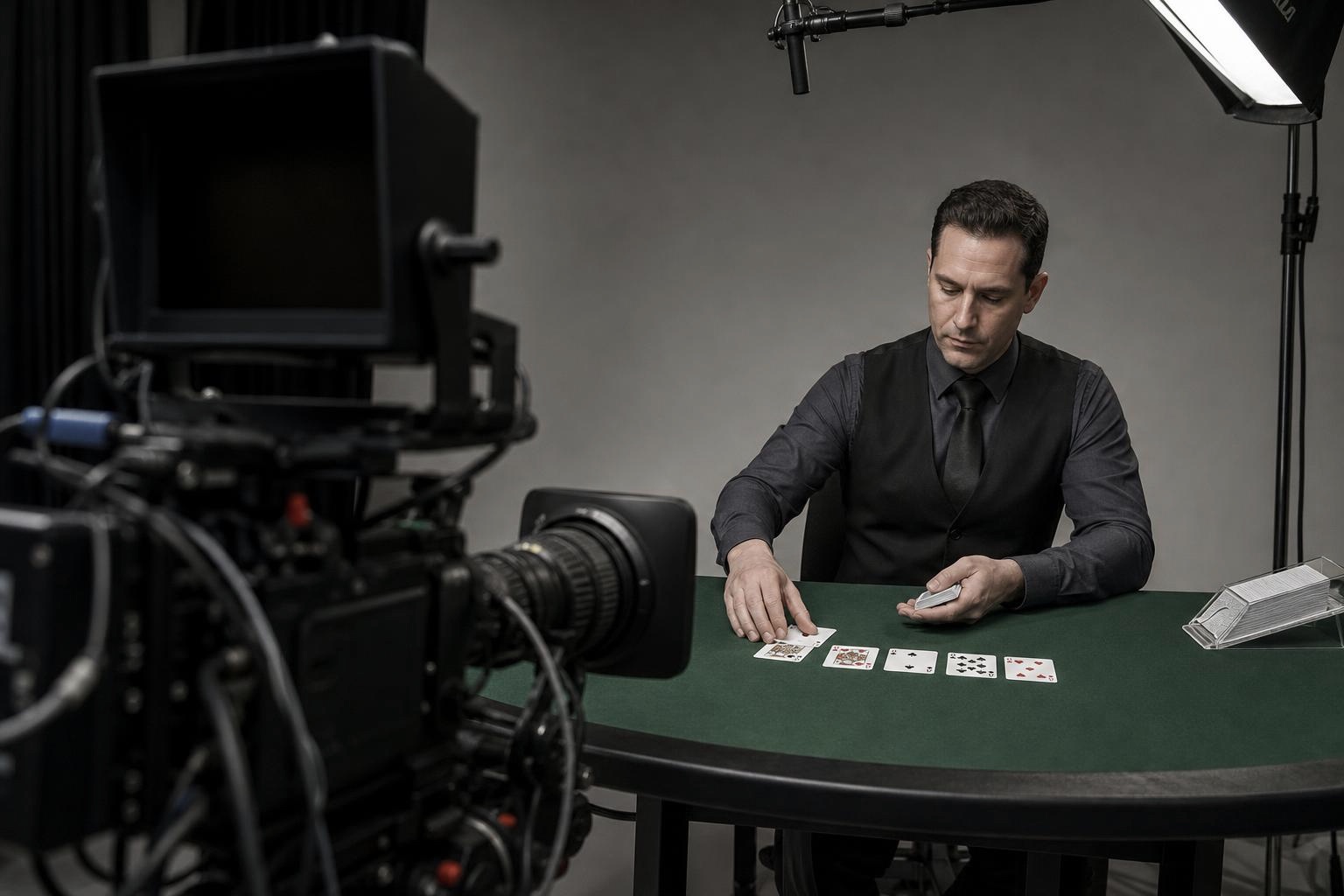
The cards have to be dealt correctly, the explanation has to be clear, and the presenter has to keep up with participants watching from elsewhere. All of it happens on camera. Live blackjack brings several familiar screen-production tasks together, with the added responsibility of conducting a game involving real money. For anyone interested in how Canadian productions work, the studio offers a useful behind-the-scenes subject: a physical table whose every hand must reach an audience as both a picture and usable information.
A Metro Vancouver Studio Behind the Screen
The broadcast behind live blackjack canada starts with physical cards, a presenter and equipment built around the table. Metro Vancouver has housed this kind of production since 2018.
That February, Evolution announced that its 16,000-square-foot live casino studio in New Westminster, above the Anvil Centre, was operational. Its opening lineup included blackjack, roulette and baccarat. A dedicated, standalone data centre supported the facility.
Today, purpose-built live broadcast studios operate in New Westminster and Burnaby around the clock. Shift schedules keep presenters at the tables, while separately advertised card-shuffling positions show how the work is divided. The person facing the camera belongs to an operation with duties extending beyond the broadcast frame.
The Presenter Has Two Jobs at Once
Handling cards accurately is one part of the assignment. Explaining the game and communicating with participants requires another set of skills, particularly when both tasks happen together.
Canadian presenter recruitment material describes training in game rules, presentation techniques, camera confidence and customer interaction. Previous casino experience is optional for applicants entering through that training programme. The role calls for someone who can learn the procedures and become comfortable delivering them on screen.
Participants can communicate through chat, adding conversation to the dealer’s work. Clear speech helps them follow the action while the cards provide its visible sequence. Account questions go elsewhere: operators such as ToonieBet run separate 24/7 live chat support for players in Canada outside Ontario.
That interaction involves financial risk. Anyone choosing to gamble should meet local legal age requirements, set time and spending limits, take breaks and seek local gambling-support services if play becomes difficult to control.
How a Card Reaches the Interface
While the presenter handles the table, cameras and microphones carry the pictures and speech. Software supplies game information and the controls through which participants make decisions.
Card-reading equipment can identify dealt cards and send that information to the system. Michigan’s official live-game regulatory framework gives an example of how this is checked: launch testing includes demonstrations of barcoded card-reading equipment, along with acceptable timing between the audio/video signal and the user interface.
Following one card makes the task easier to understand. The physical card appears on the table; its identity also becomes information the software can display. These elements must stay coordinated so a remote participant can follow the game.
Testing covers other timing questions, too, including whether the system prevents wagers arriving after the permitted point. The broadcast and the game’s controls have to work together.
When Something Goes Wrong During a Hand
A dropped card brings that preparation into focus. Staff have an event underway and procedures governing their response.
Michigan’s framework requires documented handling of misdeals, equipment malfunctions, aborted games and table closures. It also covers participant disconnections and interruptions to video, voice or data streams. During controlled launch testing, providers demonstrate how dealer mistakes and unusual events are resolved.
Canadian rules address comparable situations. Within the Kahnawà:ke Gaming Commission’s authorization framework, staff must understand procedures for dropped cards, misdeals and incorrect automated card detection. Consistent shuffling procedures, card-count verification and shuffle logs are required as well.
These details give the idea of working without a second take its practical meaning. The response to an interruption follows established operating procedures, with supervision supporting the people conducting the game.
The Recording Has Work to Do Afterwards
Once the hand ends, footage remains available for review. Its purpose extends beyond the presentation participants have just watched.
The Kahnawà:ke Gaming Commission’s interactive gaming regulations, amended March 25, 2026, require continuous recording of games within its authorization framework. The recordings must show the sequence of games and establish each game’s time to within one second of the system clock. Retention lasts at least 15 days.
Game logs provide further material for examining patterns involving game performance, staff and locations in the gaming area.
For readers accustomed to thinking about cameras as storytelling tools, this gives the studio footage another role. It preserves a sequence of actions that can be checked later. What begins with a presenter dealing cards ends with a record of how the hand unfolded, including the procedures used along the way.