


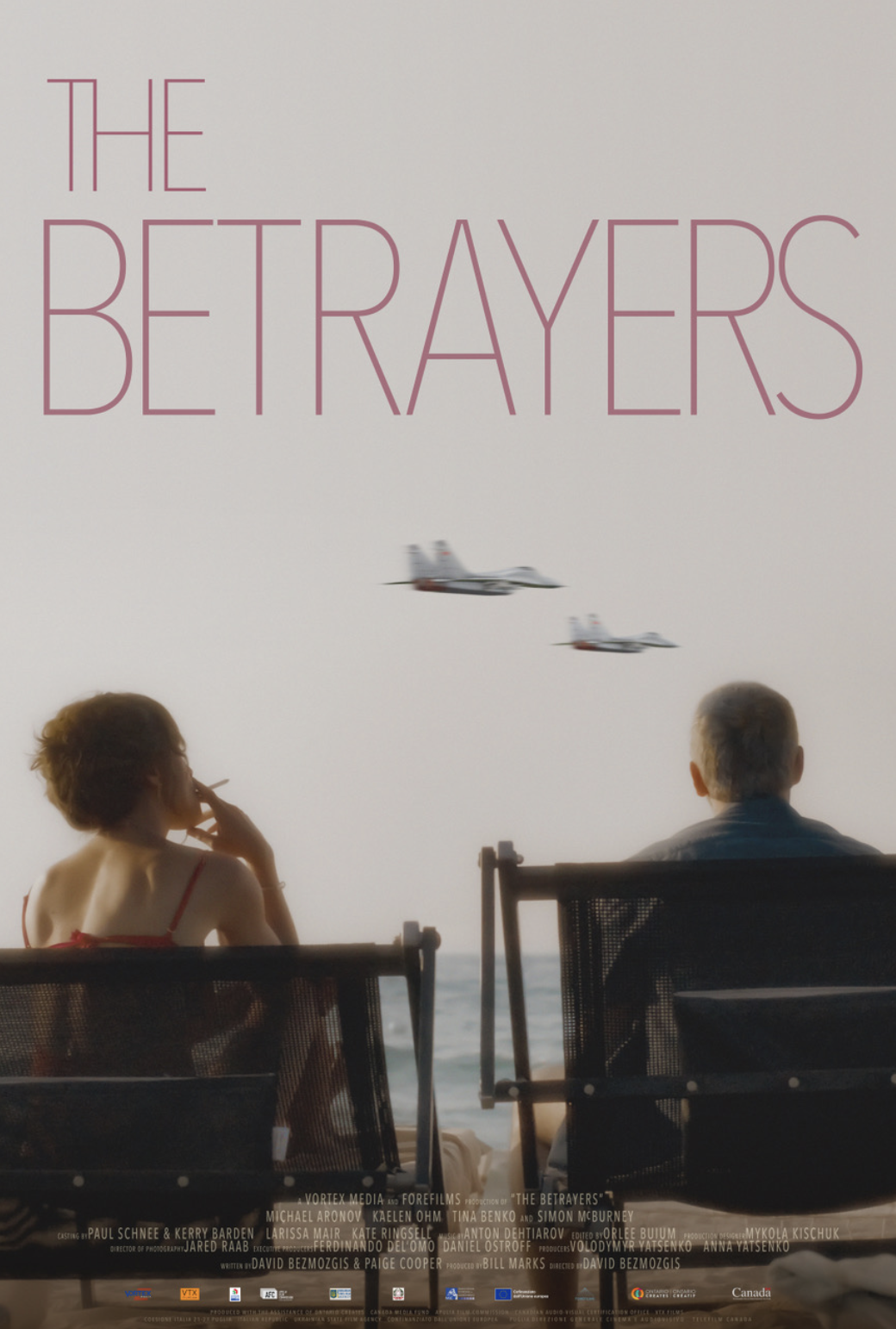
The Betrayers was screened at the fifty-first Toronto International Film Festival (TIFF) in September 2026. It’s definitely worth watching. It’s an intriguing international espionage love story.
Here is our conversation with the Canadian producer Bill Marks.
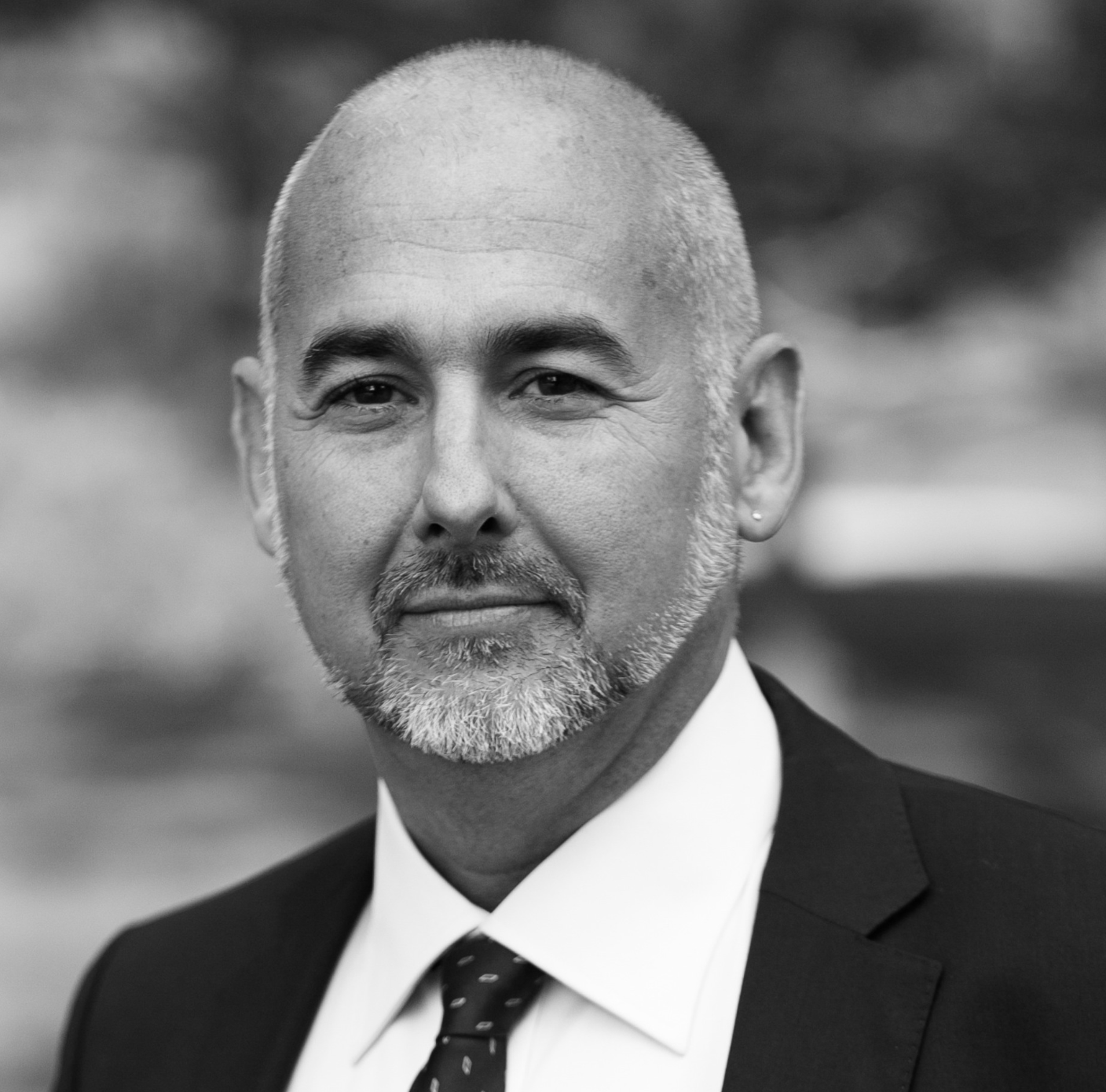
HNMAG: Are you in Toronto now?
Bill Marks: I am in Toronto for another day, and then I leave for Newfoundland.
HNMAG: That’s exciting.
Bill Marks: Well, it’s beautiful. I’m going to the west coast of the Island.
HNMAG: That’ll be something. Are you originally from Toronto?
Bill Marks: I am, yes.
HNMAG: How did you get into film and television?
Bill Marks: Oh, I worked on my first movie in 1978. It was a tax shelter movie called Cinofrenic. It was a psychological horror film made and shot on 16mm in the tax shelter days.
I worked on that and a couple other movies in the late 70s, as a teenager. I’m not that old, but I got the job because I had a car.
HNMAG: Yeah?
Bill Marks: Purely why I was hired. All through the 80s and into the early 90s I published comic books. My company was Vortex Comics. It was one of the larger independent comic book publishers in North America, certainly for a while the largest in Canada. We worked with artists and writers all over the world, but a lot of key Canadian talent got their start at Vortex Comics.
HNMAG: How did Vortex Comics become Vortex Media?
Bill Marks: Vortex Comics became Vortex Media in the early 80s. I had options of film rights to our Mr. X comic book to a guy named Jack Epps Jr., who wrote the first Top Gun movie. I made a lot of contacts in LA, and then when the comic book business became untenable financially, the comic book stores were all going out of business, and even Marvel went bankrupt, and all the distributors went bankrupt, so I needed to find something new to do. I know a few people in the movie business, and I have all intellectual property that we either own or Control.
I made a transition in their early 90s into producing movies. I went to the Canadian Film Centre (CFC), and produced several short films there, and then elsewhere, and then stepped out into the business. I started line producing some of the lower-budget action movies with figures like Roddy Piper. I got lucky to have some mentorship from two wonderful people with similar last names that aren’t related to each other, Jeff Pollock and Dale Pollock. Dale Pollock was the head of A&M Films, which was a big force back in the day, and I worked with Dale on a movie called Mrs. Winterborne, starring Brendan Fraser, Ricky Lake, Shirley McLean. Richard Benjamin directed. Later I worked with Jeff Pollock on the movie Booty Call.
I was very fortunate. I had worked with another producer named Donald Zuckerman. We developed the movie Casino Jack together.
One of our largest ones was Forsaken with Donald and Kiefer Sutherland, Demi Moore and Brian Cox. One of the great movies I’m really proud to have produced. We even had a gala at TIFF.
HNMAG: Congratulations.
Bill Marks: That helped us create a mini studio in Canada, where, unlike most of the other people in the business, we identify material that we think has value in the marketplace. We finance it fully with our own resources, produce the films, and then take them out to market. We’ve probably made about fifty films this way in the last six years.
HNMAG: That’s a lot.
Bill Marks: Now we have these two big projects happening,
The Betrayers, which is David Bezmozgis’ third film as a director. The book was shortlisted for the Giller Prize, and David’s been shortlisted for the Governor General’s Award a couple of times, for books like Natasha. I also produced the movie, Natasha.
HNMAG: You had a relationship with David already.
Bill Marks: I actually line-produced his first film, which was called Victoria Day. We’ve been close friends ever since, and have been working on The Betrayers for nine years.
We started on The Betrayers even before the Russians illegally annexed Crimea.
After the Russians invaded the first time, we were going to shoot just outside of Odessa.
HNMAG: Of course, you couldn’t do that.
Bill Marks: It was a Canada-Ukraine co-production treaty that hadn’t been signed yet, but we knew it was imminent. So we were going to shoot largely in the Odessa area until the full scale invasion made that impossible.
HNMAG: The Italian coast was really beautiful. It was probably even nicer where you shot than the actual place.
Bill Marks: We were lucky that the Adriatic coast of Italy really felt like we were in Crimea.
David had spent a lot of time in Crimea in 2012 researching the book. He had a very good sense of what he wanted the movie to look like. Working with our Ukrainian co-producer for the treaty co-production. Since we, were unable to shoot anywhere in Ukraine.
HNMAG: No, it’s not possible in a war zone.
Bill Marks: It was a very complicated financing structure. Logistically very difficult. We got tremendous support from the Canadian Media Fund for the project. We could not have made this movie without them.
HNMAG: It’s a very unique and specific cultural identity in the movie. Russian and Ukrainian Jewish refugees who made a life for themselves in Israel.
Bill Marks: I don’t think people understand today what it was like to be a refusnik, though if you read David’s book “The free world”, it gives you a little window into it. The minute one member of your family said I wanted to leave the Soviet Union, immigrate to Israel, or anywhere else. Every member of your family was fired from their job. You lost rights to your apartments and any privileges you might have had that were tied to, you, your appointment or your membership in the Communist Party, or any of these things. One member of your family says, I’m not happy, and the whole family is punished. Then they don’t allow you to leave the Soviet Union for a few years. They make you stay there and suffer with no job and no money and no housing. They take away any government awards you’ve had, medals your ancestors might have won fighting in the Great Patriotic War. When you come to Canada as a refusnik, which David’s parents did, it’s an unimaginable sacrifice.
HNMAG: We had a conversation with Tim Doiron about Little Lorraine, which was at TIFF last year. Kaelen Ohm was great in that, but of course she, she was a completely different character. The specific accent for a character who grew up in Kyiv, then moved to Israel and lived for years in Israel with her family. That is a very unique and challenging accent. What went into that?
Bill Marks: What went into that was a fantastic actress, who is such a gifted performer. We were fortunate that she had worked with the producers of Fauda as well on another project, and had some understanding of the dialect that was needed. None of the actors grew up in Ukraine or grew up in the Soviet Union. Our principal leads were just really gifted performers who were able to study, understand, and learn how to have these authentic voices.
HNMAG: That was really great. There’s one scene in the jewelry store where they’re talking about the price, and Baruch mentions what it would be in dollars. Was the point of that for US and Canadian audiences to understand the value?
Bill Marks: Yes, we were mindful of who we are making this film for.
There was a big debate while we were preparing to make The Betrayers as to what language it would be filmed in.
HNMAG: In reality, characters in Yalta will most likely be speaking Russian and Hebrew in Israel.
Bill Marks: Do we make it a multilingual film? Do we do it entirely in Russian? I don’t think we want to make a Russian language film at this point in history.
We know English is the universal language of the moment. We made the decision to make the film in English because it’s a story that’s important to be seen and understood, and embraced by audiences worldwide, and we felt that making the film in English was going to give it the greatest opportunity to find the widest audience.
HNMAG: For sure.
Bill Marks: Every artist wants an audience. You can make artistically perfect work but if no one sees it, it’s lost.
HNMAG: You’ve done a lot of work on The Trailer Park Boys, which is very Canadian, and there seems to be a lot more momentum for film and television set in Canada. Did you see that trend continuing?
Bill Marks: Oh, absolutely, absolutely. I will not twist your ear too much about another subject, but I have a TV series that I’m making in Windsor, Ontario right now,
HNMAG: Which is technically South of Detroit.
Bill Marks: It’s in the Walkerville neighborhood of Windsor. The show is called Walkerville. It’s set in Canada about Canadian characters telling Canadian stories. This is the future, not just because of Heated Rivalry. Look at Michael Dowes’ work especially his new film, The Stunt Driver.
We have so many great Canadian stories to tell.
HNMAG: A hilarious biopic starring Jay Baruchel as Ken Carter, the Mad Canadian stunt car driver. He has a real passion for sharing and entertaining Canadian stories.
Bill Marks: That’s where we are now. Certainly, where we are as a company is to tell Canadian stories as Canadians.
HNMAG: Is there anyone who was monumental if making The Betrayers an excellent movie?
Bill Marks: Volodymyr Yatsenko, who’s our co-producer, and his wife,
Anna. Volodymyr has been in the Ukrainian army fighting for the last eleven years.He just retired about two months ago, but he has been an active participant, and during that time, he has produced seven films, two of which have been at TIFF.
HNMAG: Great.
Bill Marks: What a joy it was to work with a talented, committed, patriotic individual, and that gets right back around to the notion of being working with talented, committed, patriotic Canadians as well.
Bill Marks is a prolific and talented producer. He has made a large variety of movies and TV shows, mostly from his home base in Toronto. The Betrayers is an wonderful and entertaining movie that deals with with loyalty, trust, nationality and informs the audience on some complex issues without preaching. It’s worthwhile seeing. Now we can’t wait to find out how Bill’s work in Windsor will turn out. Based on his knowledge and track record, it should be groundbreaking.