


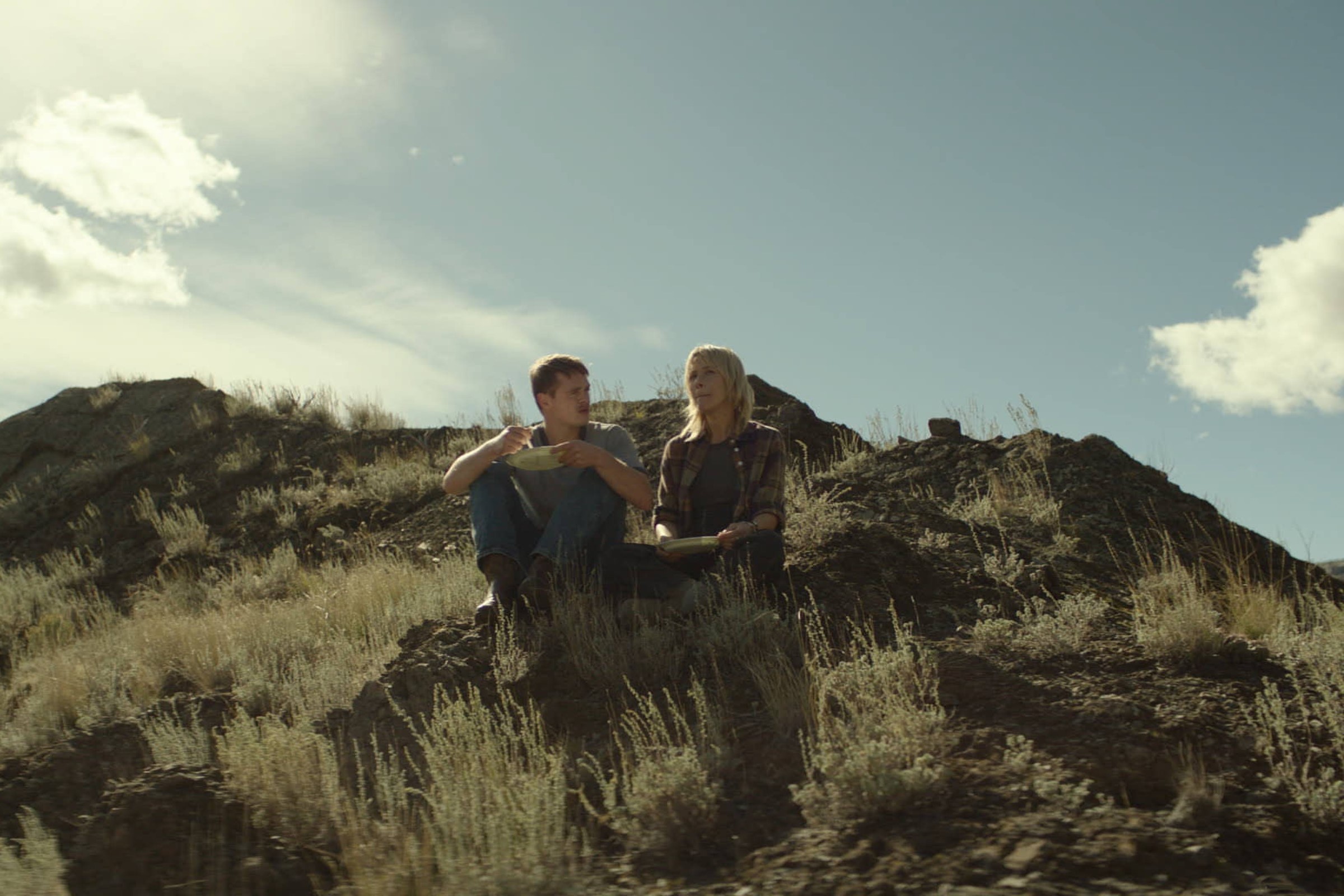
In the fictional desert town of Mooncrest, Lunar Sway finds its characters surrounded by heat, isolation, eccentricity, and the possibility of unexpected connection. In reality, however, Nick Butler’s 2026 Canadian feature began far from a conventional studio setting, with production taking place across British Columbia’s Thompson-Nicola region in September 2024.
Supported by Telefilm Canada and the Canada Council for the Arts, the independently produced film went from a regional shoot to Locarno Pro First Look, where it received two industry awards, before making its world premiere at BFI Flare in London in 2026.
Subsequent festival selections and international distribution agreements have extended its reach beyond Canada. Lunar Sway offers a revealing case study in how public support, regional filmmaking, festival exposure, and international distribution can give a distinctly Canadian independent film a wider audience.
Inside Mooncrest: Queer Comedy, Family Secrets, and Belonging
At the centre of Lunar Sway is Cliff (Noah Parker), an eccentric young man living in Mooncrest whose search for love and connection takes an unexpected turn when Marg (Liza Weil) appears and claims to be his estranged birth mother. Their reunion draws Cliff into a world of family secrets, questionable decisions, and unpredictable encounters. Douglas Smith, Grace Glowicki, and Kaden Connors round out the principal cast.
Written and directed by Butler, the film combines dark comedy with queer coming-of-age themes, romantic uncertainty, and an unconventional take on family relationships. Its fictional desert setting gives the story an unusual visual identity, while its offbeat characters place misfits and outsiders at the centre of the narrative.
BFI’s programme describes Mooncrest as a town of “Lynchian proportions,” a reference that captures the film’s surreal atmosphere without reducing it to a straightforward genre exercise.
The film’s selections at BFI Flare and Inside Out also place it within contemporary LGBTQ+ cinema. Rather than treating its queer perspective as a separate talking point, the article can explore how humour, longing, and complicated relationships shape the characters’ search for belonging.
How British Columbia Became Mooncrest
Although Lunar Sway unfolds in a fictional desert town, its setting was created across real communities in British Columbia. Filmed in September 2024, the production used locations in Cache Creek, Ashcroft, Spences Bridge, and Savona, with additional filming in Kelowna. Existing businesses and properties, including the Oasis Hotel and Pub and the Desert Inn in Cache Creek, helped establish Mooncrest’s unusual roadside atmosphere. In Spences Bridge, locations included Vulture Garage and Baits Motel.
The choice of locations was more than a visual decision. The region’s dry landscapes, small-town streets, and roadside businesses provided a practical foundation for the film’s fictional world. By working with existing locations, the production could create a distinctive setting rooted in British Columbia rather than depending entirely on constructed studio environments.
Beyond its artistic contribution, the film also generated economic benefits for the region. According to an October 2024 report by Castanet, the $4 million production was projected by the Thompson-Nicola Film Commission to generate C$2 million in direct local spending and up to C$5 million in broader economic impact.
Although these figures were estimates made during production rather than final audited results, they highlight the project’s potential to support local businesses and create employment opportunities for regional crew members, alongside key team members from Ontario.
The figures offer a concrete illustration of how an individual film production can bring economic activity to communities outside Canada’s largest production centres, even if its longer-term regional impact remains uncertain.
Public Funding and the Independent Production Model
For an independent production such as Lunar Sway, public cultural support can be an important part of bringing an unconventional story to the screen. The film’s funding credits identify Telefilm Canada and the Canada Council for the Arts, two institutions that support different aspects of Canada’s film and arts sectors. Their involvement places the production within a broader ecosystem designed to help Canadian creative work get made and reach audiences.
The film was produced by Cloudy Pictures, with Nick Butler, Jennifer Wrede, and Lucas Meeuse serving as producers. Butler also wrote, directed, and edited the feature, giving him several key roles in shaping its final form. That combination of responsibilities reflects the hands-on approach often associated with independent filmmaking, where a relatively concentrated creative team can maintain a distinctive vision.
The available credits do not establish precisely how much each funding body contributed or how the film’s entire budget was assembled. Still, Lunar Sway illustrates how public arts support can help create space for a project whose unusual tone and subject matter might make it a less conventional commercial proposition.
The Festival Journey and International Distribution
For Lunar Sway, international visibility developed through a series of industry and festival appearances rather than a single breakthrough moment. In 2025, the film was presented at Locarno Pro First Look, an industry initiative that showcases works in progress or films nearing completion to international professionals. There, it received the Cineground Award and the Le Film Français Award. The recognition offered industry exposure, although First Look should be distinguished from a public festival premiere.
The film reached a wider festival audience in March 2026, when it had its world premiere at BFI Flare in London, the British Film Institute’s LGBTQIA+ film festival. Subsequent selections included Inside Out in Canada and the Brooklyn Film Festival in the United States. Together, these appearances placed the film before audiences and programmers in several markets while connecting it with festivals that support independent and LGBTQ+ cinema.
Distribution partnerships provided another route toward international circulation. Sales company Alief handled international sales, while distribution agreements included TLA Releasing for the United States and United Kingdom, Optimale for French-language territories, and GMfilms for Germany. These agreements indicate that the film attracted distribution partners beyond Canada, though they do not, by themselves, establish release dates, audience figures, or commercial performance.
The path illustrates how festival programming, industry recognition, and sales representation can work together to expand an independent film’s reach. For a production with an unconventional story and a relatively small creative team, that network can be an important bridge between making a film and finding audiences for it.
What the Film Can Tell Us About Regional Canadian Cinema
The journey of Lunar Sway highlights several ways Canadian independent films can build an international profile. Regional production gave the film access to distinctive landscapes and local communities, while public cultural support helped place the project within Canada’s broader creative ecosystem. Festival appearances then introduced it to audiences and industry professionals beyond its production region, with distribution partnerships creating additional opportunities for international circulation.
These elements are interconnected. A film’s setting can contribute to its visual identity, but the locations alone do not guarantee that it will reach an audience. Likewise, public funding can help a project move forward, while festival selection and sales representation can create opportunities for further exposure. Lunar Sway offers a concrete example of these mechanisms operating together, from filming in British Columbia to screenings in international festival settings.
The film also illustrates the value of regional filmmaking beyond Canada’s largest production hubs. Spending on accommodation, services, locations, and crew can bring activity to smaller communities, while local landscapes and businesses become part of a film’s identity. The scale and lasting effects of those benefits vary by production, however, and should not be overstated.
Ultimately, Lunar Sway is best understood as one case study rather than proof that every independent Canadian film can follow the same route. Its trajectory demonstrates the possibilities created by combining a distinct creative vision with institutional support, festival exposure, and distribution relationships.
The Limits of the Success Story
Despite its festival recognition and distribution agreements, Lunar Sway’s longer-term commercial performance remains difficult to assess from publicly available information. Awards, festival selections, and deals with international distributors are meaningful milestones, but they do not automatically translate into large audiences, profitability, or sustained commercial success.
The reported production budget and the projected regional spending figures also require context. The estimates published during filming provide a useful indication of the production’s anticipated economic footprint, but they should not be treated as verified final expenditure or proof of lasting economic benefits for the region.
Similarly, distribution agreements indicate that partners have committed to handling the film in specified markets; they do not confirm that the film has been released everywhere covered by those agreements or reveal how it has performed with viewers.
These distinctions matter when evaluating independent cinema. Lunar Sway demonstrates a route toward international visibility, but a fuller assessment would require reliable release information, audience data, and financial results that are not established by festival and industry announcements alone.
Wrapping Up
Lunar Sway demonstrates how a Canadian independent film can build an international profile without losing the distinctive qualities that set it apart.
By combining British Columbia’s landscapes, public cultural support, festival recognition, and distribution partnerships, Nick Butler’s offbeat comedy has moved from regional production toward a wider international audience. Its journey also highlights the contribution that smaller communities can make to Canadian filmmaking, both as production locations and as participants in the local economic activity surrounding a shoot.
Whether the film achieves lasting commercial success remains to be seen. Yet its progress offers a valuable example of how creative ambition and industry support can create opportunities for independent work to travel beyond its origins.
For Lunar Sway, the road from Mooncrest to the international festival circuit is more than a production story; it is a reminder that distinctly local filmmaking can find a place in a much larger cultural conversation.