


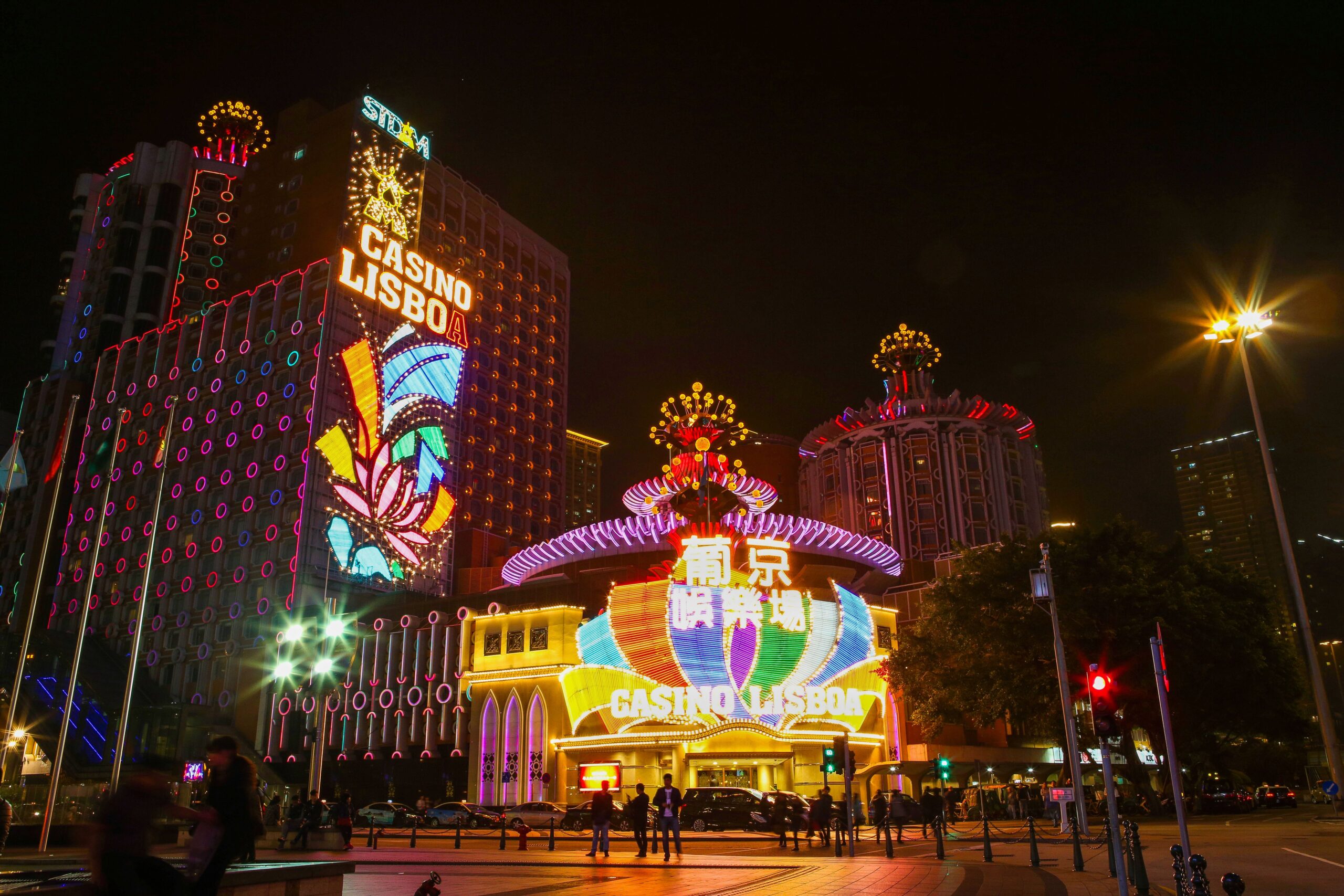
Some settings never seem to leave the screen. Courtrooms, police stations and newsrooms remain useful because audiences understand their rules almost immediately. Casinos belong to the same group but arrive with far more color.
Their commercial record is difficult to ignore. Steven Soderbergh’s Ocean’s Eleven earned approximately US$450.7 million worldwide against a reported US$85 million budget. The four modern Ocean’s films have collectively grossed more than US$1.4 billion, according to box-office figures for the franchise.
A roulette table does not guarantee a hit, of course. What those numbers demonstrate is that casino stories can comfortably support ensemble filmmaking, crime, comedy and elaborate visual storytelling.
One Building, Several Film Sets
A casino resort gives a production several environments without requiring the story to travel far. The gaming floor handles crowds and spectacle. Private salons create controlled spaces for dialogue. Security rooms provide surveillance imagery, while restaurants, hotel suites and service corridors allow the tone to change without abandoning the building.
Every company move consumes time. Finding several looks inside one property can therefore simplify a demanding schedule. The challenge is making those spaces feel like parts of one institution rather than unrelated rooms decorated with casino props.
Production design carries much of that responsibility. As this feature on film set design and real-world inspiration explains, locations communicate through architecture, color and carefully selected objects. Martin Scorsese’s Casino repeatedly moves from the polished gaming floor into offices, count rooms and service areas. Costume, music and rapid editing turn the building into a functioning system whose public and private sides look deliberately different.
Ocean’s Eleven treats the casino as narrative machinery. Entrances, elevators, cameras and vaults form a spatial puzzle. The audience must understand the building because the heist depends on moving through it. The croupier takes the opposite route, restricting attention to repeated procedures, formal clothes and carefully arranged tables. It proves that casino cinema does not require vast crowds or explosive action. A deck of cards, a fixed routine and controlled framing can carry a scene.
The Casino Story Has Left the Gaming Floor
A contemporary casino story may begin at a table, but it can now move through a phone, payment screen, or identity check. That gives writers and production teams a different set of details to research.
Writers can consult Casino.org Canada for current information about provincial frameworks, game terminology, payment methods and online casino formats when developing a contemporary Canadian setting. These details do not require an exposition-heavy scene, but they can stop a Canadian screenplay from combining rules or technologies that would not plausibly coexist.
The physical casino is now only part of the picture. Ontario’s competitive regulated iGaming market recorded $82.7 billion in wagers during 2024–25, with casino games accounting for approximately $69.7 billion, according to iGaming Ontario’s financial statements. Wagers represent betting turnover rather than player losses.
For directors, digital play creates an immediate visual problem. A person tapping a phone lacks the movement and depth of a crowded gaming floor. Messages, reflections, sound cues and cross-cutting can connect the device to the surrounding action without leaving the camera fixed on an interface. The details also need to ring true. Payment methods change, provincial systems differ and online platforms evolve quickly. An obsolete process can date a film as surely as an old phone model.
Why the Setting Works in Canadian Production
Canada has the crews and infrastructure required for location-heavy screen work. The Canadian Media Producers Association’s Profile 2025 reported $10.2 billion in film and television production volume during 2024–25, supporting approximately 181,000 jobs.
Ontario recorded about $2.56 billion in production spending during 2024, according to Ontario Creates. Experienced art departments, location teams and crews capable of managing complex ensemble scenes give producers options beyond building a generic imitation of Las Vegas. Toronto can provide dense urban exteriors and polished interiors. Montreal brings different architecture and visual history. Niagara combines tourism infrastructure with border-town geography, older motels and a landscape shaped by visitors.
The Last Casino adapts familiar card-game and group-planning elements to Quebec locations and university spaces. It belongs to the same broad tradition as an American casino caper, but its surroundings give the story a separate identity. Niagara Motel finds value in the wider geography of a casino destination. Commercial spectacle sits beside roads, motels and ordinary workplaces. In Owning Mahowny, restrained offices and institutional interiors carry more visual weight than resort glamour. Neither production needs a fake stretch of the Las Vegas Strip to make its setting legible.
Canadian productions can also benefit from the physical efficiency of casino and resort complexes. A single property may provide a gaming floor, restaurant, hotel, office, loading area and security room. Careful design makes those areas feel distinct while reducing the number of company moves.
The Location Keeps Evolving
Casino films last because the setting performs several jobs at once. It gives writers recognizable rules, cinematographers reflective surfaces and production designers a clear division between public spectacle and hidden infrastructure.
Scorsese used the casino as an institution. Soderbergh made it a machine to navigate. Canadian productions have reshaped the same visual vocabulary through regional architecture and digital platforms are now pushing the story beyond the building.
Filmmakers are left with two connected spaces: the crowded physical floor and the quieter screen carried in a pocket. The tension between them offers casino cinema somewhere new to go.