


You have the financing. You have the location agreements. You have a DP you have wanted to work with for three years, and she lives in Los Angeles.
Then someone on the production side asks the question nobody wants to deal with at that stage: can she actually work on this shoot, legally, and what does that take?
For a lot of Canadian independent producers this is the first real encounter with immigration paperwork, and it usually arrives late, when the schedule is already locked.
The C14 LMIA exemption for film and television productions
The default assumption is that hiring a foreign worker in Canada means a Labour Market Impact Assessment, which is slow and involves proving no Canadian was available for the role.
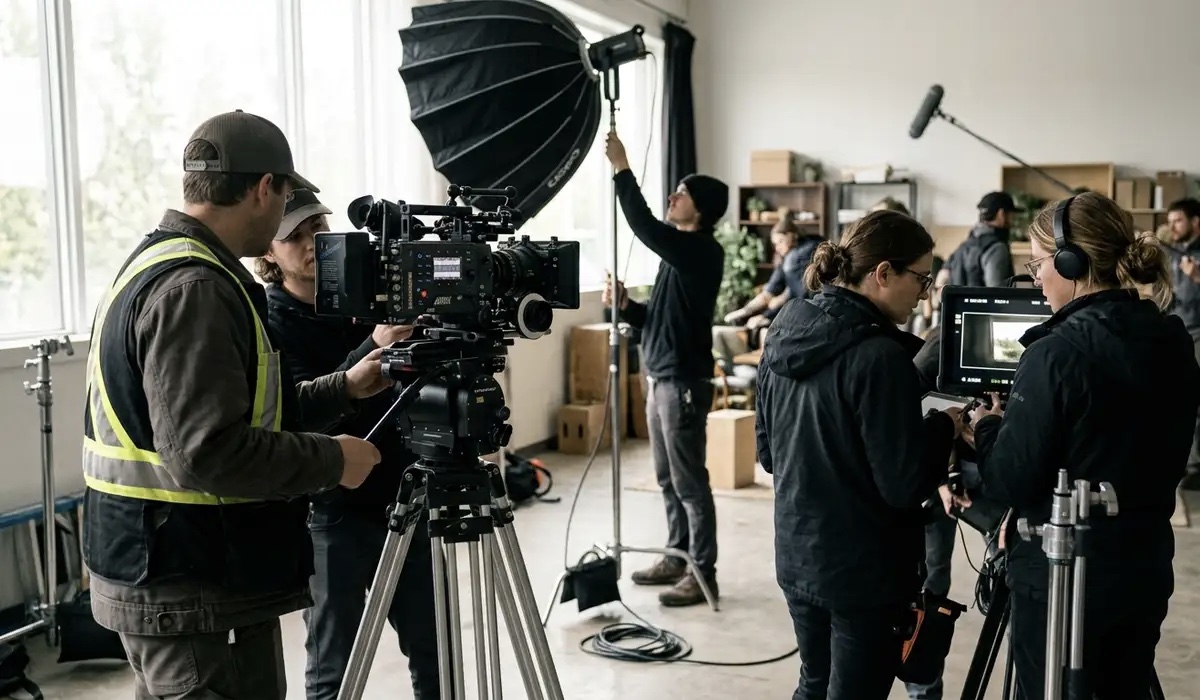
Film and television have their own door. Under exemption code C14, a foreign national whose position is essential to a TV or film production can get a work permit without an LMIA, on the basis that the production creates significant economic benefit for Canadians. It applies to productions shot in Canada whether they are Canadian or foreign, and whether they are filmed here entirely or only in part.
IRCC refreshed its guidance on this category in December 2025, clarifying how applications are assessed and what evidence officers expect. If your last experience with this was a few years ago, the details have moved.
The category generally targets high wage and unionized positions. Roles that may qualify include actors, directors, stunt performers, lighting specialists and choreographers.
What documents a C14 work permit application needs
Two documents do most of the work.
The first is a letter from the employer confirming that this specific person and this specific position are essential to the production, and that the production will deliver significant economic benefit to Canada. In practice that means detailing Canadian jobs created, budget spent in Canada, and confirming the project qualifies for federal, provincial or territorial tax credits or funding.
The second is a letter of no objection from the relevant union or guild, confirming the work falls under a collective agreement and that they have no objection to this person in this role for this company. It should name the production, name the applicant, and be signed and dated by a senior representative.
There is also process on the employer side. An Offer of Employment goes through the IRCC Employer Portal, with a compliance fee, before the individual submits a work permit application. That sequence matters. People routinely try to do it the other way around.
Where independent productions get caught: pre-production and post
Here is the part that surprises people, and it is the reason this article exists.
C14 generally does not cover pre-production or post-production work. Storyboarding, visual effects, sound editing and film editing are specifically listed as roles that normally fall outside the category, on the reasoning that this work is not essential to the on-location production stage in Canada and could be done elsewhere.
Think about what that means for how independent projects are actually staffed. The bring-in-a-specialist instinct is often strongest exactly in post, where a small production is most likely to need someone the domestic market cannot supply on the budget available. That is the part the exemption does not stretch to cover.
There is also a hard geographic requirement. The project has to be filmed in Canada, in whole or in part. A production that is not shot on Canadian soil is generally seen as failing the significant benefit test.
And the tax credit line is not decorative. It is one of the main ways a production evidences economic benefit. A project that does not qualify for credits or funding has a materially harder case to make, which tends to hit smaller and unconventional productions hardest.
The timing problem: permit validity versus a moving schedule
Permit validity is typically tied to the expected end of production, or the expiry of the applicant’s travel document, whichever comes first.
That sounds tidy until the schedule moves, which it always does. Reshoots, weather, a location falling through, a financing gap that pushes principal photography by six weeks. The permit does not stretch to accommodate any of that on its own.
Productions that handle this well sort the immigration side when they lock the key creative hires, not when they lock the schedule. Toronto firms like SEP Immigration deal with this constantly. The paperwork is manageable. The compressed timeline is what turns it into a crisis.
Worth knowing before you need it
None of this should discourage anyone from hiring the right person for a project.
The point is that the system has a specific door for this industry, that door has clear edges, and the edges are not where most people assume. Production stage is inside. Post is largely outside. Shot in Canada is required. Tax credit eligibility carries real weight in the argument.
Knowing that before you make an offer is considerably cheaper than finding out after.