


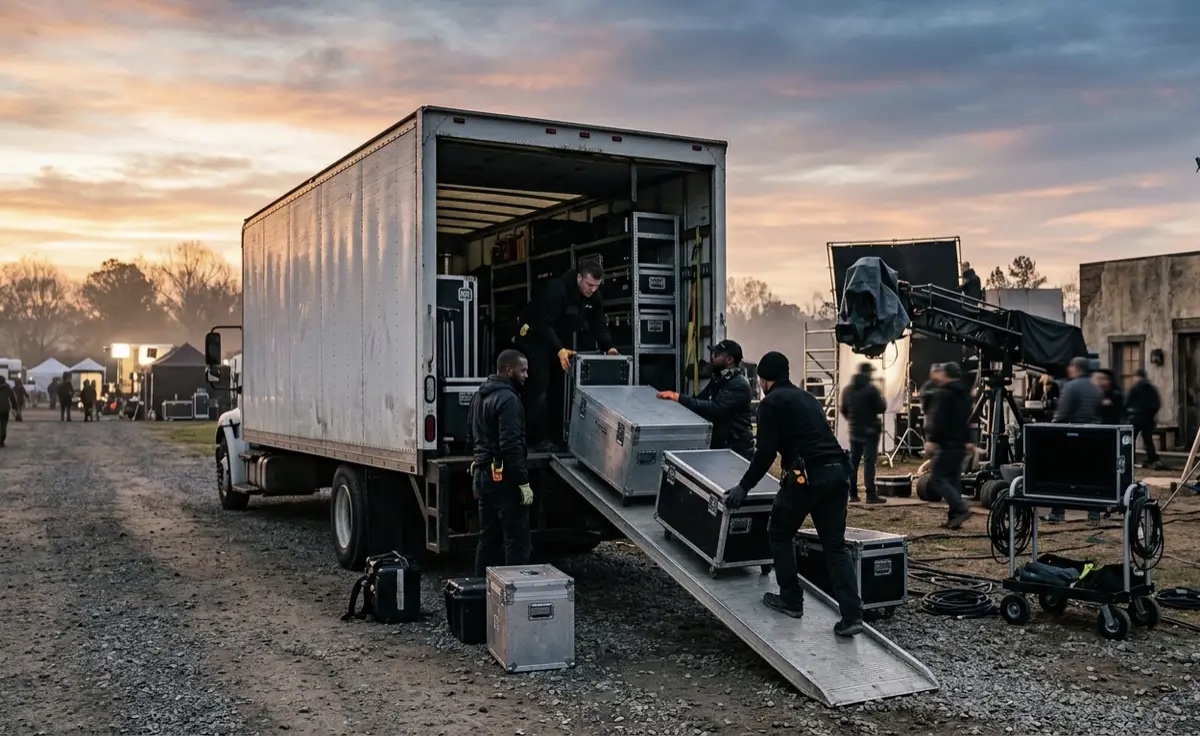
Canada’s film and television industry runs on more than cameras and talent. Behind every shoot, there is a fleet of trucks hauling grip equipment, lighting rigs, generators, wardrobe, and entire mobile sets from one location to the next, often across provinces and against tight production schedules. Production coordinators rarely think about the trucking industry until something goes wrong with it, yet the reliability of that network is quietly one of the factors that determines whether a shoot day runs on time.
The trucking industry that supports this movement is going through its own transformation. As transportation demands continue to grow across Canada, innovation is becoming a key factor in creating a more reliable and efficient supply chain, one that productions of every size end up depending on.
The Digital Transformation of Production Logistics
Technology has introduced new possibilities for the fleets that keep film production moving. Modern trucking companies now rely on digital tools that help improve performance, reduce operating costs, and increase safety on the road, which matters when a production schedule has no room for delay.
Fleet management systems allow companies to monitor vehicle locations, analyze driving patterns, and optimize routes. These technologies help businesses make better decisions while improving delivery efficiency. For a production coordinator waiting on a truck full of equipment for an early call time, knowing exactly where that truck is and when it will arrive is not a convenience. It is the difference between a shoot day that starts on schedule and one that does not.
Artificial intelligence and data analytics are also becoming more common in transportation. By analyzing information collected from vehicles, companies can identify potential problems before they become major issues. This approach helps reduce unexpected downtime and improves overall fleet reliability, the kind of reliability a tight shooting window simply cannot do without.
The shift toward connected vehicles shows how technology is changing trucking from a traditional industry into a more data driven and efficient sector, something that benefits any business, film production included, that depends on equipment arriving where it needs to be.
Improving Safety and Efficiency Through Innovation
Safety has always been one of the most important priorities in the trucking industry, and it matters just as much when the cargo is an entire set build or a truck full of camera equipment that cannot easily be replaced on short notice. New technologies are helping drivers and companies create safer working environments.
Advanced driver assistance systems, improved navigation tools, and real time monitoring solutions provide valuable support for drivers. These innovations can help reduce risks, improve awareness, and make long distance transportation more manageable, particularly on the kind of multi province hauls that larger productions require.
Technology is also helping companies improve fuel efficiency. Better route planning, smarter engine systems, and improved vehicle designs allow fleets to reduce fuel consumption and lower operational expenses, savings that ripple down to the productions working within fixed budgets.
The Importance of Reliable Components in Modern Trucks
While technology continues to improve transportation, the reliability of physical vehicle components remains essential. Even the most advanced commercial vehicles depend on high quality parts to maintain performance and operate effectively, and a breakdown on the way to set is not the kind of delay a production can simply absorb.
Regular maintenance and access to dependable replacement components help prevent costly delays and extend the lifespan of heavy duty vehicles. For trucking companies, choosing reliable suppliers is an important part of keeping fleets running smoothly. This is where a resource like https://quickfitparts.com becomes relevant, since companies that specialize in commercial vehicle components help support the trucking industry by providing essential parts designed for heavy duty applications. Reliable components allow businesses to maintain their vehicles and continue delivering goods, and equipment, efficiently across Canada.
The Move Toward More Sustainable Transportation
Environmental responsibility is becoming an increasingly important topic in the transportation sector, and productions are paying closer attention to it as well. Trucking companies are exploring new ways to reduce emissions, improve fuel efficiency, and create more sustainable operations.
Technology is supporting this transition through innovations such as electric vehicles, improved engine systems, and smarter fleet management solutions. While the shift toward greener transportation will take time, continued investment in innovation is helping the industry move toward a more sustainable future.
Better maintenance practices also contribute to sustainability. Well maintained vehicles often operate more efficiently, consume fewer resources, and have longer service lives, which matters to any fleet, including the ones productions rely on indirectly every time equipment needs to move.
How Technology Is Shaping the Future of Trucking, and Production
The future of trucking in Canada will likely be defined by a combination of technology, innovation, and adaptability. As businesses face changing demands, the ability to use data, improve efficiency, and maintain reliable operations will become increasingly important, and that includes the logistics quietly running behind Canadian film and television.
Automation, artificial intelligence, and connected vehicle technologies may continue changing how transportation companies operate. However, successful trucking will always depend on the combination of advanced solutions and strong fundamentals, including skilled drivers, effective maintenance, and dependable equipment.
Technology does not replace the importance of reliable vehicles and proper maintenance. Instead, it enhances the way the industry operates, and by extension, the way the productions depending on it are able to operate as well.
Building a Stronger Future for Canada’s Transportation and Production Industries
Canada’s trucking industry is entering a new era where innovation and reliability work together. From digital fleet management to improved vehicle components, every advancement contributes to a more efficient transportation network, one that Canadian film and television productions lean on more than most viewers realize.
As technology continues to evolve, trucking companies that embrace innovation while maintaining strong operational practices will be better prepared for future challenges. For an industry where a missed delivery can mean a lost shoot day, the trucks behind the scenes matter as much as anything in front of the camera.
The road ahead for Canada’s trucking industry is shaped by progress, adaptability, and a commitment to improving how goods, and equipment, move across the country. Through the combination of modern technology and dependable solutions, the industry can continue supporting businesses, communities, and productions across Canada for years to come.