


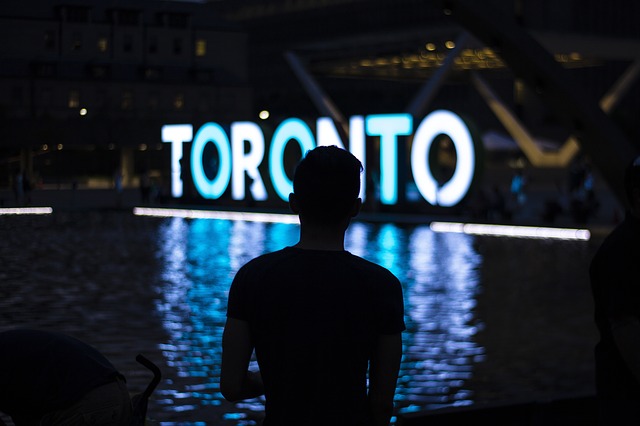
You’ve got a strong script, a cast on hold, and a street that looks “big city.” Then a buyer says the quiet part out loud: “This reads like Toronto.” That note can shrink your market fast. The fix is not luck. It’s a repeatable plan: story rules, location rules, and camera rules that stop Toronto cues (like the CN Tower or TTC marks) from slipping into frame.
Story Geography Rules That Force Clear Location Choices
Start with a hard choice: does the story take place in Toronto, a named US city, or an unnamed city? Write it down as a one-line “city label.” Then set three facts you can test on every scene: travel time, season, and day length. If a chase needs a ten-minute drive from downtown to a warehouse zone, pick districts that can match that cut pattern.
Second, lock your “no-show list” before the scout. For Canadian Cinema that aims for global buyers, the usual “no-show” items in Toronto doubles include the CN Tower sight line and transit brand marks tied to the Toronto Transit Commission (TTC).
Location Design System: Build a City Look That Is Not Toronto
Pick one “city look” and apply rules, not vibes: street width, building age, brick-to-glass ratio, and shopfront style. Then build a small “swap kit” you can reuse across blocks: street-name plates, parking sign overlays, window vinyl, and story posters for ad frames. This is how you get consistency without chasing perfect streets.
Use one rule that saves money: neutral zones do the heavy work. Parking garages, stairwells, back hallways, and generic office lobbies travel well because they carry fewer local tells.
Choose the candidate pool without bias
Don’t scout with your favourite streets first. Start with a map grid and pull options from each box: one hero street, two side streets, one lane, one roof line, one interior hub. If you only scout “cool” blocks, you’ll stack Toronto cues without notice.
Build a candidate list from three sources: municipal film office lists, private location libraries, and first-pass drives with a camera phone. Tag each option with: (1) sign density, (2) skyline risk, (3) transit risk, (4) sound risk. Anything with high transit marks or landmark lines moves to “B-roll only.”
Scout Method: Filter, Score, and Lock Locations Without Regret
Run a scorecard, not a gut call. Count visible signs per angle. If you can’t cover a sign in under 10 minutes with two crew, treat it as “post cost.” Then lock locations as a district bundle (hero street + side street + lane) so cuts feel like one city.
A practical rule: if a location needs more than three fixes per shot, replace it. You’ll lose time on set and still miss something.
Camera Plan That Avoids Toronto Cues in the Edit
Write shot bans into the plan: no wide pans on streets with sign clutter; no long lens down corridors that reveal skyline tells. Build coverage that cuts clean: hands to faces, feet to doors, cars to curb. When you need scale, use controlled blocks with clean horizons.
Also, plan “clean plates” for patchwork. A still frame with no actors can save a scene later when a logo slips in.
Art Department and Permits: Make Cover Work Legal and Fast
Cover work must be legal and reversible. Photograph every sign and ad frame before and after. Build a restore order so owners and city staff see respect. If you chase tax credits, do not treat paperwork as an afterthought: Ontario’s OFTTC requires an application to Ontario Creates for a certificate of eligibility, and productions that start principal photography after August 24, 2023, must include an on-screen acknowledgement in end credits.
Bullet checklist for set cover:
- Street name plate swaps (pre-printed)
- Poster frames: story ads only
- Vehicle plates and decals matched to the story city
- Removal plan for every cover item
Final Checks: Test “International Read” Before Picture Lock
Picture lock is the point when the cut is approved and sent to later steps, such as online edit and sound mix; late visual changes can force redo work. Before that point, run one “international read” test with people who do not live in Canada. A test screening is a preview show to gauge audience reaction, often with a survey or feedback form.
Use a strict method, not open talk:
- Prompt 1 (no hints): “Name the city.”
- Prompt 2: “List the exact items that made you sure.”
- Prompt 3: “List any words, signs, or logos you saw.”
Then build a “Toronto cue punch list” with owners and fixes:
- Landmark lines: the CN Tower is widely described as Toronto’s most distinctive landmark, so any clear sight line is a high-risk cue.
- Transit marks: the TTC brand and “TTC” text are direct Toronto cues; if they appear, plan crop, blur, cover, or patch.
- Street text: street-name plates, parking signs, ad panels, car plates.
Last, re-check the full film with one rule: no mixed signals (Toronto cues in a film set in another city). If you must keep one local cue for story truth, keep it rare, clean, and consistent.
Summary
The “Too Toronto” note is avoidable when you treat a place as a design system. Lock a clear city label, then block known Toronto cues (landmarks and TTC marks), pick a district bundle that cuts as one city, and use a scorecard that counts signs per angle. Before picture lock, run a test screening with non-Canadian viewers and turn their feedback into a punch list of exact frame fixes.