
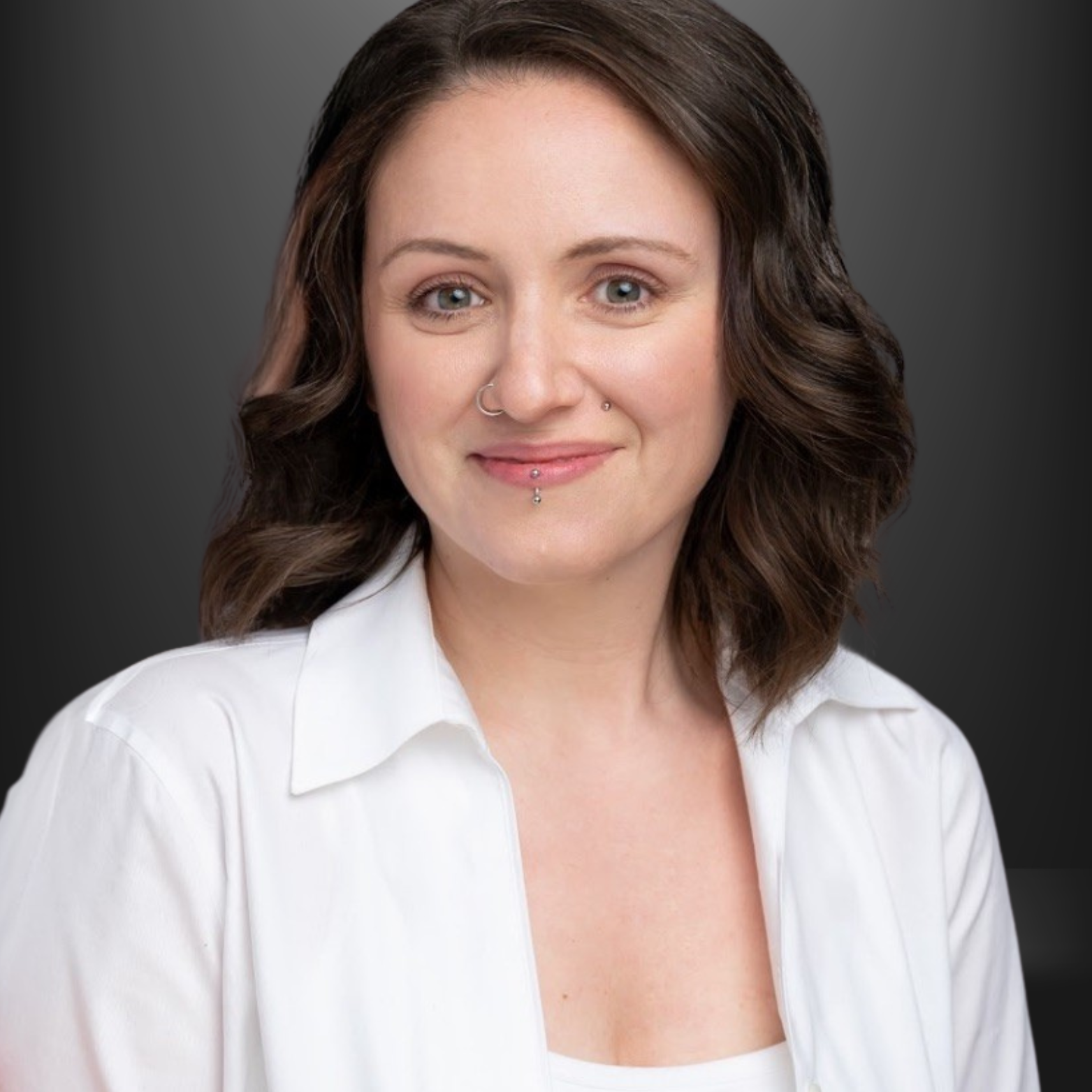
We all know how in recent days, weeks, months, and well, even years, Verticals have been on the rise in the Vancouver film industry. I have been in BG for a signifcant amount of them and while they’re not the same as being BG in a feature or TV series, the moments have been well, interesting. Maybe a bit frustrating, maybe somewhat strenuous, but they make for great stories to discuss in Instagram posts, get-togethers, and dinner table discussions. Now, for those who are not 100% familiar with verticals (I can’t imagine why), they started being made a decade ago. Mostly in Asia, until Chinese laws changed, outlawing certain content in both film and TV. As someone who is familiar with the media laws in China, I understand somewhat. When I was in a feature that got put on hiatus, there was some Chinese funding for production, and as such, we would’ve had to follow specific rules of no hugging from a certain angle. Lately, new laws prohibit showing the consumption of western food, women wearing pants, and even the portrayal of sex in a ‘favourable’ way. China still had plenty of studio space available for usage so they flew under the government’s radar and made them in the format of those social media reels. Until the government cracked down hard on the production companies and wanted to benefit from them since they were making money. Then, production companies had to make their way out of China to North America and other places. Before we knew it, these verticals started recruiting the local actors providing them with some income, but things for the film industry got more twisted and even a bit downhill thanks to all these verticals. I’m in favour of verticals personally because I like the interesting new format, and I had once been upgraded from BG to speaking role in one called “The CEO’s Wife stole her Life” and I was also pretty prominent in “Return of the Alpha’s Unclaimed Queen” and a little bit noticeable thanks to my typical quirks/expressions in some other verticals with titles that are too long. While I was okay with them, as well as the other actors I met on set, I heard complaints, saw lawsuits being filed, and even followed social media posts where Vertical production companies got called out for only offering an honourarium if you were BG on them for 8+ hours. There have been some other issues and complaints too, but we’ll get into those momentarily, because verticals are looking to be improved and progress is positive, all thanks to Monika Dalman, and her organization the Vertical Short Film and Short Series Alliance, or in its abbreviated format, VFSSA. Now, I have been wanting to tackle verticals for 6 months now since I met a producer on the set of ‘My Sunset Love Affair with the Billionaire CEO’ and informed them of this website hoping to someday schedule an interview and talk about this exciting new format. They never reached out. Later on, the production company dug a hole for itself and has been getting itself even deeper ever since. But enough of that, we gotta talk to the Queen of Vertical productions herself, Monika Dalman as she steers these new series vertically upward to success. I meant to write that. Let’s increase our knowledge about verticals to new heights and take on this new format. This will be full of information for all those curious, but it won’t hurt like a slap to the face. It’ll be just as refreshing as discovering you’re safe with the CEO when he confesses his feelings to you. Of course, I meant to write that too. Here’s our interview with Monika Dalman, and why she is validating verticals valiantly thanks to VFSSA.
HNMAG: So, from what I’ve heard and experienced myself, Verticals have caused some controversy. But you are flipping that. How so?
Monika Dalman: So, I’m doing a number of things to make them more professional. I started the VFSSA (Vertical Film and Short Series Alliance) in June. It’s Andy Chu, Alicia Read, Sammie Astaneh, and myself. We’re doing a number of things, we’re trying to connect with as many of the service production companies, production companies, crew, actors, platforms. Anyone involved to hear about people’s experiences and then based on the experiences on that they had if there are ways that we can support them in improving conditions or filming process. We do that, we’ve also developed something called the V Seal, which is in development now but basically that is to be an industry approved seal for vertical productions. Because even though there are union agreements in place, it’s very unlikely that even I would say that 20% of verticals would ever be unionized. They do not rely on A-List talent being cast or a star system so it’s not necessary for them in most situations to unionize. Of course, there are some actors who I think if they were very successful would want to do verticals prior to becoming union. That might be the biggest motivator, it would be to continue doing verticals with those actors even though they’ve had to join the union. But we’re focusing on the exact steps for a company to get the V Seal. What we’re looking at is if there’s documented process, prints, if the companies are complying with any guild obligations they may have. If there is clear evidence that they’re watching safety, policies on safety and harassment, looking into their payment practices to see if their transparent. Just transparency in general on everything. Hopefully through that we can get more of a bird’s eye view as to what makes that a safer set vs more unprofessional set, I guess? We have an idea, verticals are not different than a movie of the week set in many many ways. We already have and know what makes those sets safer, so it’s sort of following that same vein.
HNMAG: How has the process for the V Seal been coming along? Will we being it soon or is it going to take a little longer?
Monika Dalman: We want to make sure that we cover all of our bases, and one of the challenges is… let’s say that we decide some of the criteria is that they’re registered with WorkSafe, or they have X insurance. We don’t want to just take people at their word because we know especially in the Vertical world, it wouldn’t be beyond some producers to lie. Once we have our full list of information that we want to use, then we want to reach out to WorkSafe and say “Hey, this is what we’re doing. Is there a number we can call, or a release we can get people to sign so we can just call you up when we get an application and say ‘is this real?’ Basically”. We don’t want it to be something easy to get, just for people that are going through motions, so we want to make sure it really means something. We want it to be accessible, so if it costs more money for us to check, we don’t want barriers in place. We want every company that’s actually doing everything right can accessibly get the V Seal. We want it on the RIGHT productions.
HNMAG: There’s been lots of issues that people have complained about regarding productions and the production companies. Would you say these issues were caused by a lack of understanding film industry regulations in Canada or is it just because there are some people who were corrupt?
Monika Dalman: Well, I would a little combination of the two things. The vast majority of Verticals when they came to Vancouver were not made by filmmakers. If you’re coming from a country and you know a language, and then you have to pick up and move to another country and the companies are going to want to pair with that new country. There are going to be people who speak your language, who might be from your country, right? In Richmond, there are dozens of small media companies. If you go on Amazon and you’re buying a tent for example, there might be a video of somebody putting the tent up and those companies make those videos. They throw the gig up on Craigslist, Facebook, or whatever and then you might get a non-union actor or someone who managed to have seen it and think “I’ll get a couple hundred dollars”. It’s pretty low-key, you get your cash and never think about it again. But those companies were never doing narrative projects that expanded into multi-day or with talent agents or dealing with complex narratives. I think that when they were contacted to do THESE projects, at first they’ll say yes to the contract. But, I don’t think they were quite prepared for what that really entailed so I do think that a lot of the trouble was because they didn’t really have experience or know how to deal with this type of project. I do know also from experience of my own communicating with these companies there were MANY people that were plotting. Some I think got to the point where it was very much willful ignorance, because it does cost more money to get water or take a 10 day shoot and make it longer or whatever. It costs more money to pay people, have better food, and do a lot of things. Insurance costs money so I think that they didn’t necessarily want to spend the extra money.
HNMAG: Recently one production company you used to work with took a turn for the worse not agreeing to do overtime pay. Was that one among many reasons you departed?
Monika Dalman: Yeah, there have been a few clients that I have stopped working with because of reasons like that. I’m pretty aware that a lot of these production companies are new, and that when they reach out to me I will always show them my contract and if they’re okay with my requirements because my contract has a lot in it about following employment laws. Any local laws we have to follow because I’m not going to hire people for less than minimum wage or the production is not insured because they’re just not comfortable doing that. I think some companies are undercutting companies so badly that there’s pressure on the companies that are competing for the same contracts to fall in the pattern of doing the same. A lot of times, I think the big issue is obviously in the film industry we do a lot of shorts, a lot of projects that are not going to profit. When you’re doing a project like that, you might do it for an honourarium. But a vertical is in a lot of ways, a commercial project and it’s not the same. You don’t hire somebody to do a commercial project with an honourarium. If you’re a business, you’re making a product that you were hired to produce and you’re a company that’s operating a business and have to pay people according to employment laws. There’s started to be some pushback with some companies or they heard this company does this so why can’t they do that to save money, and I’m just like “You can do what you want to do, but I’m not going to send actors to you if I know that you’re breaking the law” because I have to maintain reputations with these actors and the Asians in the city and I don’t just cast verticals. I cast other projects also and so I want to make sure that everyone I’m sending talent to is following all the rules.
With the news of the V Seal, and which companies will get it, it’ll soon be easy to tell which ones to trust. Because even though I had success with that one reputable company many times, it recently took a wrong turn, as mentioned in the opening. Not just with an honourarium pay, but a whole day of unprofessionalism as I witnessed a most disrespectful method of work I haven’t seen since one particular film project I worked on in my days attending the Art Institute. Taking place at a church with a cemetery in the Surrey area, I watched as crewmembers and even cast tracked atop graves, stepped over headstones, and obviously didn’t know the etiquette of shooting films on sacred grounds, which is why most film studios make their own fake graveyards. I won’t be naming that production company here out of fear of getting blacklisted (as if I haven’t been already with what I know), but I know things are getting worse and people don’t know how these production companies stay in business. I had to dwell deeper into that matter.
HNMAG: And lately these issues have escalated given some of their more unorthodox practices these past few months. Do you sense companies that don’t follow laws may be soon shut down?
Monika Dalman: Well, I do know for sure, I’ve met with networks and they’re not interested in working for companies that are like that. Another piece of information that I think is important is that for the past two-ish years, a lot of the platforms were newer in North America and so a big piece of what they were doing is trying to fill their catalogues. A lot of the projects were getting made by smaller companies that were cutting a lot of corners. If you have 5 really good shows on a platform, people who watch will say “Hey I want to watch more of these” and your catalogue doesn’t have any more they’ll go to another platform and if that platform has more options they might stay there and not even go back. The big goal in the beginning was to get as many shows in the catalogue as possible. You need 100-200 in order to actually have an effective business as a vertical platform so I’ve been told by some of these platforms that a lot of the smaller companies that were making these really tiny shows were never intended to be the flagship shows. The companies that were bigger and getting the 8-10 day shows, if they were 6 days shows and did well despite the script or whatever, they would give those companies the bigger shows. Right now, we are nearing market saturation, there’s not any way to watch all the verticals right now. At one point, you could’ve watched all of them but now they’re coming out so quickly that they be done right, make sense, because higher content quality is going to get viewed over inferior content. Many of these companies actually had contracts that were expiring September 2025, and I think it has quieted down a bit in the city as people on those contracts have filmed their obligations and a few platforms have told me they’re just not going to work with them. They’re actually more interested in companies that work in film, and I think a few of the platforms would rather work with a newer company they haven’t worked with that has extensive experience in ‘Movie of the Week’ and commercial work, and has established communication in the film industry over a company that’s put out over 20 sort of content mill projects.
HNMAG: How did production companies for verticals stay in business despite all these issues, such as no WorkSafe, or delayed pay?
Monika Dalman: A lot of people were reporting them, and lot of people were voicing their concerns and I’m not sure there was a lot of punishment that was happening or thought by whoever they were reporting them to. The union’s mandate has been super helpful but the union’s mandate is not to help non-union projects so the only time they could get involved if a union actor was on the non-union set which has happened a few times. They were able to help in those cases but it’s not for lack of trying and even about a week ago UBCP had an in-person workshop that was free and for non-union talent to learn about their rights on non-union sets so I think people are circling. I’m not sure what interactions WorkSafe and employment standards have had. But I do know that when the company’s not officially registered, and they’re not signing up for things like WorkSafe, it’s a matter of how do you reach those people. How do you show up on set to check if things are okay? I think that could be part of why, but I’m not sure if there’s been any enforcement of the rules and I think that when the rules aren’t enforced, they ask themselves “why?” and “if we haven’t been required to do this would we start doing it?” I know for one company, they’d been operating for a year and a half, they hadn’t even heard of WorkSafe and they hired a pretty experienced PM to the project and she right away flagged it. She gave them a WorkSafe number but that was the first that WorkSafe had even heard of that company and so up until that point they just weren’t on the radar. Agents sometimes ask “How can I see this company’s okay?” and I’ll say “Well, contact WorkSafe, they can give you a certificate that says this company is in good standing” Then there’s that one company will always say “Look we have a WorkSafe Number” but having a number doesn’t mean you’re always in good standing, so they have money and resources, there’s really nothing keeping them from doing the right thing.
HNMAG: There’s even controversy about actors being flown from US to Canada which isn’t fair to local talent or even how there’s Canadian talent being flown to China where they’re put under serious rules to follow. What can people do to address these issues and avoid getting involved with companies who do this?
Monika Dalman: It’s pretty normal to bring up actors from the States as long as you do the proper paperwork, for a non-union project it only costs like $400 to do that. I would say if people have concerns about that, that’s a different discussion because it’s possible to bring up and get the work permit. The problem really is the companies that don’t do that, so some companies will have people come up on a tourist Visa which is not allowed but as long as they’re following the actual proper rules.
HNMAG: So production companies involved with VFSSA are the main ones to trust. How do they become part of the alliance?
Monika Dalman: Right now, you can sign up on the website to become a member. We haven’t released membership yet, but what we do is we have our mailing list. We run events, and you can come to the events, get to know us. As we go through the process of every detail, we want to make sure that we’re going to have members that share the same value as us. But we also want to make sure that we’re not including anybody based on a lack of knowledge. We don’t want to make it something where you have to be wealthy to be a member of. We’re still coming up with our process for screening out members, but in the interim we do have our mailing list.
If you want to know more about Verticals and learn about those involved, consider signing up to the newsletter today! Monika started telling me about one event involving Brianna Nordstrom who is an amazing director and has already directed a few verticals. The workshop allows about 15 people for $25 each and you can engage with Brianna while she helps you through an actual workshop.
HNMAG: And how do you help production companies for verticals to follow professional guidelines and thrive in business?
Monika Dalman: What I’ve been doing more recently is I’ve developed relationships with platforms, and I get to know their AP’s, the people at the platform who are working with service production companies and producers. Over the past few years, I’ve developed some pretty good relationships and trust with people of these exacts and if I see that there’s a company who wants to get into the space but don’t have vertical experience yet other experience and seem trustworthy, then I have been helping them get pitches together and once I feel like they’re ready to go, I connect them to the platform because I know one of the best things we can do is to kind of smoke out unethical companies by giving opportunities to companies that are.
HNMAG: So it’s recommended for companies to get more ethical practices and following professional guidelines that you offer.
Monika Dalman: Yeah. It’s very stressful to the platforms, actually as volume increases to be working with companies that are cutting a lot of corners because they really have to babysit those companies. The more projects they get, usually an EP will be assigned to a couple projects at a time and they have to screen all of the process so they have screen locations, approve clothing, casting, and everything. If a company is not doing it right, that’s way more work for them. An EP might have 3 or 4 projects at a time that they’re trying to manage and they’ve definitely expressed lately that the companies which require more handholding are really stressing them out. I feel like this is a good sign now because a lot of companies that did need a lot of handholding before, if they haven’t gotten their act together, they’re just not going to get more contracts.
HNMAG: Are production companies still auctioning off their series to Vertical apps?
Monika Dalman: There’s always going to be a little bit of that, because there are going to be smaller platforms that are looking to license more content so they have filler and whatever in their catalogue. We’re at the point where a lot of more platforms are more established, they’re very confident in their algorithm so it doesn’t make sense in most cases to license something that hits all the beats your platform knows to make money. I always say that at this point, making a project for Spec or creating an entire vertical series that you’re hoping will get licensed is not necessarily the wisest thing to do unless you’ve produced a significant number of verticals for a platform already because each platform wants what it wants. Even if your project might be really creative or maybe it’ll do well, they’re not really going to take a chance on something new. I think it was a year and a half of trying to get as much content as possible to fill catalogues and I think that’s changed now. The new stories they want are ones that they know meet and so most of the companies I’m working with now are doing coproductions with a platform directly, or they’re the distributor who has distributed so many they know what people want.
HNMAG: And you’ve been working with government and other organizations. What will this mean for production companies in the future?
Monika Dalman: Yes, we’ve been talking to provincial federal governments. We wanted to put verticals and microdramas on their radar because we attended a number of meetings at Creative BC and film commissions and I would say in half the cases they had no idea what those even were. I think a lot of that was because there was that period of time where people were working and in crew, and what they were doing to get by was working in Verticals. A lot of them were maybe in different crew unions and maybe not sure they were allowed to participate and so they needed money and did it anyway. I think it was being kept a bit quiet, but now we know from hearing from so many people that they were staying afloat because of verticals. This isn’t just crew or cast, this is vendors, so like companies that do catering, gearhouses. A number of them said they would’ve gone out of business during that time. So we thought “If this industry is thriving underground, if we brought it up and we actually tried to make BC and Canada a destination to film these, that would also put more pressure on the sets to operate more fairly and safely but also I have clients in different provinces that are able to use tax credits in their province. Because the budgets are so low, it’s not like using the tax credit is making somebody wealthy. All its doing is putting more money in the pockets of cast and crew and making the set a bit healthier or safer. Like in BC, it’s a bit of a struggle with how the laws are written. Not impossible, but the way they’re written is very specific, and it’s hard to fit something into those laws that didn’t exist before they were written so we wanted to talk to the government to explore new wording or how we could fit Microdramas into existing language because it would mean we could be more of a destination where people would be working. Honestly a lot of people we talked to didn’t know about these and now they do.
Monika told me how now that more people know, it makes her happy because the verticals definitely have buy-in. Once again, another reason for me to praise verticals and maybe even secure a lead role in one. But if corny dialogue, silly storylines, and the same guy being 4 different BG characters isn’t ridiculous enough, I’ve heard stories from one friend how some verticals have used AI. Now don’t get me wrong, AI can be a wonderful tool if used the right way and not to cut corners (like a former writer did on here). Examples of AI in verticals have included translating scripts to English, replicating voices, and providing landscape transitions. Of course, I had to ask about that too.
HNMAG: It’s been mentioned that Verticals have been slightly notorious for using AI to replicate actors voices to prevent not having to pay them for work. Are the rumours true? And are you also making sure that nobody uses AI in these productions strongly if at all?
Monika Dalman: I think the worst thing they’re doing with AI is there are definitely companies that are deepfaking and taking footage and making it be something completely different. The projects that I cast are only allowed to use the footage within a project which is helpful, and in terms of the AI that they use, there’s some language that we’ve thrown in that agents request when it comes to AI. I’ve looked at projects and I’m pretty sure the only AI that some of them are doing is some werewolf plots where people become a werewolf but thankfully there are no actual wolves on these sets to my knowledge because I feel like that would go very badly. They might have little flowers, it just seems like making a TikTok reel with little graphics. Sometimes the voice definitely sounds a bit echoey, but I haven’t seen any… at least not that I’ve cast where they’re doing anything too nefarious. The worst AI thing that I’ve heard of, may have been out of companies from Asia or the States where they would take the footage and make it a completely different project. But most of our contract prohibits that.
HNMAG: And how long did it take for you to confirm the UBCP deal?
Monika Dalman: Well, it wasn’t very quick. I reached out to them in March of 2024, and since then a number of companies had gone in and tried to get an agreement. When we reached out to them, and we were like, “What will it take?” and what most people don’t know if that you’re a production company, and you have a budget that might not be conventional and even if the union doesn’t have an agreement specific to that budget, the union is really happy to work with you on coming up with something fair. Even something more custom and tailored to your project, but I think a lot of companies are afraid to go to the union because they are worried that it just draws attention to them. They decide if it doesn’t work out, they’re afraid of getting a ‘Do Not Work’ notice. Instead they just fly low and hope not to talk to the union. We were able to get an agreement pushed because we had a company that was interested in doing one. It’s really a matter of who will take that first step.
HNMAG: What attracts people into watching Verticals?
Monika Dalman: Honestly, I think all of it is escapism. I think a lot of it is that you’re out of the house, in a waiting room, or standing in a line. You have your phone with you, you’re going to watch something. If it’s vertical and fits on your screen, that’s much easier. What’s interesting too is the platform. When you’re watching it in a platform, you can do other things on your phone at the same time and I think that also makes the difference. You can literally have it playing in a tiny corner, and still go about your other things, like texting/messaging, checking your email. But people also often forget that watching a vertical is something you watch alone. Vertical content is meant for one person to watch, not your whole family to watch it, or for you and your friends to sit around and watch it. It’s not really meant to be watched together, just by yourself. That allows it to be a little weirder, because you’re not worried about other people around you to be judging you.
HNMAG: What other methods will you be projecting in the near future to ensure Verticals continue to rise?
Monika Dalman: I’m meeting with some literary agents because I’ve noticed lately that a lot of professional union writers have been writing these verticals for different writing rooms. They use a pen name or whatever, because they need to eat. The rates on the scripts are kind of all over the place, so there’s an opportunity now to have a literary agent negotiate the backend for a writer especially after you’ve written several. A couple literary agents reached out to me saying that they might want to start representing actors that are writing in the vertical space. Again, the volume, it may not be your highest budget but your client is writing 10 of them a month. I mean, it can add up so I think that’s really exciting because what I said meeting with the two I chose because I want to make sure if you take them on as a writer, you’ll look at their other work too. If you’re really interested in having just vertical writers, you’re never going to find such a writer. These agents were like, “No, no, no. Being a literary agent is so much about that person, everything they do, not just the stories or writing.” They’re looking for that, and I’m hoping that might be a literary agent for some people and that would improve stories and deals. It’s another way to get more work for people.
HNMAG: What is your hope for verticals in the future?
Monika Dalman: That they stay safe, that they get safer, that they continue to provide work for filmmakers because there hasn’t been much studio or network work and I feel like especially in BC we have so many filmmakers that have worked on HUGE network projects and also on verticals. I feel like there’s no location other than LA that has that. I know the networks are circling and I’m with several of them. I feel like positioning BC and Canada really, if we can position ourselves as a destination for this, based on our experience, success, safety, our exchange rates, and tax credits, then people will be working and filmmakers won’t be so stressed out having to pay the rent.
Yes, a lot of things have been discussed. Monika has seen a lot of interesting subject matters in private social media groups about verticals, what with which ones to avoid and the writers of the verticals. There’s a lot of little known facts about verticals and I say I might’ve learned more than expected, and now so have you. Let’s take these truths and put them to good use so that verticals won’t be just another fad, or frowned upon by everyone working in film. Improvements are on the way. So what do YOU think the future holds for verticals? Do you favour or fret over these productions? Let me know in the comments below.