
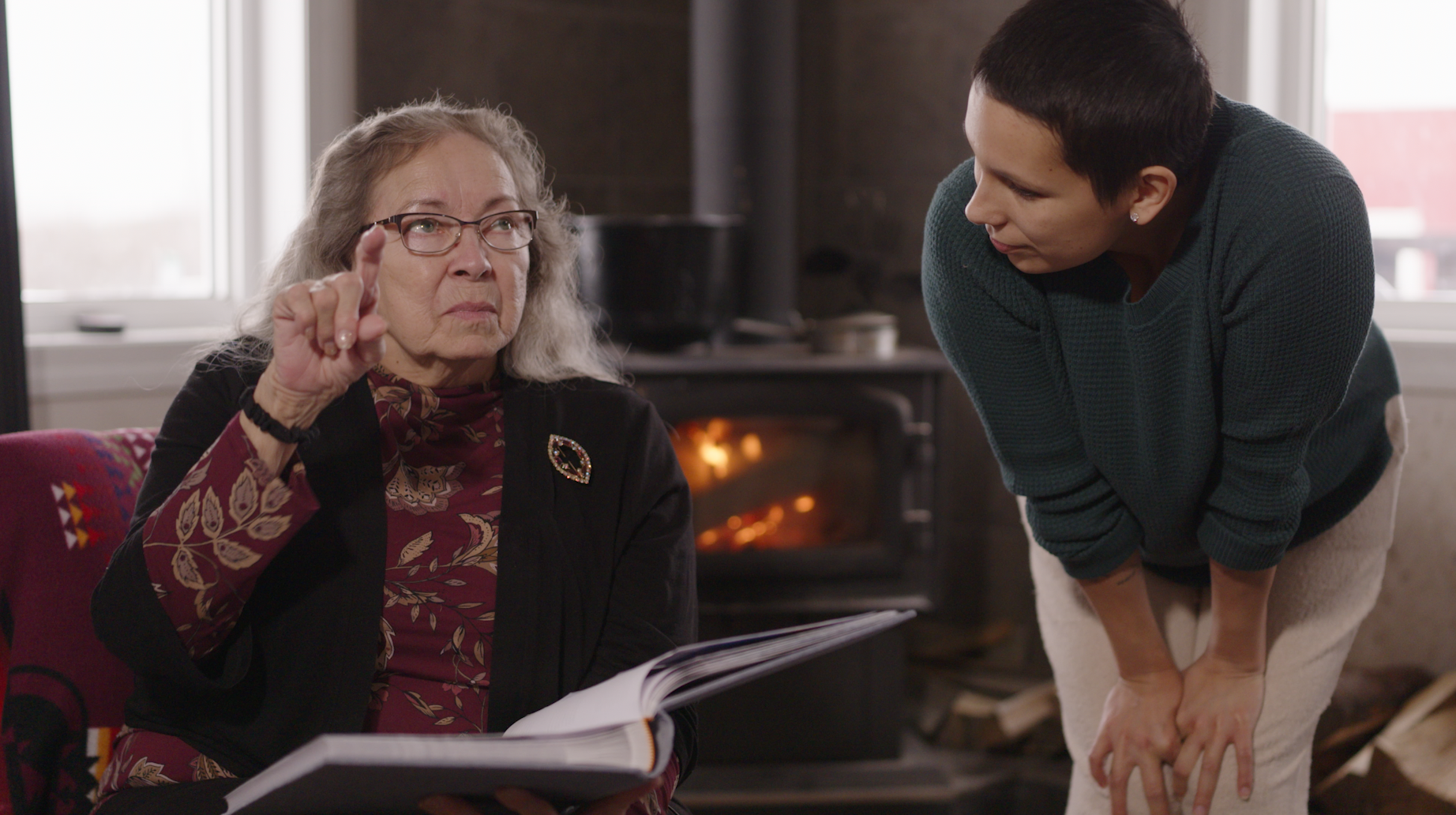
Last week at GEMFest, a great film had premiered and it touched the hearts of all in attendance. That film was called Cree Approach and it talked about a commonly discussed subject in our local community: The Indigenous. I always enjoy those stories because I’m curious to hear from people who actually grew up on this land and the stories they could tell in comparison to my own. I admit it, I’m a complete outsider. My parents come from separate regions of the globe (Ireland and Russia) and they both met up in the US before moving here. And to think I probably would’ve grown up in Belgium. (some of my childhood books were Dutch).
I got the opportunity to talk to Tristin Greyeyes as she explained some interesting facts and details about her documentary in a quick and efficient interview that was quite simple. She’s already shown Cree Approach to family members and they’ve shown some respect as they respect her. She has seen a lot of films in comparison to hers, but Cree Approach certainly has a lot of hype already. Even though it was low budget, a lot of thought and feeling was put into it.
HNMAG: Congratulations on Cree Approach and its release just before International Woman’s Day. How did you get it to premiere at GEMFest?
Tristin Greyeyes: Not sure, but I suppose the programmers selected the film after we had submitted it on Film Freeway. And I did know some people working there, and so that kind of helps, but that doesn’t actually guarantee your film’s gonna be selected for a film festival.
HNMAG: And how did you get the idea of making this documentary about your grandmother?
Tristin Greyeyes: In high school. I got the idea because actually, just doing a research paper on her, I found out that she lived this incredible life and that she was kind of somewhat of an important person in history, so a project of ‘If you can make any film, which film would it be? And if you had no budget, you can essentially make anything, what would it be about?’ And then I was like, I think I’ll do it on her.
HNMAG: She has dedicated her life to saving a language that was almost dead. Just how did Freda go about preserving it?
Tristin Greyeyes: She captured stories from elders before they passed away. She would go to speak with elders who spoke fluent Cree. And as a fluent Cree speaker, she could get a lot of the stories and then she got them from directly, a lot of them from women, the matriarchs of the community. Because of most of the time, academics or whoever, historians would come in and only interview men. Women wouldn’t speak to them anyways, but she had that access by speaking their language, being able to communicate with them, but also building a relationship with them. And so she had that access in a way that historians could never gain. She was getting stories that I think that might have been lost with those elders that passed away if she hadn’t done that work.
HNMAG: And you were learning about why Cree wasn’t your first language in the process. What were some of the most interesting things you learned while making this documentary?
Tristin Greyeyes: It’s a lot harder to get it than to lose it. I think a lot of people, Non-Indigenous included, can relate to losing their mother tongue. And so for me, if my language dies. Nah. If my people die, then it. It is nowhere else on Earth that it will survive because this is where it belongs. I learned that a lot of people can speak. Some people can speak it, are able to have conversations, but just don’t use it.
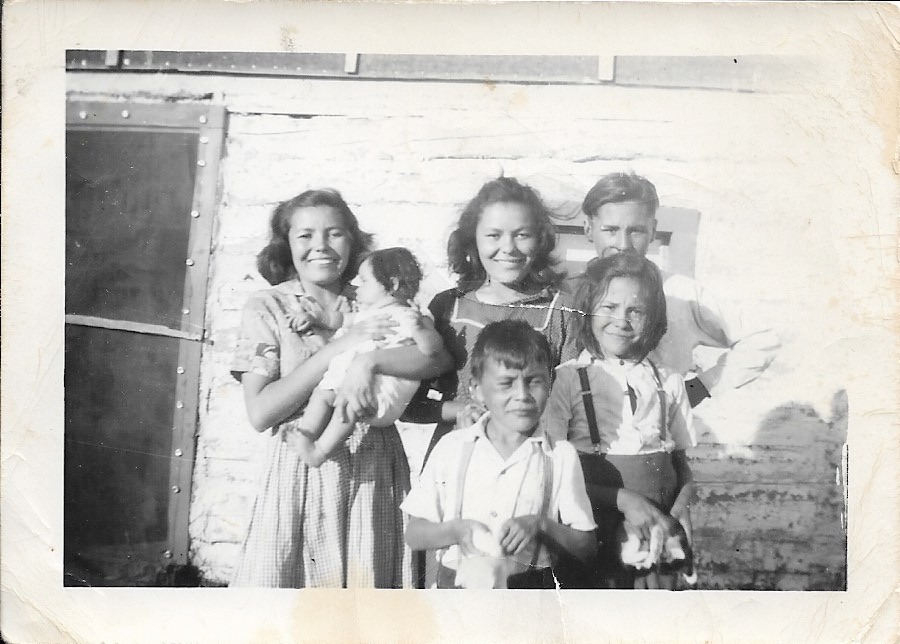
Tristin went on to explain how it all boils down to colonialism. It’s hard to use a language when someone has taken over your country and you’re forced into new customs or an everyday life that you’re not familiar with. Ugh, maybe I’m looking too deeply into this. Let’s continue on with the interview, because there’s lots more details of what went on behind the scenes. Like what the cree language really was called. Apparently there’s some interesting facts about where terms are geologically from.
HNMAG: Was there something you wanted to feature but couldn’t?
Tristin Greyeyes: Yeah, the SRO part, like, the more educational bit of what exactly she did: The written structures. I would have liked it to maybe talk about that specifically more. But. But that’s just like another huge topic that could be. We could talk about even. Just like, the term cree is not our language. It’s Nehiyaw.
HNMAG: What have audience reactions been from it?
Tristin Greyeyes: I did a private screening for my family because I have to do, like, community consent and consultation, so I’d always have to ensure my family are okay with it and approve of it. So I don’t know. I also think that I can make a really terrible film and they’ll just love it regardless. So otherwise, outside of them, I don’t know. I haven’t really shown it to some people that don’t know me. And I think that I’m excited to show that because it’ll be a little bit more critical. Although I’ve seen some reviews. But I’m also like, are they from specific people who know me? Like, are they be like, hey, can you write a review about this person as part of my publicist?
HNMAG: Are there any other screeners for it happening in the future?
Tristin Greyeyes: Our second screener will be at the Sundar Prize Film Festival in Surrey at the Delta Centre for the Arts. April 24th at 3:30, and we’re playing again in Minnesota.
HNMAG: You’ve focused on another Indigenous subjects for movies which are short films and dramas. Did you find making a feature documentary more of a task compared to past work?
Tristin Greyeyes: Yeah, because documentaries, you can continue to change it and change it, and change could go any a million different ways. You can approach documentaries and have so many different kinds of formats or media that you can incorporate, like animation and stuff. And so that kind of takes a long time. But I mean, you obviously have to prepare for both. But sometimes documentaries, depending on, like, the style, the genre, it can take several years. And I think because this is my first and because for a lot of most of it, I didn’t have a mentor, I was kind of just being like, I don’t know what to do. I don’t know how to start it, what to do next. And so I think I missed a lot of key steps that kind of makes it take a little bit longer, but also as a film, so personal. Just not only to me and my family. I found that I had to take some breaks from it because it was so extremely personal. Sometimes life would get annoying. I think that took it a little bit longer too.
HNMAG: So will you be making more documentaries in the future now that you’ve tried this?
Tristin Greyeyes: Yeah, I definitely love how documentary is very, like, accessible much more. It can tell so many different stories without being exploited to be dramatized. But I like that. I love the documentary storytelling and narrative. I’d choose one. But I definitely love both for their different values and different approaches.
HNMAG: What subjects would you really like to focus on?
Tristin Greyeyes: Humanities, I guess.
HNMAG: What do you hope audience will take away from Cree Approache?
Tristin Greyeyes: Importance of indigenous languages revitalization and reclamation, and just like the lack of support that we have for it. It’s just so important to somebody’s identity. We can’t even speak our language.
HNMAG: With the festival run going on for Cree Approach currently, are there some big ones you’re hoping it will be showcased at?
Tristin Greyeyes: I would say for sure, like indigenous films festivals. Because that’s who we are aligned with, and those are the communities that I would really love to represent and to go support. But otherwise, yeah, any.
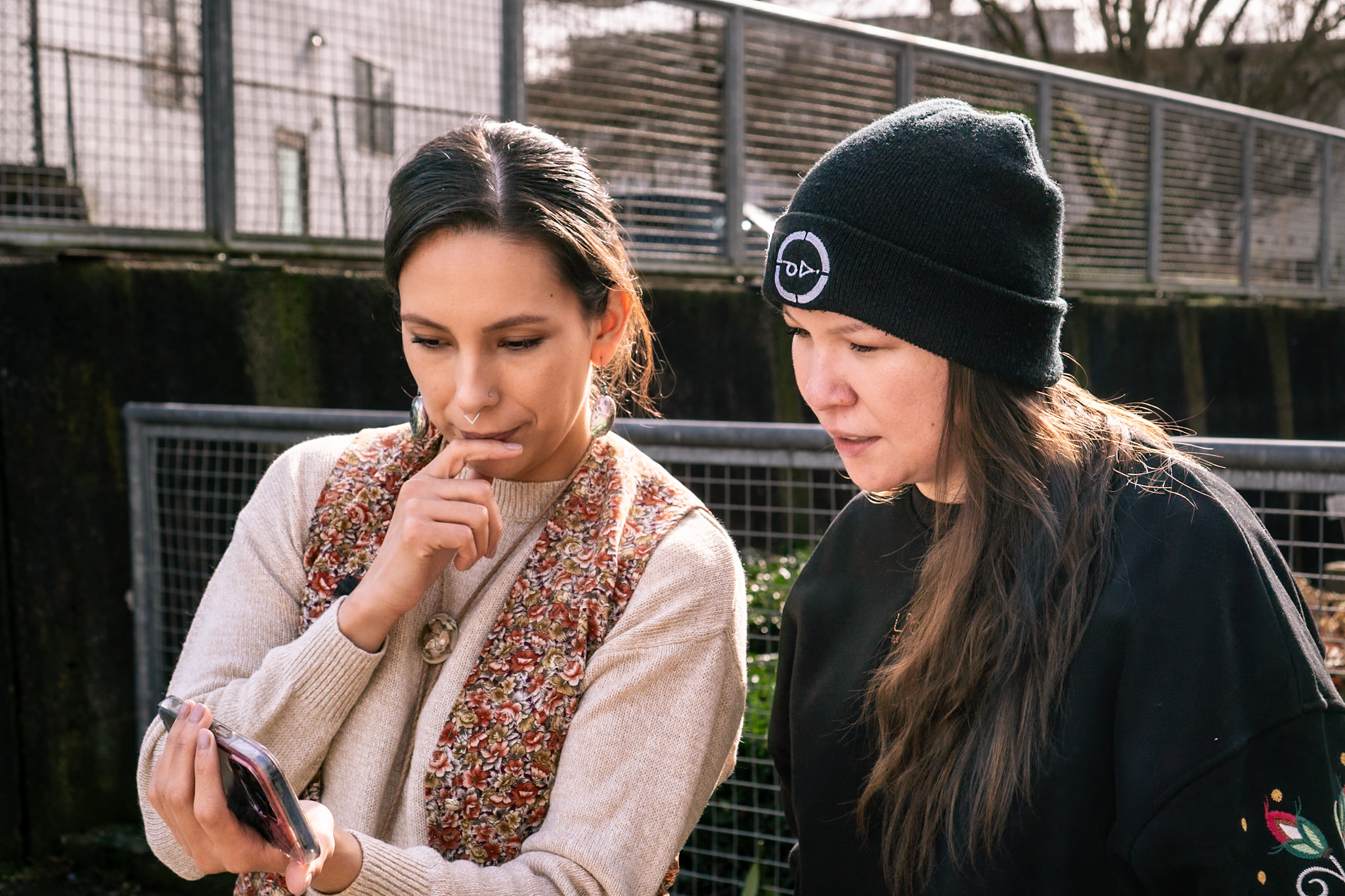
Tristin said they did what they could with what they had, and we can all clearly see just how well it paid off. I can’t wait to see what other festivals it will go to next. I ought to attend one of them while I can, it’s been too long since I did festival coverage.