
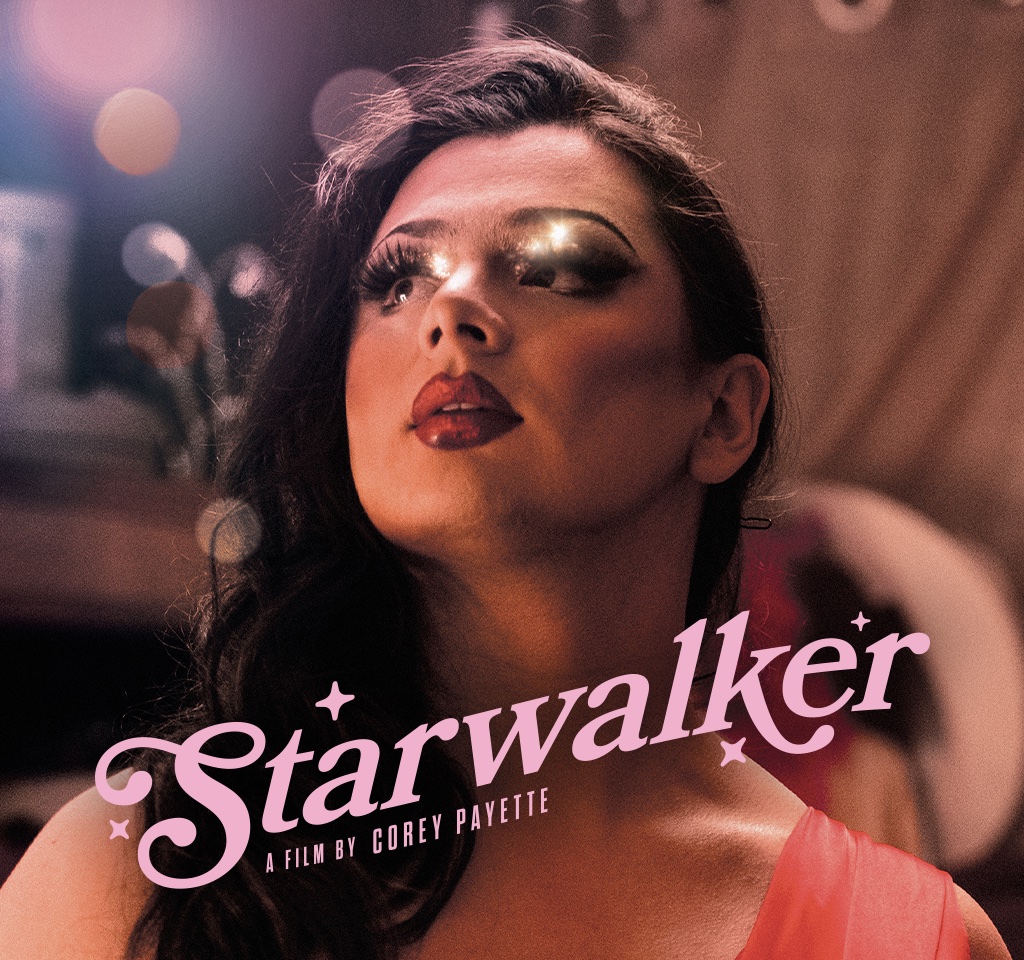
Starwalker is an ambitious musical produced, written, and directed by Corey Payette.

We subsequently had a chance to sit down with Corey Payette at the Whistler Film Festival (WFF).
HNMAG: You were born in New Liskeard, Ontario?
Corey Payette: Um hmm.
HNMAG: What was that like for you? How long did you spend in that part of the world?
Corey Payette: I lived in New Liskeard for sixteen years. I was a really artsy kid. A queer kid in the North, which is a tough place to be. One of the reasons that I left is that my parents recognized that I needed to express myself beyond what the North could offer me. That’s why I moved away at sixteen.
HNMAG: Where did you move to?
Corey Payette: To Ottawa. I went to an arts high school there. After two years, I went to York University in Toronto.
HNMAG: Have you ever heard that Neil Young song, Helpless?
Corey Payette: I’m sure I’d know if I hear it (lol).
HNMAG: It starts “There is a town in North Ontario,”
Corey Payette: Yes, yeah, yeah, yeah.
HNMAG: The chorus is “Leave us Helpless, Helpless, Helpless… Before you left at sixteen, did you ever feel like that? Abandoned, the world has to be bigger, that kind of feeling?
Corey Payette: Absolutely! I think a big part of my understanding of the world was that I needed to get out and do more. I needed to experience more than what the North could offer me. I carry a lot of that to this day. When I was growing up, because in the North the arts aren’t as significant, I was picked out at a young age as being special. I don’t know if I would have had that same experience if I had grown up in the city. In a big city, there are talented people everywhere. In the North, there was just one other lady who could sing. That beginning, where people recognized that I had that gift, got me started on this path. From that point, I knew that I was going to tell stories, sing songs, share my culture and perspective in ways that I always understood as my purpose.
HNMAG: How old were you when your parents recognized your talent?
Corey Payette: I was twelve. From then on, I sang at every hockey game. All the weddings and funerals, fall fairs, summer fest, all of it. I was the little performing monkey.
HNMAG: Why did you head west after being at York?
Corey Payette: I earned a degree in music composition from York University. Music has always been such a strong force in my storytelling. That was my dream. I wanted to write musicals. I started acting professionally when I was nineteen in Toronto.
HNMAG: On stage?
Corey Payette: Yeah. Short films as well. Then I was in the feature film, The Road Forward. Then I went to a northern town in British Columbia and met my husband. From there, we moved to Vancouver, and I was in a show at the Playhouse during the Olympics. After that, I just stayed in Vancouver. I have lived in this part of East Van, where Starwalker is set, for the past sixteen years. It is home now and has given me so much. This film is a love letter to this community.
HNMAG: Most drag shows have performers lip-sync. In Starwalker, the actors were singing full original songs. What was the reason not to have them lip-sync?
Corey Payette: Musicals work best when music is used as a tool to advance the plot and evoke emotions. That is especially effective with internal emotions that characters are not willing to verbally express to one another. This was always the foundation of how the story would be told. There was also the balance of when I’m writing a song, is it what the audience is hearing in the club or live setting? Or is it an internal song? There are parts of the movie where they’re singing on stage, but then they go offstage, and they’re still singing. That juxtaposition for the performer is really interesting for me. I wanted it to be very natural for a character to go from a scene to a song.
HNMAG: The music does carry the story. A lot of the lyrics are integral to what is being communicated between the characters. You had seventeen songs that you composed yourself. That is insanely ambitious. The club, Borealis. Nothing like that exists in Vancouver. Was there an inspiration for this magical drag venue?
Corey Payette: The House of Borealis is a fictitious drag house in East Vancouver. The entire story is fiction. There are elements of the East Vancouver drag scene that I really wanted to highlight. The scrappiness, the diversity, the kind of drag that is a bit absurd. It’s not what you see on RuPaul’s Drag Race. It has cultural roots to it, but it’s also silly and fun. We have a lot of that in East Van. Some performers call themselves Drag Things. They’re not a drag king or queen.
HNMAG: Where is East Van are there more of these Vaudeville-influenced shows?
Corey Payette: There was a warehouse that hosted monthly ballroom-style parties. There were all kinds of entertainment, including something absurd like a mermaid coming out of a boat. We wanted to bring in that absurdity. That space has been torn down and will be where Saint Paul’s Hospital is moving to. Now those shows are taking place at the Birdhouse in Mount Pleasant.
HNMAG: The character Star has a lot of trauma. How does that resonate with you?
Corey Payette: A few years ago, friends of mine were adopting First Nations kids. I was the First Nations connection. Adopters need to show a cultural connection. I brought these young people to Talking Stick festivals, drum circles, and pow-wow’s, all sorts of cultural experiences. After a while, they asked me if they could not be drumming all the time. Kids really just want to play video games. What I mostly took away was what the removal from the community, from their family resulted in, in terms of their being able to accept the love that was being shown to them later in their lives. There were parts of it that were really beautiful to see, but there were also parts of it that were really sad. That had a lasting impact that resonated with Star’s journey. Not being able to trust and not feeling that people have the best intentions for you. That was important for me to express through this story. I wanted this not to be a coming-out story. That story has been told. I wanted to tell what comes next. How do you find love? How do you find a chosen family? How do you learn to accept yourself and celebrate all of your gifts? I wanted to show how Star learns to heal.
HNMAG: It’s very difficult to overcome traumatic experiences.
Corey Payette: People don’t get that. It’s not just, okay, I’m fine, I can do it. It’s hard, but you have to face those demons.
HNMAG: Vancouver is central to Starwalker. Some industry people have this notion that audiences don’t want to see a movie set in Canada. You’re finding out with even some US interest, that’s not true.
Corey Payette: Yeah. It’s been really fascinating to see. Also, with what’s happening politically in the States right now, some audiences are looking to other places. They don’t want it to seem like it’s set in Seattle. They recognize that things are different in Canada. It’s been really cool to see. I started writing this script in 2019, and it seemed like our rights were not being taken away, and equality was still strong, even in the US. Since then, there has been a huge step backwards. Now the film has even more of a role to play.
HNMAG: Is Canada moving a bit backwards as well?
Corey Payette: Whenever there is a push against rights, it’s a slippery slope. Even in Canada, there have been movements for gay marriage to be discussed in Parliament again. It was quickly rejected, but just that opening up, as if it was something that was still on the table. I’m happy that it didn’t go far, but that’s the way it starts. It begins with “Do these people deserve the same rights as everyone else?”
HNMAG: Do you have anything else to share about Starwalker?
Corey Payette: We released the album. The music from the film so we hope everyone goes and listens and comes to see the film in theatres in the New Year.
HNMAG: Is that on Spotify and Apple Music?
Corey Payette: Yes, everywhere. All streaming platforms. People are now getting introduced to the movie through the music.
Starwalker is about a queer Indigenous man who has had a challenging life. He finally found himself, his love, and family through the world of Drag. When more challenges arise, can he trust this new world or keep running as he’s always done?
The setting is East Vancouver, and it’s a very specific and wonderful place for Star. Even though it’s a musical, there is a real sense of place and reality that an audience can buy into. If this were set in the US, it would be difficult to accept unless the movie became more political and real-world issues were taken head-on. People can watch Starwalker around the world, get a sense of Vancouver, our community, and the drag scene that can thrive here.
Corey Payette is very talented and smart. He made a wonderful feature-length musical. We are also fortunate that the soundtrack is available. We hope that young people can find and love these songs and the movie as well. Hopefully, it will help make the world a more tolerant and loving place.