
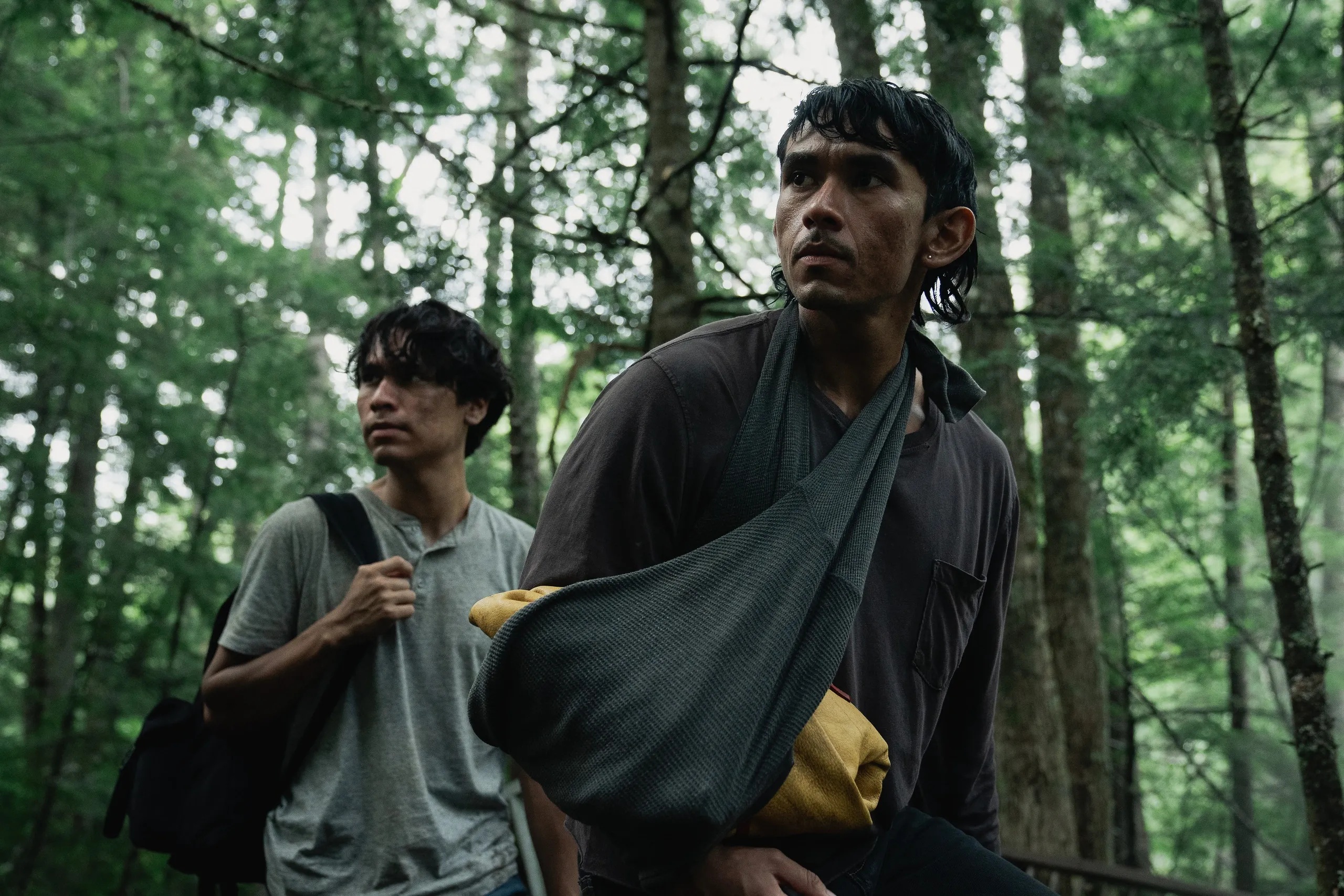
Sk+te’kmujue’katik/ At the Place of Ghosts is an indigenous thriller, feature-length movie. It was written and directed by Bretten Hannam.
We subsequently had a chance to sit down with producer Martin Katz at the Whistler Film Festival (WFF).
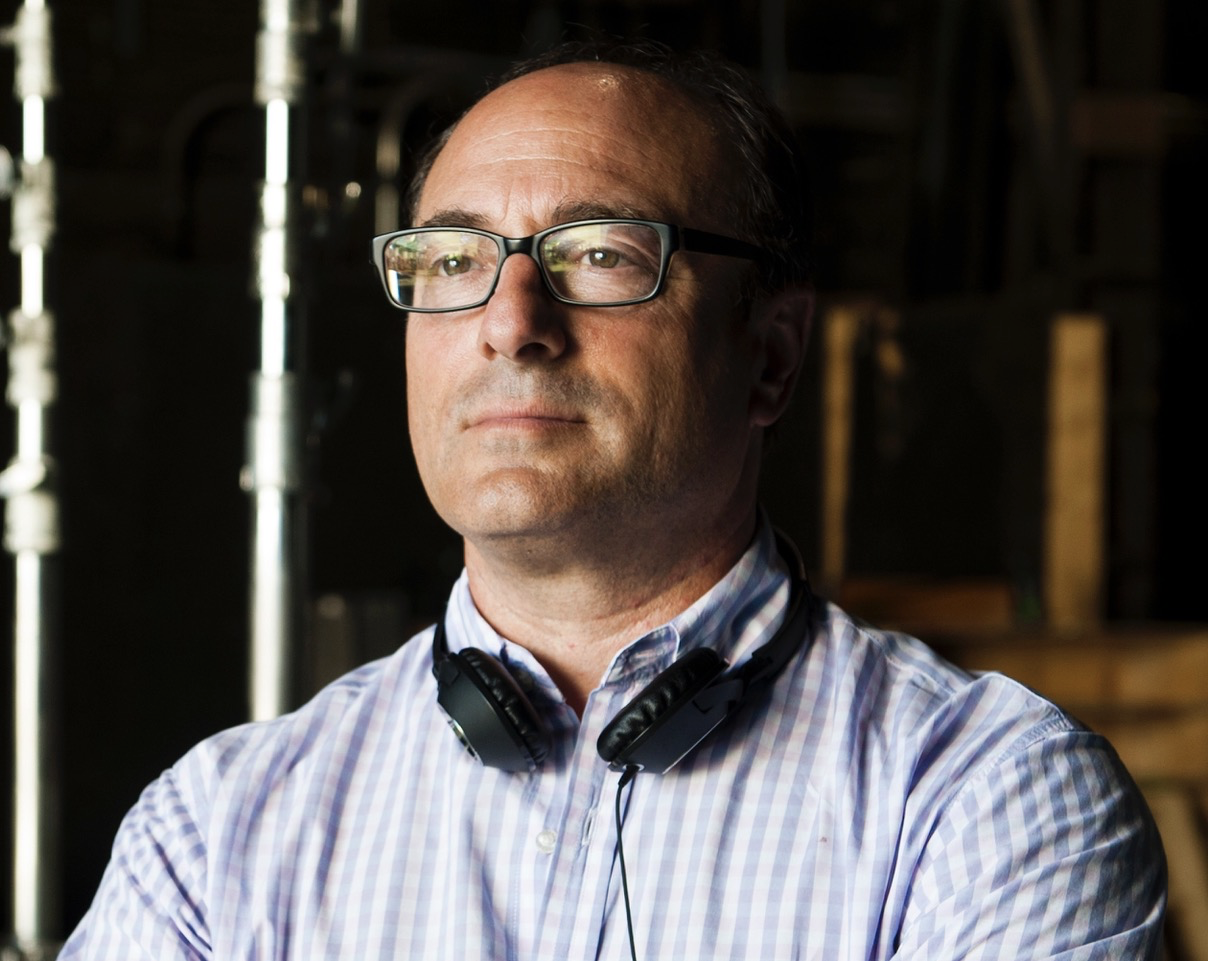
Photo: Caitlin Cronenberg
HNMAG: How long did you live in Winnipeg?
Martin Katz: I left Winnipeg in 1981 to go to Law school in Toronto.
HNMAG: You’re older than you look.
Martin Katz: (laughs) I’m very old. I started Law in Toronto.
HNMAG: At the U of T (University of Toronto)?
Martin Katz: At U of T, yeah. Then I moved to Paris and did a post-graduate law degree at the Sorbonne.
HNMAG: Did you already speak French?
Martin Katz: I already spoke French, but not as well as I thought I did. At the end of my year in Paris, I spoke French extremely fluently.
HNMAG: You’d have to get up to speed at the Sorbonne.
Martin Katz: Yes!
HNMAG: Your path into Film and Television was as a lawyer.
Martin Katz: It’s a bit of a circuitous route. I came back from Paris to work in a law firm and then took a year off to teach law in French on the East Coast of Canada. When I was about to come back to the law firm, I was asked to join Canada’s largest publishing house, McClelland & Stewart. I thought that could be more interesting than working in a law firm. That led to a job at the CBC, where I became head of business affairs.
HNMAG: That eventually led to producing.
Martin Katz: It did. At CBC, I was offered a job at Atlantis Films before they merged with Alliance. Before they became Entertainment One. There were twenty-two people there. I was invited to join as an executive producer. I worked there for four years, and then I was poached away by Microsoft. I ran the Microsoft Network (MSN) for Canada.
HNMAG: Was that related to film?
Martin Katz: It was at the time because when I was at Atlantis I was presented a script for a play called Tamara. It was like the play that ran for twenty years in New York called Sleep No More. That was a copy of Tamara, which was by Canadian playwright and screenwriter, John Krizanc. More than a play, Tamara was an environment-based entertainment, where the audience follows the characters around through a house or a building.
HNMAG: That sounds like fun.
Martin Katz: I thought there was a way to develop this as a movie or a TV project. I started working on it at the same time as computer games were just being introduced. I ended up spending time in Palo Alto and San Francisco learning the burgeoning new business of computer games and talking to people at Electronic Arts (EA) and Sony Interactive.
HNMAG: This was in the 1990s?
Martin Katz: Early 90s, yeah. Ultimately, I pitched it to Microsoft. Some folks at Microsoft said we’re working on this thing called the Internet. Maybe there is a way to adapt the story you are working on to computers, but we think it might be on the Internet, instead. That way, there is a possibility of accessing all this information. Would you be interested in joining and helping us develop the Internet? I said, “Sure.” I became the executive producer of MSN, the Microsoft Network Canada. We developed innovative news and entertaining programming in French and English for the Canadian market and the world market through MSN.
HNMAG: Where was that?
Martin Katz: That was in Toronto. I was commuting to Redmond.
HNMAG: In Washington State, the Seattle suburb.
Martin Katz: Yes, where the head office was. I did that for several years. The Internet developed, and the idea of social media started to get introduced. Microsoft had the idea that it would populate the Internet with content. That would drive more people to the Internet. My job was to get people on the Internet. Soon, it became clear that there was going to be more content than you could ever create on your own. Your job would become more of a traffic cop and director. That was not appealing, so I left and started a film company.
HNMAG: How did you get involved with Sk+te’kmujue’katik/ At the Place of Ghosts?
Martin Katz: I knew Bretten Hannam, the writer and director. Their first feature was called Wildhood. It was at the Toronto International Film Festival (TIFF) several years ago. I knew it, and Bretten’s agent, whom I also knew, called me and told me that Bretten had a new ambitious script. They asked if I would be interested in helping get it made. They sent the script to me and wanted my input on how it could be made. It’s an all indigenous cast, so it’s unlikely to have star attachment. Wildhood was fantastic, but it would be challenging to finance a movie on Bretten alone. They needed some clever, financing magic. After reading the script, I thought it was breathtakingly ambitious. After that, I met Bretten and then their partners in Nova Scotia, Marc Tetrault and Jason Levangie.
HNMAG: Was the city in the film, Halifax?
Martin Katz: We shot it around Halifax, so the city scenes in the movie are Halifax.
HNMAG: In terms of the story, is the city supposed to be Halifax?
Martin Katz: Definitely Halifax, yes. It’s a thriller, in a highly specific world, but contemporary. Also, time has this quality in which it folds over itself. No one explains it, excuses it, or justifies it. In the script, it happened in such a compelling way, I found myself thinking, “This shouldn’t work as well as it does, but I can’t stop reading it.” It was a real page turner.
HNMAG: In the place where they journey to by canoe, ghosts exist in a timeless context?
Martin Katz: If I understand it correctly from working with Bretten, in the Mi’kmaq tradition, all of your ancestors exist in the same time. That is for seven generations past and seven generations forward. Everywhere you are is infused with a sense of your present, past, and the promise of your future. We tried to create that sense by having the forest itself as a character.
HNMAG: It works thematically with what the main characters are going through because they have an unresolved trauma. It’s from their past, but it is still there. It sits with them, and it’s going to remain unless they deal with it.
Martin Katz: Confront it. That is the nature of trauma. It will stay with you until you confront it. Our characters reach the breaking point where they have no choice but to dig in and confront it. It’s at a physical, metaphysical, and personal level.
(SPOILER)

HNMAG: The main characters are brothers, but there was one point where the father only acknowledged one of them as his son.
Martin Katz: It was the father’s character’s way of dismissing the other child, who is queer and therefore no longer considered by him to be his son.
HNMAG: Will audiences in Canada get to see Sk+te’kmujue’katik/ At the Place of Ghosts?
Martin Katz: We have a great partnership with VVS, so there will be a Canadian Theatrical release.
HNMAG: What is the main takeaway that we should know about Sk+te’kmujue’katik/ At the Place of Ghosts?
Martin Katz: One of the interesting things about this movie is that it’s set in such a specific, identifiable place and time. There is a lot of the Mi’kmaq language woven into the film. More than any other film ever made. It might appear hard to relate to, but the story is so universal. The story of siblings who haven’t dealt with something from their past, which has resulted in their estrangement, and family drama that has boiled over and needs to be addressed. That sense of intergenerational trauma and the manner in which it needs to be confronted has a universal aspect to it, and that’s what we’re seeing from audiences.
Sk+te’kmujue’katik/ At the Place of Ghosts is a dark supernatural thriller set in the Mi’kmaq nation in the forests of Nova Scotia, as well as Halifax. The movie also screened at TIFF. Audiences really enjoy it even if they have no relation or knowledge of an indigenous community. The funny thing about universal appeal is that it increases when the story is more specific.
Martin Katz is a very experienced and intelligent producer. He is articulate and skilled in bringing a project to its full potential. We look forward to speaking with him again for future films.