
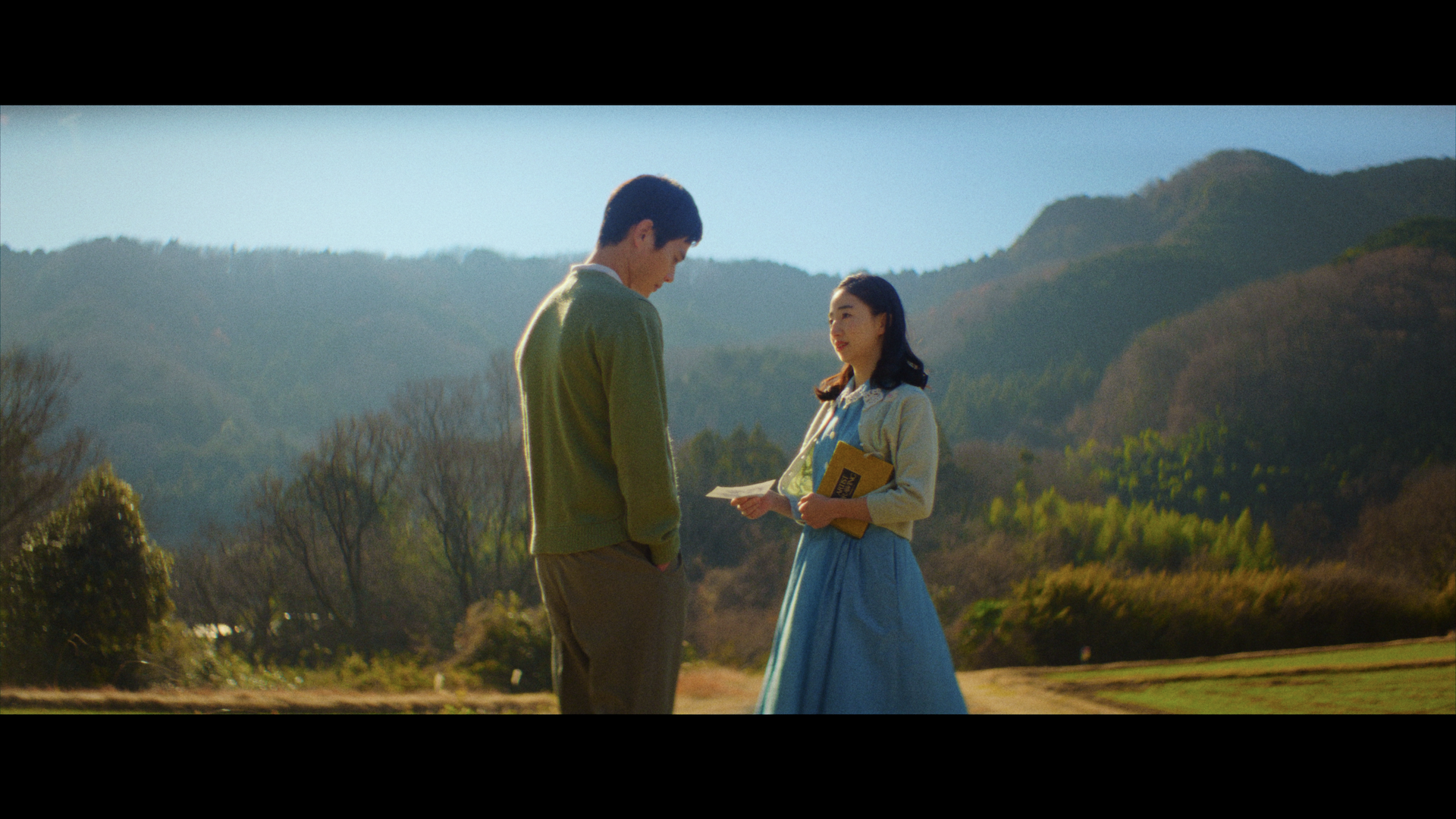
Akashi is a Canadian feature film, mostly set in Japan. It was written, starred, and directed by Mayumi Yoshida. We subsequently had a chance to sit down with Mayumi Yoshida at the Whistler Film Festival (WFF).
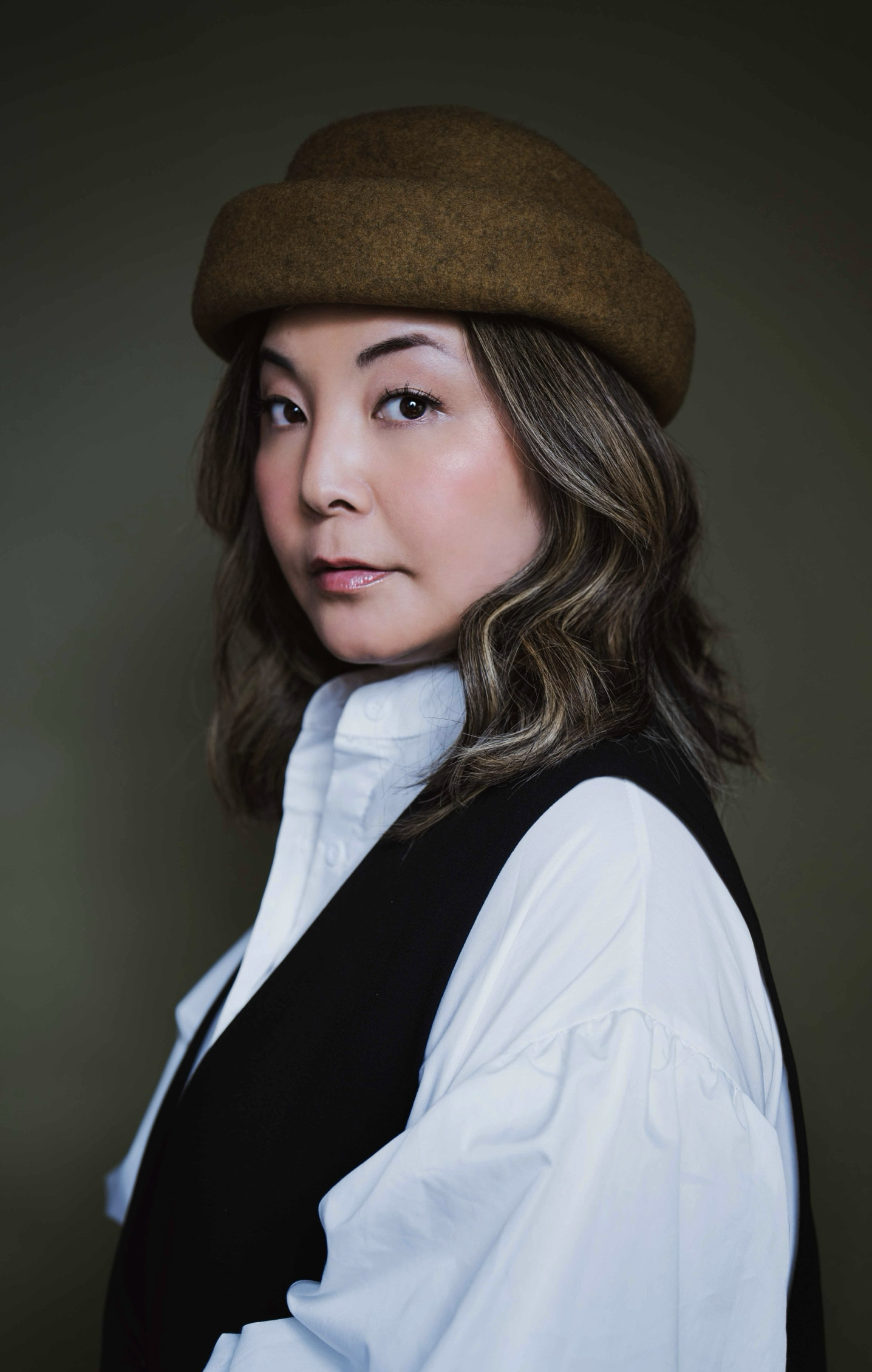
HNMAG: You grew up in Japan.
MAYUMI YOSHIDA: Yes.
HNMAG: When did you become interested in performing?
MAYUMI YOSHIDA: I always loved movies and television ever since I was a little kid. I was born in Japan, but from two to five, I lived in Washington, DC. I came back to Japan, and from eight to eleven, I lived in Belgium. I went to a British school there. After that, through university, I lived in Tokyo. After university, I moved to Vancouver to study acting.
HNMAG: You moved to Vancouver for acting classes.
MAYUMI YOSHIDA: Yeah, I went to Vancouver Film School (VFS).
HNMAG: Did VFS have a great reputation as an acting school in Japan?
MAYUMI YOSHIDA: My Dad just happened to go to Vancouver on a business trip, and he randomly brought back a brochure from VFS. I had been doing a lot of theatre in Tokyo at the time. He suggested I try doing it in English because I was already fluent. I told him that he had no idea how hard that is. I’m not Brad Pitt, how was I going to do it in English? I looked at the brochure, and there was a one-week summer intensive. I thought if it’s just one week, people won’t know how bad I am. I took the one-week course, and it was life-changing.
HNMAG: What year was that?
MAYUMI YOSHIDA: This was 2010. The summer course was in 2008. After I went back to Japan, I realized I had to come back here and I moved to Vancouver in 2010.
HNMAG: You then went through the VFS acting program. How long was that?
MAYUMI YOSHIDA: It was a year. Then I did another course called Acting Essentials. Altogether, it was a year and a half. That also helped me find the community in Vancouver. I feel that the Vancouver Indie film community is my home.
HNMAG: How long did it take before you joined the Union of British Columbia Performers (UBCP)?
MAYUMI YOSHIDA: You need to be Canadian or have a residency to join.
HNMAG: You would have to get Permanent Residency (PR) first.
MAYUMI YOSHIDA: Yeah, I did. I was able to join around 2015.
HNMAG: That was when you were in The Man In The High Castle.
MAYUMI YOSHIDA: Yeah! It didn’t just open up my career as an actor, but because I met so many directors and directors of photography, it gave me an unofficial shadowing experience as a director. When I first made Akashi as a short, I didn’t know anything about directing, but since I’ve seen so many directors and how people work on set, it wasn’t a totally foreign thing.
HNMAG: Was the short made for Storyhive?
MAYUMI YOSHIDA: Yes! That was 2016. Having the residency triggered a lot of things.
HNMAG: How did you go from an actor to a writer and director?
MAYUMI YOSHIDA: It happened as a happy accident. I wrote a play called Neon, which is the origin of Akashi. It was for the Fringe Festival. I performed, wrote, and directed it. It had a ten-person cast. At the time, there was a callout for known female directors for Storyhive. Random Facebook tags were asking “Aren’t you a director”?
HNMAG: You did a play.
MAYUMI YOSHIDA: That’s exactly what my dear friend and mentor Karen Lam did. She directed the first feature film, Evangeline, which I acted in. My response was Can I? I added a scene that wasn’t in the play. We pitched it, and we landed up getting Storyhive’s grand prize. Then it went on a festival tour. That spiralled into getting representation at Gersh in LA. That led to the conversation of a feature version.
HNMAG: It was from 2016 to 2024 until the feature went to camera. It’s a long process.
MAYUMI YOSHIDA: Totally, but there was Covid too.
HNMAG: You also made some other shorts.
MAYUMI YOSHIDA: Mainly because I wanted to clock the hours as a director. I worked on honing my voice and my craft. It did become clearer.
HNMAG: The name of the main character in Akashi is Kana. It doesn’t sound a bit like part of Canada. Was that at all intentional?
MAYUMI YOSHIDA: It was. In the subtitles, when Kana arrives home, her family says, “You’re so American.” Then I say, “No, I’m in Vancouver.” The response to that is “Oh, like Kana-da.” That wasn’t the plan, though. My best friend’s name is Kaneko. With some parts, I think about her. I wanted to give the main character a name that means something to me. With international viewership, I needed to have a name that is easy to pronounce. The Canada name joke came up because I thought it would be cute when I was writing the script.
HNMAG: Why did Kana move to Vancouver?
MAYUMI YOSHIDA: To pursue her career in Canada.
HNMAG: She’s an artist. She could paint anywhere.
MAYUMI YOSHIDA: She could. It’s not told in this version of the story. There was a school she wanted to go to.
HNMAG: Emily Carr or something like that.
MAYUMI YOSHIDA: Yes, like an art institute in Canada such as Emily Carr. Then she found her artistic home there.
HNMAG: That relates to your own experience. Without being aware of that, it could be because Vancouver is so pretty with the mountains, the cityscape, and the sea. It would be a great place to paint.
MAYUMI YOSHIDA: That could be part of the reason why she stays.
HNMAG: There is a terrific use of black and white and colour. The colour seemed to represent the past. What was the intention behind that?
MAYUMI YOSHIDA: We also have a quick moment with Kana and Hiro in colour. I wanted to audience to experience that part of the story through Grandpa’s lens. We are peaking through his memory. It’s vibrant and evokes yearning. As time goes by, the colours fade and become closer to real life. For Kana and Hiro’s moment, it was almost like a fantasy. It’s in their mind. It’s not a real place. It was shot in black and white, but I wanted to see what that would look like during editing. Having a conversation with my grandmother, I realized that we can never appreciate our present time. If we can take away the colour palette, would we take our modern struggles a little more seriously? What Kana is going through is a universal struggle of identity and belonging. I wanted that to have a timeless, classic feel. That way, it’s also an evergreen problem.
HNMAG: Is the grandfather’s story influenced by a real event?
MAYUMI YOSHIDA: The conversation I had with my grandmother in the cafe is real. Everything else is imagined. I never met a lover. The only fact that I was given was that my grandfather did have a lover. I don’t know how long that lasted, but the lover did come to his funeral. At the time, my grandmother didn’t tell anyone.
HNMAG: It’s unique how the reaction to the infidelity is mostly positive. It’s nice how much love, understanding, and acceptance there is.
MAYUMI YOSHIDA: I wanted to strip the judgment out so we can see how we would be in their shoes. If it were a different time, would we have made the same choice? I wanted us to have empathy because that’s how my grandmother saw it. I initially reacted by thinking it wasn’t fair and my grandmother deserved to be loved. She felt bad. He really loved this woman before they met. They couldn’t be together. Who was she to stop him, when she didn’t even know what love meant?
HNMAG: What year were your grandparents married?
MAYUMI YOSHIDA: It was shortly after the war. They got married because they had to combine finances.
HNMAG: If they were in Tokyo at the time, it would make complete sense due to the devastation.
MAYUMI YOSHIDA: I don’t think they were in Tokyo, but still devastating circumstances. It’s an interesting dynamic. What does real love mean? Even though I didn’t know their story growing up, I could still feel this unconditional, deep love between them. That’s how they had to survive, and that’s just life.
HNMAG: There were practical aspects to their relationship. What does the title mean?
MAYUMI YOSHIDA: Akashi means proof.
HNMAG: That makes sense. When someone moves on their own to a new place away from their friends and family. Then you add on the aspect of a different language and culture, that takes a lot of courage. Kana had that courage, where Hiro couldn’t.
MAYUMI YOSHIDA: How audiences receive the movie is not up to me. Everyone is watching it in different states of mind. How you experience it is correct to who you are. There are so many themes and storylines, people gravitate towards different ones. My goal has always been to make a film that could live and grow with you for a lifetime.
HNMAG: Was it difficult to get the film financed?
MAYUMI YOSHIDA: Part of the struggle to make it happen was that you couldn’t pinpoint who I am. We had to fight with Telefilm regarding what it means to have a Canadian film. There was an article in the Hollywood Reporter about that. We had to petition to get the language restriction removed.
HNMAG: The movie had to be in French or English?
MAYUMI YOSHIDA: French, English, or an Indigenous language, and it had to be at least fifty percent.
Akashi is a Canadian romantic film set in Japan. Even though it takes place in Japan and is in Japanese, it’s about a Canadian woman learning about her past, her family, romance, and her love of her chosen home in Vancouver, Canada. One takeaway could be that Canada is not limited but inclusive. You can be a Canadian who has lived most of your life in Saint Leonard but only speaks Italian. Maybe you are a refugee from a war-torn nation and found a new home in Brampton. You can even be a very talented actor who came across the Pacific to Vancouver for a two-week acting class, loved it, and decided to stay. Mayumi Yoshida proved to be a wonderful performer, became Canadian, and then became an extraordinary filmmaker. Akashi is a beautiful movie that deserves multiple viewings. We look forward to speaking with Mayumi again about her future films.