
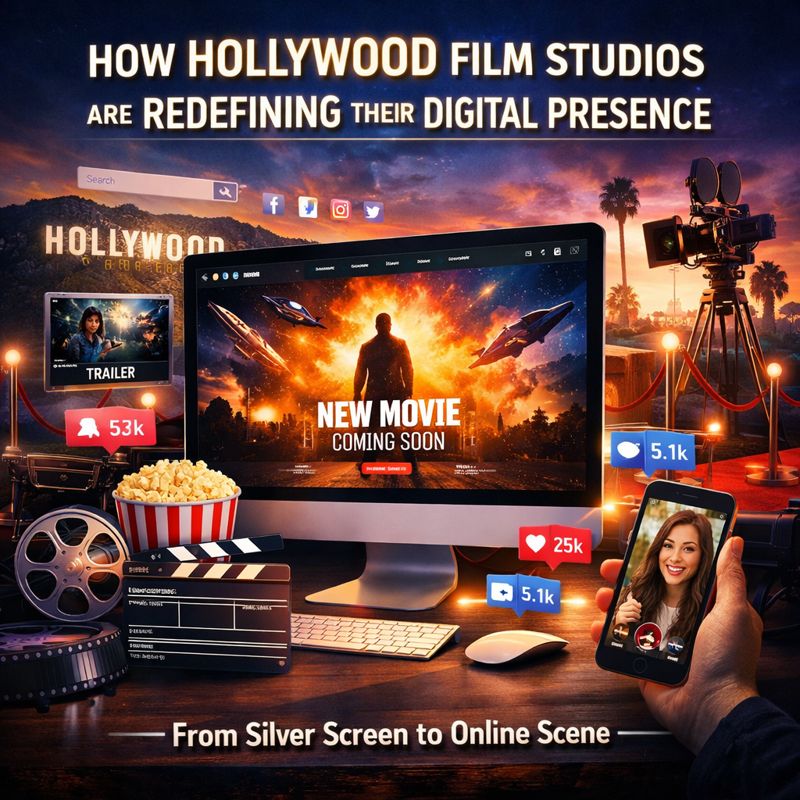
Hollywood has always been at the forefront of storytelling, innovation, and cultural influence. From silent films to CGI-driven blockbusters, the film industry has continuously evolved with technology. Today, that evolution extends far beyond the cinema screen. Hollywood film studios are redefining their digital presence to meet the expectations of a global, always-connected audience. In an era where audiences discover, discuss, and decide what to watch online, digital platforms have become just as important as box office releases.
The Shift From Traditional Promotion to Digital-First Strategies
For decades, film promotion relied heavily on television commercials, print ads, billboards, and press tours. While these methods still exist, they no longer dominate the marketing landscape. Audiences now spend more time online than ever before, consuming content across social media, streaming platforms, and search engines. As a result, Hollywood studios have shifted toward digital-first strategies that prioritize online engagement, accessibility, and real-time interaction.
Websites, social media channels, mobile apps, and streaming integrations are now central to how films are marketed. A movie’s digital presence often begins months—or even years—before its release, building anticipation through teasers, behind-the-scenes content, and interactive campaigns.
Official Websites as Digital Hubs
One of the most significant changes in Hollywood’s digital approach is the renewed importance of official film and studio websites. These platforms serve as centralized hubs where audiences can access trailers, cast information, release dates, merchandise, press kits, and exclusive content. Unlike social media, websites offer full control over branding, messaging, and user experience.
Modern film websites are no longer static pages with basic information. They are immersive experiences designed to reflect the tone, genre, and visual identity of the film itself. From dynamic animations to cinematic visuals and interactive storytelling elements, websites now play a key role in shaping audience perception before they even watch the movie.
To achieve this level of sophistication, many studios collaborate with a professional website design company that understands both branding and user experience at a high level.
Data-Driven Digital Experiences
Another way Hollywood studios are redefining their digital presence is through data-driven decision-making. Analytics tools allow studios to track how users interact with websites, trailers, and digital campaigns. This data provides insights into audience demographics, preferences, and engagement patterns.
By analyzing this information, studios can tailor content to specific regions, age groups, or fan communities. For example, a film’s website may highlight different characters or themes depending on the audience segment viewing it. This personalized approach increases engagement and helps studios optimize their marketing spend.
Social Media Integration and Fan Engagement
While websites act as central platforms, social media amplifies a film’s digital reach. Hollywood studios now design their digital ecosystems to ensure seamless integration between websites and social channels. Visitors can easily share trailers, posters, and countdowns across platforms, turning fans into active promoters.
Studios also use digital platforms to engage directly with audiences through live streams, Q&A sessions, interactive polls, and virtual events. These initiatives help humanize big studios and create a sense of community around films and franchises. In many cases, fan feedback gathered online even influences marketing strategies and future content decisions.
Embracing Mobile-First Design
With a large percentage of users accessing content via smartphones, Hollywood studios have embraced mobile-first digital design. Film websites are now optimized for speed, responsiveness, and usability on smaller screens. Quick-loading pages, vertical video formats, and touch-friendly navigation ensure that users can engage with content effortlessly, whether they are commuting or browsing casually.
This mobile focus also aligns with global audiences, particularly in regions where mobile internet usage far outweighs desktop usage. By prioritizing mobile experiences, Hollywood studios make their content more accessible and inclusive worldwide.
Digital Branding Beyond Individual Films
Hollywood’s digital transformation is not limited to individual movie promotions. Major studios are also redefining their long-term digital branding. Corporate studio websites now highlight production values, creative vision, sustainability efforts, and diversity initiatives. This approach helps studios position themselves as modern, socially aware brands rather than just content producers.
Streaming services owned by studios further strengthen this digital branding. Platforms like these blur the line between studio, distributor, and digital service provider, making online presence a core business asset rather than a supporting tool.
The Role of Storytelling in Digital Design
What sets Hollywood apart from many other industries is its deep understanding of storytelling. This expertise now extends into digital design. Studio websites and online campaigns are crafted to tell a story, guide emotions, and build narrative tension—much like a film itself.
From immersive landing pages that feel like entering a movie universe to interactive timelines and character explorations, digital platforms are becoming extensions of cinematic storytelling. This approach not only promotes films but also enhances audience connection and loyalty.
Preparing for the Future of Digital Hollywood
As technologies like virtual reality, augmented reality, and AI-driven personalization continue to evolve, Hollywood studios are well-positioned to push digital boundaries even further. Future digital experiences may allow audiences to explore film worlds in real time, interact with characters, or influence storytelling paths online.
What remains constant is the need for a strong, adaptable digital foundation. A well-designed, high-performing online presence is no longer optional for Hollywood studios—it is essential for relevance, reach, and revenue in the digital age.
Conclusion
Hollywood film studios are redefining their digital presence by embracing innovation, data, storytelling, and user-focused design. Websites have become immersive brand experiences, social media has transformed audience engagement, and digital platforms now shape how films are discovered and remembered. As the industry continues to evolve, studios that invest in meaningful digital experiences will remain at the forefront of global entertainment—both on and off the screen.