
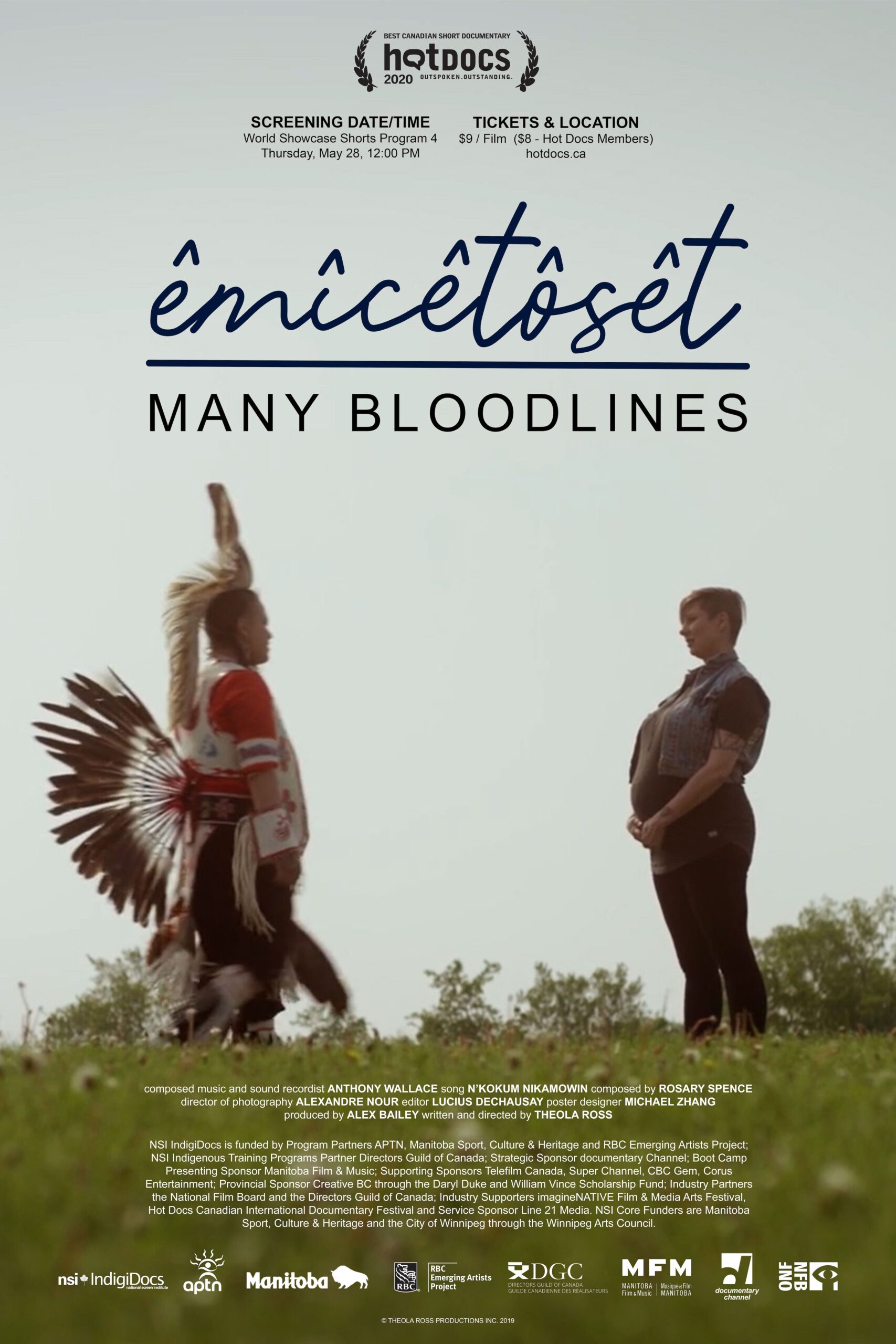
Êmîcêtôcêt: Many Bloodlines is a profound and intimate 2020 short documentary film directed by Canadian filmmaker Theolay Ross. Despite its concise running time, the film is a powerful statement in which a personal story becomes a magnifying glass for examining large-scale issues of generational continuity, the survival of indigenous cultures, and the transformation of traditional ideas about family in the modern world.
Plot and conceptual basis
The film unfolds as a visual diary chronicling the journey of Theola Ross, a member of the Cree people, and her partner Stephanie, who has Italian roots. The couple embarks on a difficult and emotionally charged journey, choosing IVF for LGBTQ to conceive a child. However, for the protagonists, this medical process is not just a way to become parents, but a conscious act of designing a future where two radically different stories must meet.
The very title of the film, Êmîcêtôcêt, has a sacred meaning. Translated from the Cree language, it means “one who has many ancestries.” This concept becomes the philosophical core of the film. The director asks how the traditions of the Cree hunters and defenders of the land can coexist with the cultural code of European immigration in one small person. The film captures the process of stitching these worlds together even before the birth of a new life.
In-depth analysis of themes and issues
Cultural synthesis and intersectionality
The film explores a unique third path of identity. At the heart of the narrative is the dialogue, and sometimes the unspoken tension, between two worlds. Teola expresses an understandable fear that the fragile heritage of her ancestors, which has survived centuries of oppression, will dissolve in a more dominant Western cultural context. Through the dialogues of the characters, we see an attempt to create a space where the Cree language and Italian family values do not compete, but enrich each other. It is an exploration of how multiculturalism works not at the level of state policy, but at the level of a lullaby.
The LGBTQ+ Parenting Revolution
For many documentaries, the topic of same-sex parenting is associated with the struggle for rights or legal obstacles. Ross, however, shifts the focus to emotional vulnerability. We see fears related to biological heritage and the joy of shared anticipation. The film depoliticizes the topic, making it deeply human. It is a story about love that strives to perpetuate itself, overcoming any biological or social barriers.
The ROPA method and mutual IVF as the technological embodiment of the idea of multiple lineages
The technological side of the issue occupies a special place in the narrative. For the main characters, IVF for LGBTQ people becomes not just a medical solution, but a way to literally unite their stories. The film explores the option of mutual IVF, also known as the ROPA method (Reception of Oocytes from Partner). The essence of this method is that one partner provides her eggs, while the other carries the pregnancy. In this way, both mothers are physiologically connected to the child. One provides the genetic material, while the other provides prenatal development and birth.
This technical solution directly resonates with the film’s title. The ROPA method turns the metaphor of many family trees into biological reality. A child born in this way carries not only the cultural codes of both families, but also the physical contribution of both mothers. The film shows this as a complex, sometimes frightening, but inspiring process, where science serves as a tool for realizing the ancient idea of the continuity of life and the connection between generations. The protagonists discuss in detail how this approach allows them both to feel like full participants in the creation of new life.
Healing from the colonial past
For Theola Ross, motherhood is an act of political and spiritual resistance. Against the backdrop of Canada’s history of forced assimilation and the residential school system for indigenous peoples, the very decision to have a child and raise it to be proud of its Cree roots is a form of healing. The birth of a new life here is perceived as a victory over colonialism’s attempts to erase the culture of an entire people. The child in the film becomes a symbol of the fact that ancestry is not just blood, but an unquenchable flame of memory.
Visual language and directorial techniques
Theola Ross chooses a straightforward cinematic style, mixing it with poetic minimalism. The camera often lingers on hands, glances, and details of the home interior, creating an almost tangible atmosphere of intimacy. The use of home footage lends authenticity to the film, blurring the line between the viewer and the participants in the events. The silence in the film is as eloquent as the dialogue, giving the viewer space for empathy and reflection. The contrast between the sterility of medical clinics and the warmth of home emphasizes the miracle of birth sprouting through technology.
Recognition and impact on the industry
The film received widespread recognition at international film venues, becoming an important event at the Hot Docs and ImagineNATIVE festivals. Critics praised Ross’s courage in exposing her private life to create a universal metaphor. The film has become an important teaching tool for discussions about contemporary identity in Canada, demonstrating that the future of Indigenous peoples is being built here and now in the everyday choices of each family.
A timeless legacy
Êmîcêtôcêt: Many Bloodlines goes far beyond the chronicle of a single pregnancy. It is a meditative reflection on what we leave behind. The film teaches us that identity is not a static set of genes, but a dynamic process of choice. What words will we whisper to our children, what stories will we preserve, and how will we teach them to love all parts of their complex selves? This is a hymn to the multifaceted nature of the human soul, capable of uniting thousands of ancestors within itself.
Basic information about the film
- Original title Êmîcêtôcêt Many Bloodlines
- Year of release 2020
- Director Theola Ross
- Country of production Canada
- Genre Documentary, short film, autobiographical
- Running time Approximately 11 minutes