


This article argues that the film inherits something other than plot. What travels from Goethe to the screen is a way of speaking: the confiding, restless, self – examining voice of a person who turns feeling into words. Following that voice, from the letters of 1774 to a modern writer’s struggle, helps explain why the story keeps finding new audiences.
The Voice on the Page: How Goethe Built Werther’s Inner Life
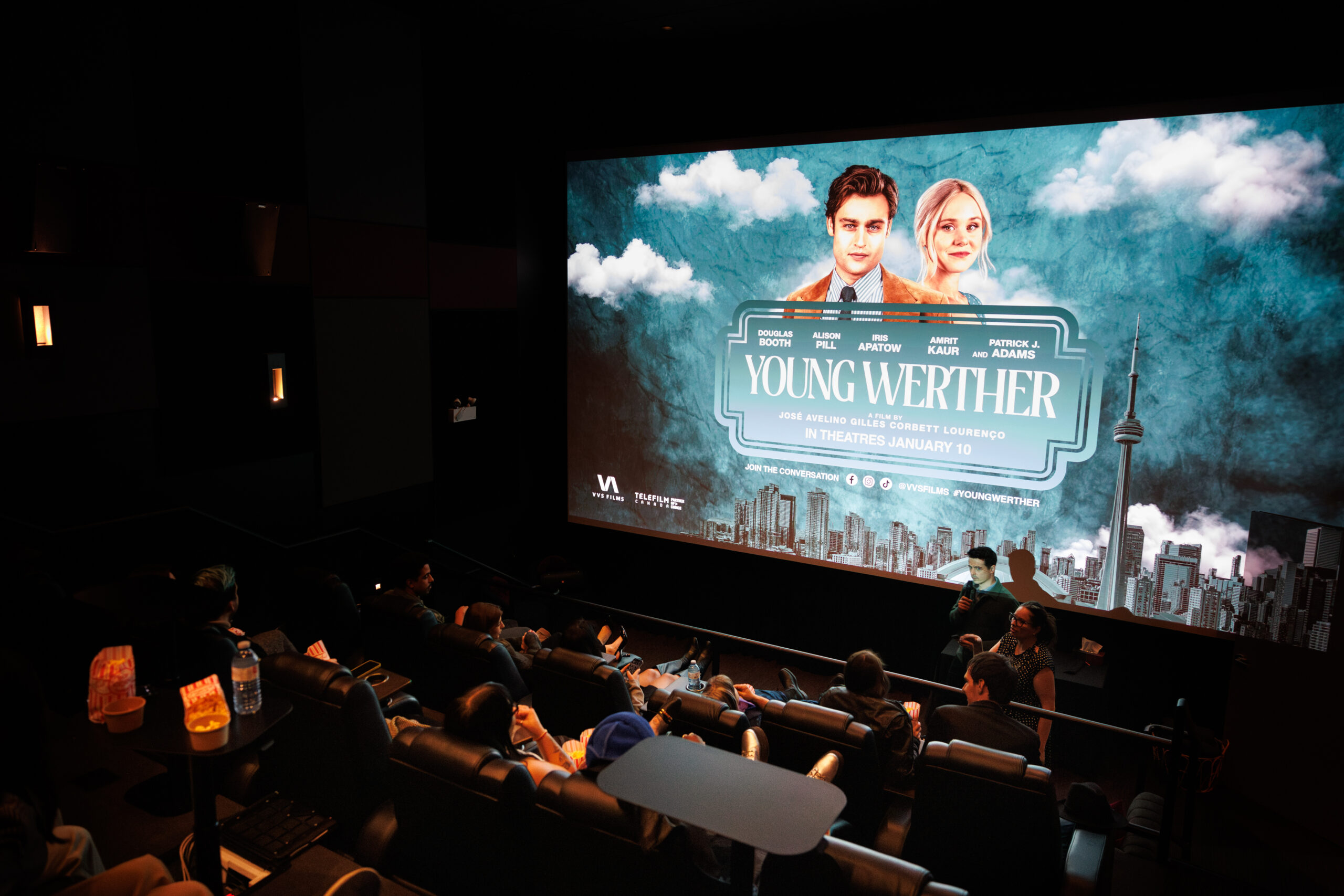
The book also grew from lived experience. In 1772 Goethe met Charlotte Buff, who was already engaged to Johann Christian Kestner. He published the novel in 1774 and revised it in 1787, softening some passages and sharpening others. Writers who return to this material today inherit its form as much as its story. The 2024 film Young Werther, which follows a young writer in love with a woman who has a fiancé, is one example of how that inheritance gets reworked for a new era.
Why a Writer? Authorship as Vulnerability
A film that makes its hero an explicit writer takes this idea and states it openly. A man whose daily work is shaping experience into text has a ready – made excuse to keep poking at his own pain. Feeling becomes material. Heartbreak turns into a draft. That tension is where the novel and its modern echo meet. Goethe’s hero and a contemporary writer share the same weakness, a mind that narrates faster than it understands.
The Triangle: Love, Obligation and Restraint
Three people sit at the center of Goethe’s novel: Werther, Lotte and Albert. Lotte is promised to Albert before Werther ever appears, and she never pretends otherwise. Albert, for his part, is neither a villain nor a fool. He is steady, decent and a little dull, at least through Werther’s eyes. That choice matters.
Social rules of the 1770s pressed hard on this arrangement. An engagement was close to a binding contract, and a woman’s reputation could suffer from the mildest gossip. Lotte’s kindness toward Werther therefore carries risk. She is warm with him, yet she is also careful. Much of the novel’s tension lives in the small space between those two things.
Modern life has loosened many of these rules. Engagements break, people date for years before committing, and few would call a fiancé a legal claim on anyone’s affections. A film that sets a young writer’s infatuation in the present, with the woman already engaged, cannot lean on old social pressure to explain why he must hold back.
When outside rules lose force, the burden falls on the individual. A modern Werther is not stopped by convention but by his own sense of what is fair. And this may be the harder test, since a person can argue himself out of a private principle far more easily than out of a public rule. The triangle survives for this reason.
From Letters to Images: The Problem of Cinematic Interiority
Each choice changes how the audience relates to the hero. Voice – over keeps the reader’s old closeness to Werther, but it also keeps his bias, since everything passes through his account. Images do something different.
This is also where Goethe’s editor figure becomes useful as a model. The novel’s final pages step outside Werther and view him from a distance. Film has this ability built in, since the camera can always stand a little apart from the character it follows. A thoughtful adaptation can let the two perspectives pull against each other, the writer’s glowing version of events on one side and the plain evidence of the image on the other.
Which of these tools the 2024 film actually uses is a matter for viewers to judge from the film itself. What can be said in general is that any adaptation of Werther must decide how much to trust its hero’s voice, and that decision shapes everything else.
Reading Werther Responsibly Today
Goethe’s novel ends in tragedy. It is also the reason the novel acquired a reputation beyond literature. Still, the idea stuck. In 1974, the sociologist David Phillips gave the pattern a name, the “Werther effect,” in a study of how suicide rates changed after widely publicized suicide stories in the press. His work, and the research that followed it, suggested that certain kinds of coverage can raise the risk for people who are already vulnerable.
Goethe himself seemed aware of the danger. In the second edition he added a short verse urging readers not to follow his hero’s path. Any article about Werther, including this one, can follow those principles. The story can be examined as literature without turning the ending into an ideal. Readers who find these themes close to their own lives are not alone, and talking with a trusted person or a local crisis service can make a real difference.
Closing Thoughts
Looking back across Goethe’s pages and the film built on them, the pattern is consistent. The plot of a young man, an engaged woman and a love with nowhere to go is easy to copy. The voice is harder. Werther’s way of turning every flicker of feeling into a sentence, and then trusting the sentence more than the facts, is what gives the story its pull.
That voice is also what makes the novel uneasy company. Readers sympathize with Werther, yet the structure of the book keeps asking them to doubt him. The editor’s final pages, the widening gap between events and his account, and the quiet decency of Lotte and Albert all work against his version of the story. A good adaptation keeps that double vision. It lets the audience feel the longing and still see the man from outside.