


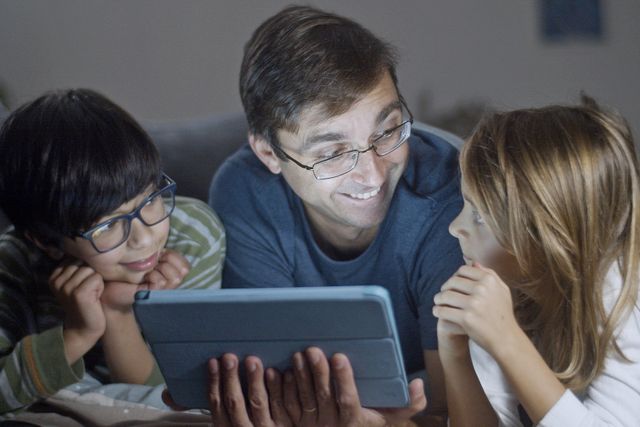
Ask any parent what their kid learned today, and you’ll usually get a shrug and a “nothing much.” Funny thing is, that’s rarely true. Kids pick up new ideas everywhere — while watching a favourite movie, acting out a scene from a TV show, building a blanket fort, or asking for the tenth time why the sky is blue. School is only part of the story.
Stories and entertainment can be surprisingly useful parts of that learning process. A great family movie can introduce children to different places, cultures, characters, problems, and ways of seeing the world. A funny scene might lead to a conversation about emotions, while an adventure story can send a child looking up a place they’ve just seen on screen.
The trick for parents isn’t turning every movie night into a lesson. It’s simply giving kids enough room to be curious about what they watch, read, play, and experience every day.
Learning Doesn’t Have to Look Like Studying
When we hear the word “learning,” most of us picture textbooks, worksheets, or a kid hunched over homework at the kitchen table. Fair enough — that’s a big part of formal schooling. But plenty of real learning happens in moments that don’t look anything like class.
Measuring flour while baking is math, whether or not anyone calls it that. Watching a tomato plant sprout teaches patience and biology. Building a cardboard robot forces a kid to think through balance, structure, and what happens when a plan doesn’t work the first time. Reading a bedtime story together grows vocabulary while sneaking in a little imagination on the side.
The same thing happens with entertainment. A movie about space can lead to questions about planets. A historical drama can make a child curious about another period. An animated adventure can inspire drawing, storytelling, or pretend play.
None of that needs a quiz at the end to count.
Let Curiosity Take the Wheel at Home
Curiosity might be the single most powerful engine behind learning, and it’s one kids come with by default. When your child asks a question, you don’t actually have to have the answer ready. Sometimes the better move is to say, “I’m not sure — let’s find out together.”
Say your child wants to know why leaves change colour in the fall. Instead of a quick Google-and-done, try flipping through a picture book, collecting a few leaves from the sidewalk, or watching a short video together. The point isn’t just the answer — it’s showing them how to go chase one down.
The same approach works after a movie. If a child asks whether a location shown in a film is real, look it up together. If they become fascinated by an animal, character, historical event, or profession, let the question lead somewhere.
Do that often enough, and kids start to trust their own ability to figure things out.
If you’re short on inspiration, there are some solid roundups of fun activities for kids at home worth bookmarking — especially ones that lean on curiosity and creativity rather than a pile of special supplies.
Make Room for Screen-Free Time
Screens aren’t the enemy — plenty of movies, shows, apps, and videos can introduce children to new ideas and stories. But children also need time that involves moving their bodies, talking out loud, getting their hands dirty, and occasionally being bored enough to invent their own fun.
A screen-free afternoon could mean drawing, a board game, a puzzle, a walk around the neighbourhood hunting for bugs, a half-baked science experiment in the kitchen sink, or scribbling a short story nobody asked for.
Better still, let a favourite movie or character become the starting point. After watching an adventure film, kids might build their own cardboard spaceship. After an animated movie, they might draw a new character or invent a different ending.
The activity doesn’t have to be complicated. Half the time, the best “materials” are just whatever’s already lying around the house.
Movies Can Start Conversations
One of the simplest ways entertainment can support learning is through conversation.
A family movie doesn’t have to become a formal discussion afterward. A couple of casual questions can be enough. Why did that character make that choice? What would you have done? Was the ending what you expected? Which character did you understand most?
These conversations help children think beyond simply watching something and moving on. They begin to notice characters’ motivations, different points of view, and the way stories are constructed.
Older children can take it further by comparing two versions of a story, discussing whether a character’s actions made sense, or even writing an alternative ending.
The goal isn’t to analyse every movie like a film critic. It’s simply to encourage children to look a little more closely at the stories they enjoy.
Play and Schoolwork Aren’t Opposites
It’s easy to think of play and academics as living on opposite ends of the day — fun over here, learning over there. In practice, the line is a lot blurrier.
A word game sharpens vocabulary. A strategy game like chess or checkers builds logical thinking. Doubling a cookie recipe is a fraction lesson in disguise. Even taping together a model volcano brushes up against real engineering and science concepts.
Entertainment can work in much the same way. A child inspired by a superhero movie might become interested in drawing, costume design, acting, storytelling, or special effects. Someone fascinated by an animated film might start wondering how animation actually works.
For younger kids especially, meeting an idea through play — in a context that already makes sense to them — can make it more memorable than meeting it cold on a worksheet.
Helping Older Kids Learn to Manage Themselves
As kids get older, a parent’s job quietly shifts. A six-year-old usually needs someone sitting right there guiding them through homework. A fourteen-year-old needs something different: a chance to practice running their own show.
That might mean helping them set a goal that’s actually achievable, breaking a big project into smaller pieces instead of one overwhelming blob, or asking them to notice which topics still feel shaky.
Entertainment can become part of that independence, too. Older kids can learn to choose what they watch, explore subjects that interest them, and decide when it’s time to put the screen away and do something else.
It’s also worth nudging older students away from just rereading the textbook and toward strategies that actually work — things like active recall, practice tests, spacing out review sessions, and taking notes that are actually organized rather than just copied down.
Leave Room to Just Explore
Not everything a child does needs to lead somewhere on a report card. Kids also need time to chase things that have nothing to do with a grade.
The kid who spends a whole rainy Saturday drawing might be stumbling into a real love of art. The one who can’t stop taking apart the toaster — please supervise — might be fascinated by engineering. The kid obsessed with ants on the sidewalk might end up interested in biology or environmental science one day.
The same is true of entertainment. A child who becomes fascinated by filmmaking might start experimenting with a phone camera. Another might discover a love of acting after performing scenes for the family. Someone else might become interested in music after hearing a particular soundtrack.
Nobody needs to know where these interests will lead. Parents don’t need a five-year plan for every passing fascination. Sometimes the best response is simply to say yes when it’s safe, provide a few resources, and get out of the way.
School and Home Work Better Together
Kids learn best when school and home are pulling in the same direction instead of feeling like two separate worlds.
Teachers lay the groundwork and give kids the vocabulary and structure to understand something new. Home is where that idea gets to breathe a little — a lesson on plants turns into a windowsill herb garden, a writing unit turns into a battered notebook a kid actually wants to write in, and a math topic turns into splitting a grocery bill or doubling a recipe.
Entertainment can create another bridge. A lesson about history might lead to a historical movie. A story discussed in class might inspire a family to read the book together. A science topic might lead to a documentary or a hands-on experiment at home.
That back-and-forth quietly teaches kids that learning isn’t something that switches off the second the school bell rings.
Progress Beats Perfection, Every Time
One of the easiest traps to fall into as an adult is treating every single activity like a performance review. Did they get it right? Did they finish? Was it good?
But kids are supposed to get things wrong sometimes. They’ll lose interest halfway through a project. They’ll struggle with something that seems obvious to you. None of that is a red flag — it’s just what learning actually looks like up close.
Instead of leading with “did you get it right,” try questions like these:
- What did you find out?
- What part was actually hard?
- What would you do differently next time?
- Why do you think that happened?
- What do you want to figure out next?
Questions like these nudge kids toward reflecting instead of just chasing a gold star, and they quietly reinforce that learning is a process, not a scoreboard.
Raising Kids Who Actually Love Learning
At the end of the day, the point isn’t to turn every movie, game, or family activity into homework. It’s to raise someone who’s curious, capable, and comfortable enough with not-knowing to go find things out on their own.
That kind of person is built slowly, out of an unglamorous mix of school, family conversations, movies, books, messy play, and everyday problem-solving — not out of any single one of them.
When questions are welcomed at home instead of brushed off, kids start to notice that learning isn’t confined to a classroom at all. A favourite movie, a dinner-table conversation, a stubborn garden, a board game, or a broken toy can all turn into a small discovery.