




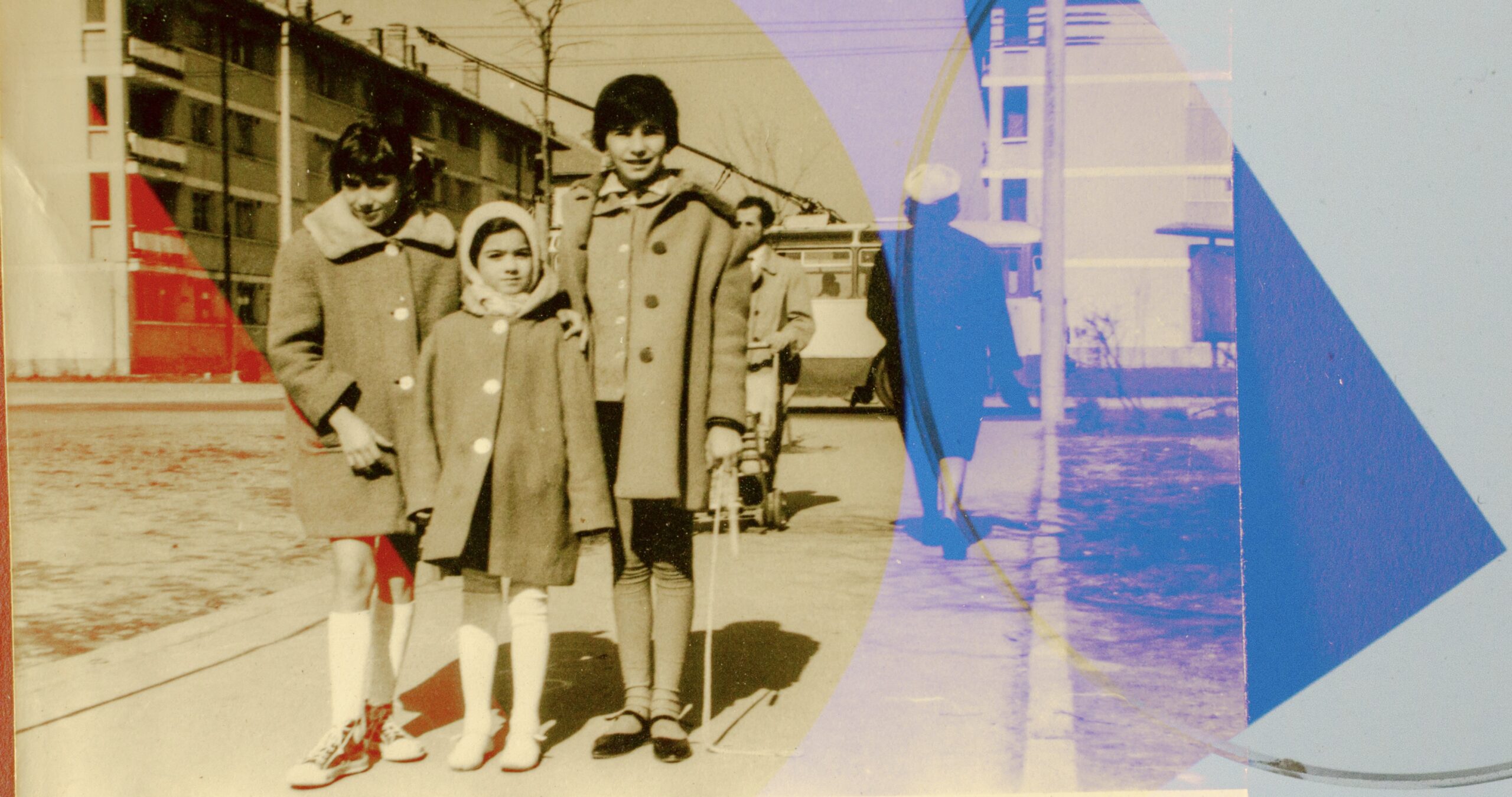
Dan Popa has an amazing story.
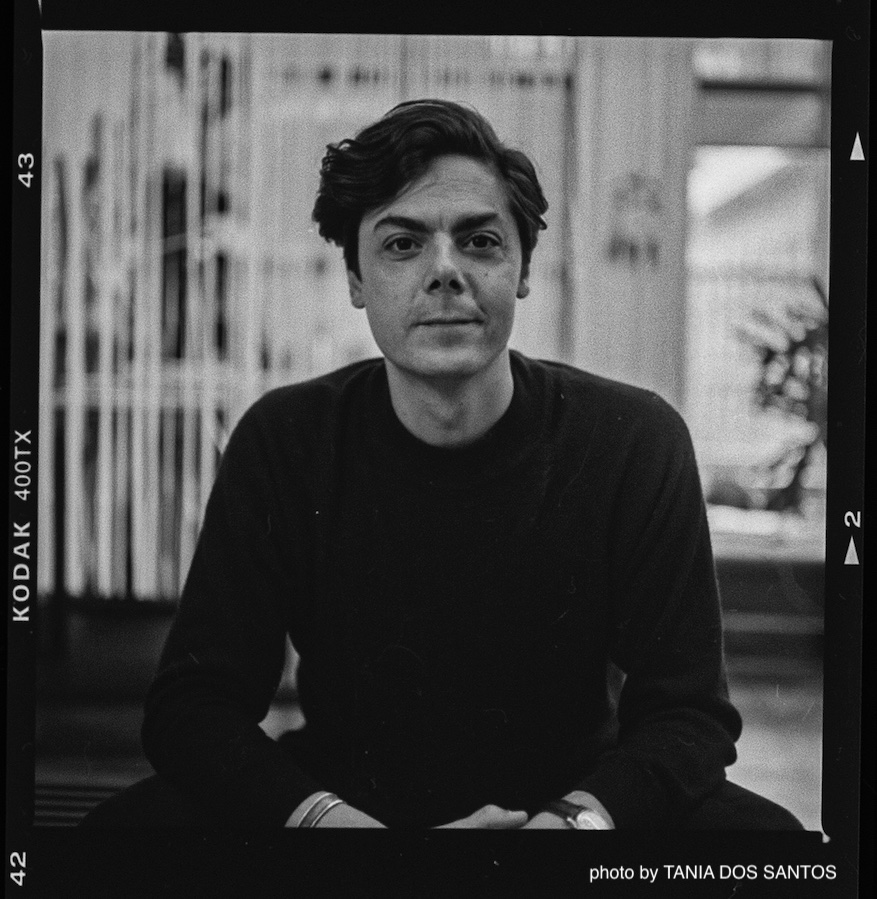
So does his mother and her sister. We met with Dan in Cannes where he was pitching his documentary Sisters of the Union which was screened at the world’s most prestigious film festival in May.
HNMAG: Were you born in Romania?
Dan Popa: Yeah, I was born there in 1982. We came to Canada in 1990.
HNMAG: Right after the revolution.
Dan Popa: Yeah, right after the revolution. My parents were able to obtain a tourist visa to Canada and after we arrived, we asked for refugee status. Then everything wen’t extremely well. By 1995, we were citizens. My sister was born forty-five days after we arrived, so she’s a real Canadian even though she was conceived in Romania.
I realize now in my forties that the first eight years of your life inform so many things about you. I was very fortunate. I spent my time between French and English. I was in Romania last week. We just finished wrapping up the final shoot on Monday. It’s quite different jumping from the Transylvania mountains to the French Riveria. It is wonderful though and a lovely time of year.
HNMAG: You moved to Montreal with parents who were not from Quebec, you obviously went to school in French. So, you’re trilingual.
Dan Popa: Yeah, I’m trilingual. I was fortunate that I grew up in an Anglophone neighbourhood, Notre-Dame-de-Grâce (NDG). When you live on King Edward and Walkley, you have English all around you. My English was a bit skewed when I was young because I learned it from both my Jamaican and Italian friends. People would say “Who are you? What is this accent you have?” I went to school in French because that’s a rule but everything got rectified at Concordia University.
HNMAG: Did you get into filmmaking in high school?
Dan Popa: In high school I picked up dark room photography as an extracurricular activity. I really loved it and after my first summer job, I bought myself my first Pentex camera. In Cegep I took visual arts. It combined theatre, painting, it combined a lot of things. Cegep is a wonderful thing because when you’re seventeen what do you really know about what you want to do? Some of the best filmmakers I know come from engineering. They apply that technical view to the production. It can be a very technical art. I was very fortunate to be able to do this. My parents were not typical of immigrant parents who forced me into law or medicine. I once sat down with my father and he asked me what I want to do. I said I’m good at math, I’m good at this, maybe a lawyer? He said, oh no, don’t bore me with this. Do cinema, you’ll love it. My parents were always in the arts in Romania. In Canada they had to adapt to whatever the job market dictated. Still, art was really part of our upbringing. I realize now how important that was. Back in Romania, my parents had limited resources and access. It was amazing just to find one Bob Dylan record but when they did, seventeen adults would gather around the turntable and listen to it over and over again. Now we have so much access that nothing is special anymore. My film is about that. It highlights the little spots of light and colour. It was a difficult time financially. People remember bread queues. What is really worth exploring is the resilience in people.
HNMAG: People, especially in the US, conflate communism as a political enemy instead of an economic system. The problem really was the leadership. Was Ceaușescu a dictator and was his oppressive rules the real issue? Looking at the Warsaw Pact, other countries that ended their communist government could do it more easily because they didn’t have this strict dictatorship that limited all their freedoms and had harsh punishments. With Yugoslavia, they had to wait for Tito to die and then that was a big mess. In Romania, it was a revolution that lead to Ceaușescu’s death.
Dan Popa: If the dictatorship was out of the equation, I wonder what communism could have looked like. As much as I was raised in a family that was completely anti-communist, it was more the regime. It wasn’t about the infrastructure of equality.
HNMAG: Today we can look at socialist democracies like Sweden and Finland. When you combine a Marxist approach to economic policies with a democratic form of representation, that’s what you get.
Dan Popa: Sure, but Capitalist markets do erode social programs in Sweden as well as Canada. We haven’t built any social housing since the 80s. There are tons of condos but who can afford those?
HNMAG: It’s all about the Benjamins.
Dan Popa: Looking at that past, it’s complicated. I also wanted to focus on simple things like family.
HNMAG: What is the title about? What does that mean?
Dan Popa: The story is about my mother, the two sisters. That’s a sisterhood. I travelled a lot in the former Eastern Bloc nations. I didn’t want to make a film just about Romania. I am using the Warsaw Pact as a utopia. In that way, it’s the sister countries next to the big union, the Soviet Union. Hence: Sisters of the Union. You can read the title in two ways.
HNMAG: Is the story also about how your mother and her sister came to Canada?
Dan Popa: Yes, the title of the film is that. One world, starts another one. It also looks at what life was like in Canada in the 1990s. It’s a film that goes back and forth in time.
HNMAG: What’s happening in Cannes for your film?
Dan Popa: In Cannes, it’s an incentive created by Telefilm Canada and RIDM ( Montreal International Documentary Film Festival) to see what films are coming up and give them an opportunity to be showcased from an international community. What is really amazing is being part of Doc Cannes. The entire international documentary community is here. I am delighted to be here with the producer of the film Line Sander Egede of Tak films and our distributors H264. This is a very personal and important movie. I was a child during the revolution but people born after 1990, have no access to that period. The older generation doesn’t want to talk about it. It’s important because a survey taken last year in Romania came out that seventy percent of people believe it was better under Ceaușescu than it is now. How does that happen? We don’t talk it about and then we end up with this ….
HNMAG: A false narrative.
Dan Popa: Yeah! That’s why it’s so important to keep up the dialogue. Very quickly things fell, put that in a box and closed it with a key. It’s not good to throw the baby away with the bathwater.
HNMAG: If you don’t learn from history, you are destined to repeat it.
Dan Popa: A transition period would have been more helpful, but revolution doesn’t bring transition, it brings complete chaos. It’s only been thirty-five years. It might feel like a long time but in the scope of things, it’s nothing.
HNMAG: Romania is part of the European Union.
Dan Popa: That’s incredible, but there are still challenges. The freedom and mobility is amazing. Thirty-five years ago, you couldn’t have a visa to go anywhere. People lost their lives trying to escape to the west.
Dan Popa made a very personal documentary about his family history which was also a very important part of twentieth century history. He makes an excellent point that it doesn’t take long for people to have a skewed vision of the recent past. You could go to Old Town Bucharest on a Saturday night in late May. You’ll find packed cobblestone streets with people eating, drinking, celebrating, smoking…etc. Maybe you’ll grab a quick bite at an overpriced Greek restaurant next to your hostel. There are no open tables so you ask to join a middle-aged man and his teenage son. This boy was not even a thought back in 1990 but he strongly believes that Romania was better off back then and Ceaușescu was not a dictator. Of course, he also believes that Jews run the banks and media. His father does not correct him because he either doesn’t want to relive that past or he doesn’t speak English or a little of both. This is why it’s important to see movies like Sisters of the Union. History matters and if we want to live in a progressive world where we learn from our mistakes, we need to remind people of those lessons.