


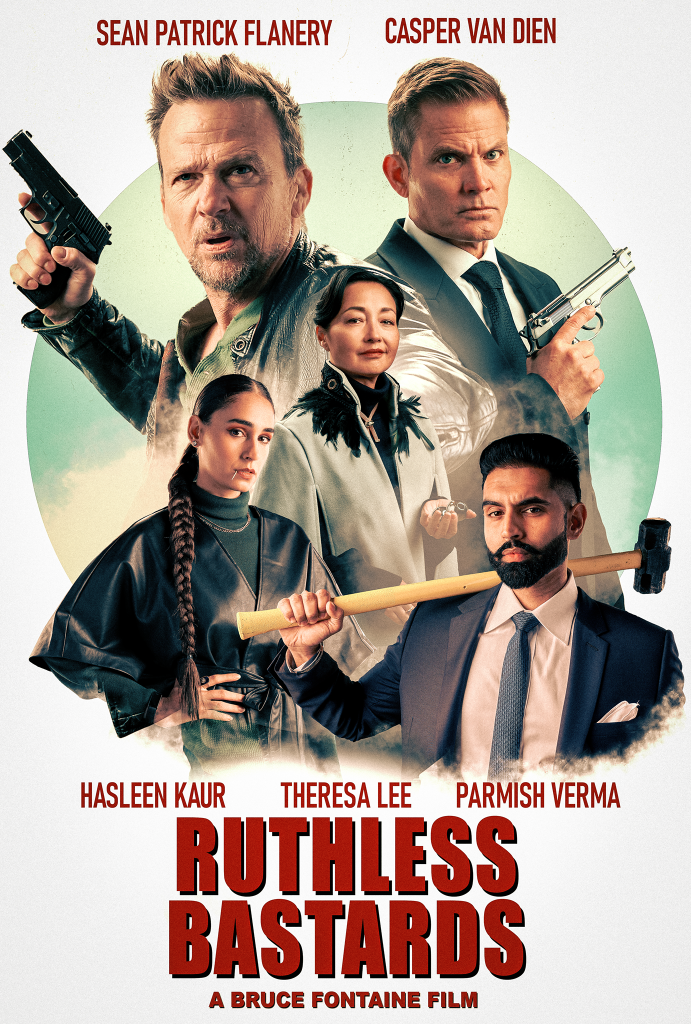
Sometime last year, I attended a private screening for this film. I took notes with plans for a review but after meeting the producer, the director, and the publicist when the screener had ended, I was informed to hold off for the time being. I did, and moved on to covering other content. Years later, another PR person reached out offering me an interview with producer Alex Bogomolov, and director Bruce Fontaine. How could I resist? I enjoyed this movie even if I wasn’t allowed to talk about it at first.
Now that I can, Ruthless Bastards is an action film about two assassination business partners: Nico (Casper Van Dien) and Rick (Sean Patrick Flanery). Nico is an 8-class assassin and Rick has been brought back into the business and their job is to take out a man named Sunny (Parmish Verma) who is working with some Russian brothers. The two partners obviously want nothing to do with each other at first but reluctantly decide to team up once again. As the duo scope out sources and gather intel from different people, they eventually reconcile while rescuing a hostage. That sounds like quite a story but Bruce and Alex also had quite the crew to pull it off.
They had people like Brian Ho, Stanton Chong, and Max Rositsan. These were some of the greatest names in Vancouver’s film industry, and all because none of them working during the strike, so they got an opportunity on some of the greatest local content of all time. Of course, Bruce’s strong relationship with so many of those people helped as well. Alex had great relationships with actors, while another producer Wei Sun Cheng had great relationships with people who worked in crew.
Filmed in Vancouver and tested in Vancouver for a private screening, the two men explained this was a test 1 to see how this film would do in Vancouver. It’s been through Germany and Italy recently along with some sales in Hong Kong.
Now that I’ve told you a little more about the movie’s plot, it’s time for these two men to tell us even more details than expected. As I chatted with them for well over an hour, they dug deep on behind the scenes, distribution, pre-production, production, and so much more. It’s remarkable I was able to keep so much in this final draft. Anyways, this is a killer interview so lock and load, folks. It’s time to gets answers all about the assassins in action.
HNMAG: The film was quite a bloodbath when I saw it. Did you find this a difficult concept to make because of all the action and story?
Alex Bogomolov: I’ll say from the producer’s perspective: We were super limited with the budget, and the strike worked in our advantage because we were able to have the best team available. All the locations were available. That location we were shooting, he was charging $15,000 a day because it’s a huge one. We paid $1700.
Bruce Fontaine: Yeah, myself and Wei, we’ve dealt with the owner and other projects in the past, so we got a really good rate.
Alex Bogomolov: Yeah, because he’s charging that for Netflix productions, but we explained we were local and didn’t have a budget, and no one was coming anyway. But he wouldn’t let us do it for free, so he said, “Okay, but at least pay me $1500 or $1700, or maybe $1200.” Quite affordable for us, so we decided to shoot as much as possible at that location. There was lots of rewriting, the script was rewritten every day.
Bruce Fontaine: Well, not everyday, but a lot.
Alex Bogomolov: And I remember the local cast complaining: “Hey, you’re sending us new sides 8 hours before I’m going to bed” and we’re all “Yeah, it is what it is. Indie Filmmaking. Welcome” That’s what we had to go through. When you don’t have a budget, you have to be creative. Whatever assets we have, we just put it in there.
HNMAG: I like how it was filmed completely in Vancouver. Was that because you wanted to make something local as opposed to other locations?
Bruce Fontaine: For myself personally, I wanted to try and make Canadian content that travels, that is seen outside of Canada. I look at Canada, and think… I hate to say it this way sometimes, but I think Vancouver’s the best place and the worst place to be an independent filmmaker. One, everyone’s accustomed to the Hollywood Rates. I’d say more than 90% of the film industry here is service to Hollywood. You get an independent because it’s hard to get the rare type of deals that Hollywood does. We’ve managed to do fairly well largely due to the relations we have and the respective areas that everyone took care of. But for myself personally, I want to make stuff that’s not Canadian perse, but into account that we have all the infastructure we need and all the in-front-of-camera talent we need, to be realistic we don’t have here, what you would call bankable stars.
HNMAG: But what about Canadian talent?
Bruce Fontaine: There are big Canadian stars like Ryan Gosling, Ryan Reynolds, Seth Rogen. We’re not going to get them. Most Canadian productions are not going to get them. Unless you’re in with the big six in Hollywood. The Paramounts and the Lion’s Gates, which ironically used to be Canadian. We managed to get Sean and Casper partly because of a friend of mine had access to Casper and then one other guy we were looking at didn’t work so then we got Sean. Those are not as currently relevant, they’re still really good actors. Professional, but a little bit past their prime, but still sellable. My policy is to get a couple stars that are ideally sellable, that you can put in your cast to help sell it. Without bankable names, it’s hard to sell. I made a film before COVID called Redemption on a much smaller budget. We had no names but we managed to sell it because action travels which is why we also chose action here. Nobody wants a Canadian drama with no names in it. I know there’s a lot of people who want to make art, and if that’s what you want to do, do it. Back to my point, I want to make stuff here, I want to use the talent we have here, we also have (a lot of people don’t know it) Chinese Canadians that are actually sellable from where they came from: Hong Kong. We try to utilize that to make our films travel. My idea is I want to try to everything as Canadian as possible but not trying to be in-your-face Canadian. Just simply focus on making it entertaining, good content that people in other countries want to see. No disrespect to people who want to make Canadian art-type drama, I wish them luck, go for it. But from all the chats I’ve had with distributors they don’t always travel so well. Big commercial stuff, action-genre. Alex and Wei did something with another director recently, it’s kind of a horror-type thing. I think that’s going to travel because horror and action both travel.
Alex Bogomolov: I’ll just add that it’s still a Canadian movie because we’ve got the certificate for Canadian content. The director’s Canadian, the writer’s Canadian, one of the leads is Canadian. Plus, all the crew are from Vancouver, so the lawyer from LA and two actors from LA got paid from America, not from Canada.
Bruce Fontaine: Our East-Indian characters are all Canadian. Parmish is a permanent resident, Theresa Lee, Hong Kong actress but she lives here. She has a family up in Kamloops. I worked with her many years ago in my earlier Hong Kong days. They’re all Canadian or at least permanent resident.
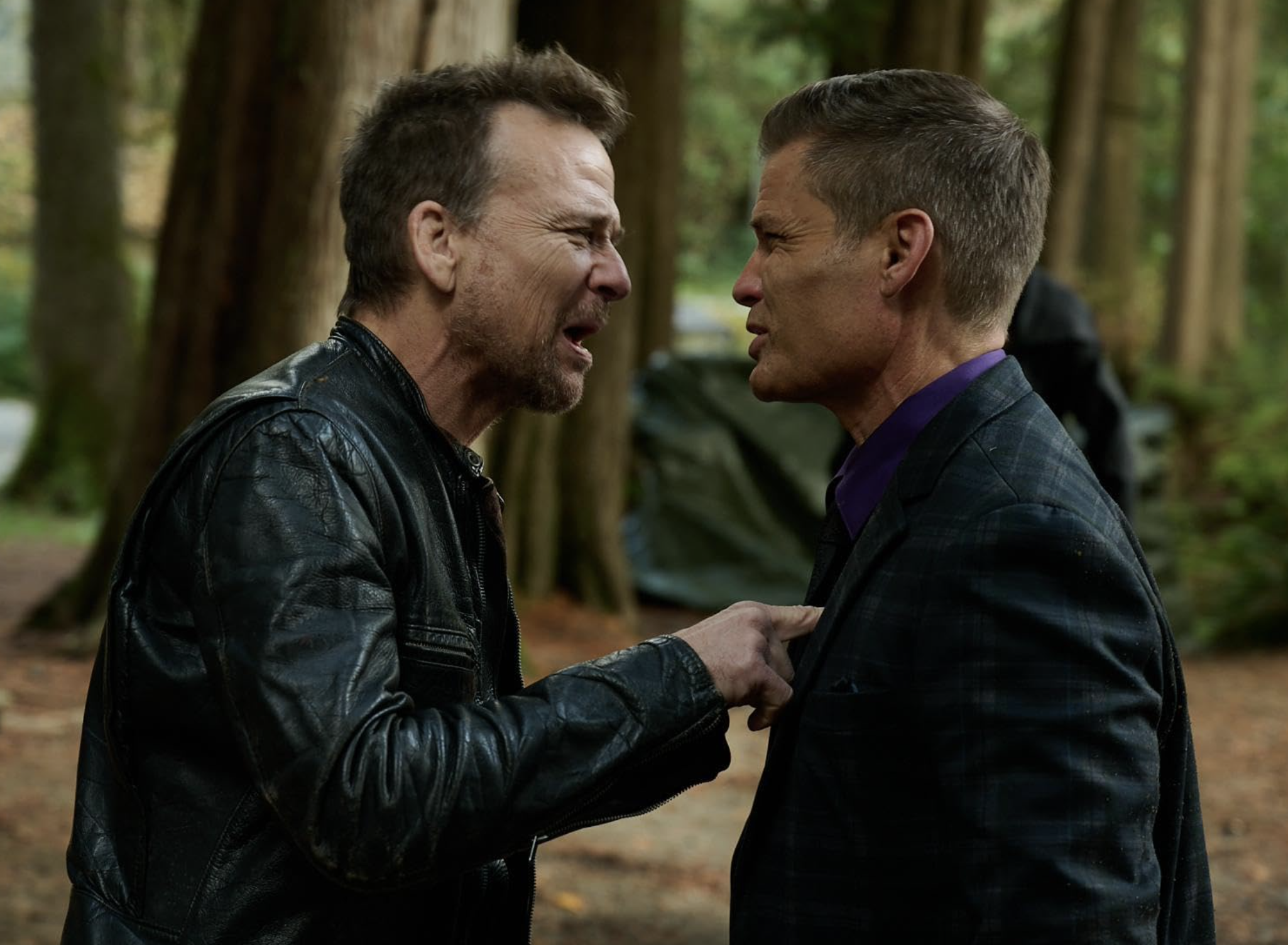
Alex explained how they had hired an LA lawyer to deal with casting directors over there since everyone speaks the same language in film industry terms. However they had plenty of great connections here as you have read. While Alex was unsure of bringing Americans here especially with what’s been going on lately, the distributor had the right idea with having some good names. Of course, only 3 people from LA were in this but they still had a big impact, as we all can agree. The two went on about tax credits, bankable names, and other interesting info that definitely explained a lot. Whatever interests the distributors.
HNMAG: And finding the locations. How did you manage to secure some of these other spots around Vancouver?
Bruce Fontaine: I think we maybe did about 7-8 days in the cabin because we did a splinter day, we came back and we had like a week or more.
Alex Bogomolov: It feels like we stayed there for 2 weeks.
Bruce Fontaine: That location, I’ve been three times prior, a friend did an indendepent film and I was there. I worked on two kind of smaller indie films, with better budgets. I met Richard the owner, our third partner Wei had also worked there. Since we know him and we talked to him, a lot of people in the industry know for that particular location, he’s got a two-tier system. When Twilight filmed in there, he was charging the whole rate. For smaller companies like us, he knows we don’t have a large budget. He’s usually very accomodating and he was very great about this. When the script idea came up, I got a co-writer and Alex helped with some of the scenes. Especially the Russian stuff. Now we didn’t have every location but we knew that location was going to save us money, we knew different places that we could utilize. We kind of reverse-engineered. We had a few other locations that we went out to Maple Ridge, Pitt Meadows, Langley, they’re outside of the Greater Vancouver Area. Partly more tax credits and that’s where Alex was working his magic because he and I kind of started it but then he said “We’re getting to pre-production, I’ll take over” He just managed all the tax credits but we partly took the location because of tax credits. Even before we were officially greenlit and had money, we did a location scouting figuring out places. Actually we had to change locations sometimes at the last minute but we had a great crew so sometimes they helped us mitigate those issues.
Alex Bogomolov: Yeah, because there was the strike, they didn’t have a leverage to negoitate. We know nobody’s busy, there was no work in the town. I remember when we were shooting the casino scene, we had a scene with a bridge in the script. There would’ve been moving but our location manager said, “Y’know instead of moving, there’s a tunnel right behind there. Why don’t we change it to the tunnel? We don’t have to move, we can stay in the same location!” There was lots of this during the production. We were kind of rewriting some of the scenes, although maybe the dialogue would stay the same or we would tweak it. That’s why the element of Pakistan would stay there but we don’t have that character anymore. It was supposed to be one of the investors, so we were like “Let’s give him a part” and then he dropped off. Then we left that c plotline in there.
Bruce Fontaine: That’s a minor thing but Alex is right, but it actually works with Pakistan and Afghanistan right beside each other. It’s known that there’s a lot of drugs floating between the two places so it works with the context of the script like an easter egg.
HNMAG: And the story itself. It reminded me of Tarantino films among other concepts. Did you draw inspiration from specific movies?
Bruce Pehterick: We have a look-book where we were putting this together and it states right on it, “It’s inspired by Tarantino and Guy Ritchie, but a lot more action” I will also add I don’t think we improvised as much as Alex said, but we definitely improvise and I have to give due credit to Sean Patrick Flanery. I learned a lesson and I had a talk with a couple actor friends later and said, “Allowing an actor to rewrite his dialogue, tell him it has to be prior to the shooting, or at least three days prior to shooting the scene in question.” But Sean actually elevated the script in context of his character and he did do a lot of tweaks to his dialogue. I actually felt it actually made it a little more Guy Ritchie-Tarantino-ish.
Alex Bogomolov: I think Sean didn’t know about the pitch deck. There is a reference to Vincent Vega being killed. And we let them improvise to get that chemistry between them, and it’s there, you can feel it. They said it worked, they have never worked together before but they both as humans played themselves. Casper is more polite, intelligent, I wouldbn’t say shy, he’s expressive. He’s cool, but Sean is from Texas. He’s an opposite character, and you see it actually worked perfectly.
Bruce Fontaine: I’ll just add one thing as a sidebar, back to when we were casting… Originally a friend of mine who lived in the States had a film that was going to happen. It wasn’t working out, it had Casper and I said “Can you make an introduction?” and this particular fellow kind of got a Midas touch when it comes to getting you to meet people from larger agencies. I started talking to Casper, his agent Jeffrey Goldberg, and we were looking at another actor. The thing is these actors we were looking at were cresting 50. Y’know, past the middle age mark and into senior territory. They’re dealing with body aches, hearing, and so on. We weren’t getting the other actor, he didn’t want to play an older guy. Jeffrey contacted me one day and said, “Hey what about Sean Patrick Flanery?” I like Boondock Saints, it’s one of my favourite films. I said, “F**k, THE Sean Patrick Flanery?” and Jeffrey said, “Absolutely. Well, they’re friends and they’ve wanted to do something together for a long time.” Right away, I thought “Okay! I love both these guys, I’ve seen them in Starship Trooper and Boondock Saints, obviously they’ve worked on other things” so it worked out. Instinct. These guys worked really well together, they truly definitely had a chemistry.
HNMAG: It’s quite the story how you obtained Sean Patrick Flanery and Casper Van Dien. Did they get to know each other even more while on set or was it just like a typical day like they have as friends off set?
Bruce Fontaine: They hung out quite a bit. Well, Sean had his famliy here but they definitely hung out. I had a breakfast meeting with them one time and they were always apparently going out for coffee and stuff when they weren’t busy. When you get 2 friends together who are professional in what they do, I think it would work out and as you can see it well did.
HNMAG: With all that went on in the story, what would you say was the most difficult thing to film?
Bruce Fontaine: For me, I felt the most difficult thing was when we were shooting the ending scene where we were having the 2-on-1 fight. Harmeesh vs. Sean and Casper. Not because of them, we had issues because we shot out there but almost the time I shot out there was night shoots. There was a gun range nearby, and then right next to us when we were shooting the ending scene was the property line. They were clearing the forest and you could hear this beeping from these big tractors that were dragging the trees and you could hear trees falling down. We also had some weather issues because Vancouver is known for having rain. One day it was rainy, and then the next day wasn’t as bad with the rain. Then we had the light issues because we’re kind of nestled in between mountains. So if you were in Richmond, where I live, you would see sun, but then the sun’s going down behind the mountains, we’re losing light. Those I think were the most difficult.
Alex Bogomolov: The hardest was to raise the money. During production, it was fine, problem solving here and there. There was a day I remember when we were going over and it was our scene, the first day. We didn’t have time, so we just chopped two pages from the script. The Sean and Casper were intended to be much longer. We had an hour to shoot the scene and all the coverages, so it was just one take and done.
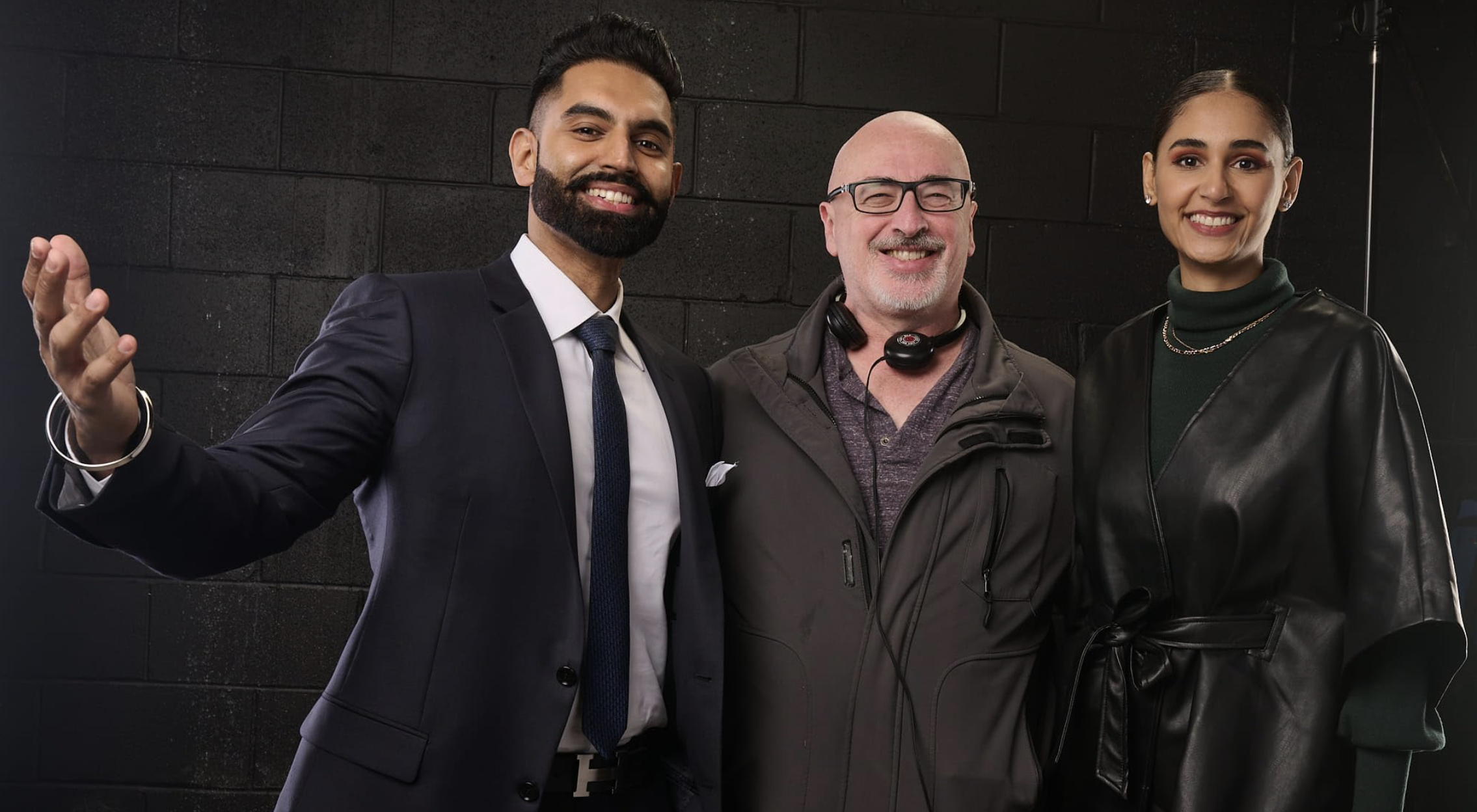
Despite this, Bruce and Alex explained how they pulled it off in a matter of 10 hours careful not to go on for too long given their independent status and low budget, Bruce has admitted to being on big Hollywood shows doing nothing for a week in his trailer because Hollywood studios can afford that luxury unlike here. They also mentioned rescheduling given certain hours and keeping Sean for a maximum of 8 hours. Besides all the little things that happened like an uncooperative restaurant owner in Langley that tried to disrupt the shoot with leaving his speakers on, the crew and everything else went very smoothly.
HNMAG: How long did it take to choreograph all the action?
Bruce Fontaine: I’ve done a lot of action stuff in Hong Kong and here, and I’ve done a lot of stunt coordinating but honestly I wanted to delegate it to the stunt people more. I will say that there was stuff that was written into the script which a lot of stunt people don’t do. They observed that and worked it in. For example, there’s a point where Casper bites the arm of Hasleen Kaur. There’s another part where Parmish sucker-punches Casper when Sean wasn’t in the fight yet. That’s not in the script. Brian and the rest of the team kind of worked those things in, I kind of gave them some rough ideas and template but they came up with the vast majority of it. Basically it was Brian Ho, Alex Chang, Andrew Chin, and another fella who was manning the camera. I have to give them due credit, they did a good job. Sometimes there was little issues here, but it would come down to technical things like time. They also helped us a lot in terms of rehearsals and cut some corners to help us save money. A lot of people really helped, I have to give credit to the whole stunt team and all the doubles.
Alex Bogomolov: I would have to add that action scenes with previous shooting. They go to the location, do what they can use, and ‘oh? how bout I jump from this fence?’ and they know what’s going to be on the day. Then they go to the gym, they build it there with mats and then they rehearse and preshoot everything there. Then send it to the LA guys and explain fights. Everybody knows the choreography and all the camera moves and where the lighting should be. Then on the day we can shoot a huge fight in half a day. The big productions do it in a week, but you spend a lot of time rehearsing and pre-shooting everything.
Bruce Fontaine: To back up what Alex said, we took Brian and the guys to the location where most of the action takes place and talked about the scene of Hasleen fighting with Casper. I had some ideas to bite his arm, do a choke, but when we got there, Brian did exactly what Alex said. They made the plan to have Casper at the top of the hill, push him, get his double Adam to do the fall, roll down the hill, then kick him off the ledge near the bottom and have him fall on his back down around a campfire type place. Brian did a great job, and when I heard those things, I went, “Fantastic” because he’s keen in terms of how we utilize this place. That was a really big contribution those stunt guys came up with. I think that really enhanced a lot of it.
HNMAG: You both have extensive experience in filmmaking, but would you say this is your most extravagant?
Bruce Fontaine: For me as a director/filmmaker/producer, this is much bigger than my first film, Beyond Redemption. That had a lot of good fights, but didn’t have a budget. We only made it for $4500, it did well but we were really limited. This for me was much bigger. I mean, I’ve done much bigger budget films. I don’t think later in my life I will reflect on some of those bigger films. I’ve worked on I, Robot for 6 months. I was Will Smith’s personal safety guy as part of the wire team. I had fun sitting around with stunt guys but I don’t have fond memories. When you take something that you create from nothing, you kind of make it happen. That’s a different kind of feeling. I’ve also worked in Jackie Chan’s condor. That one I have fond memories of, but I didn’t help create it. Myself, Alex and Wei created this, and for me this was a much bigger step, I’m hoping for even bigger. Hopefully Alex and Wei will be able to work with me again, depending on schedules and availability. But for me this is the biggest thing I’ve done, it feels more personal.
Alex Bogomolov: I agree with Bruce, because there’s so many times we were close to giving up. Before all that, we were close friends. During the production, we had some tension because we were so stressed with the money. You never know, you have to be creative, just weigh more energy into the payoff. I wouldn’t expect it to be a huge blockbuster in 2000 screens in North America. Of course not, but the way I actually see it was much better than I expected in the script stage. Because of the contributions from EVERYBODY, and especially knowing the budget, the film looks much much better. I don’t have that much experience as Bruce. The biggest production I was in was Sonic the Hedgehog. We didn’t work the same days on set, but they built this huge tavern we were shooting inside of. They built the Russian tavern, it doesn’t look Russian but it’s the way Americans think, I guess. (laughs) When we were shooting, they were able to move everything. When you have the budget, you have the luxury. Everything is like a transformer, you can move whatever you want because you never know what the director might want.
Alex said it was a great experience as well because he was given the special dolls they used in place of the CG creatures. He was carrying Tails and Sonic for a while, and watching as people set up little balls of fluff for the capturing of a scene. He was impressed to see how blending CG with reality was done.
Bruce explained earlier that he had a lot of experience working on Hong Kong films that were in fact 100% improvised dialogue. He carried that experience over into allowing improvised dialogue on Ruthless Bastards whenever they really needed.
HNMAG: And you’ll be doing even more work together with these other crewmembers in the near future?
Bruce Fontaine: There was some conversation about sequels, and myself personally, I think, let’s wait and see how it performs. Full disclosure: I waived a fee, several of us did in order to get this made but I haven’t seen a nickel. Alex, myself, and Wei, we ended up throwing a few bucks into paying for some post, lawyer fees, or whatever. I want to see how it performs, I do wish it had a little bit more marketing behind it personally. But on us, the way independent films work, you sell the license, the film, by your distributor to various countries. It’s up to that country in some regards how much went into the film. I do wish they would a little bit more promotion into this, we don’t have the funds or the resources to launch a million dollar campaign. I think all the cast is great, but I do feel that one of the major selling points is Sean and Casper. I think they have great chemistry, and my wife makes a joke that I think is kind of funny, but there was a film that came out just before us called Wolves. That was George Clooney and Brad Pitt, and that’s Ruthless Bastards Luxury. Nonetheless, I’ve seen both films and obviously Wolves has a bigger budget and obviously some marketing behind it. I still think Casper and Sean are as good as George and Brad in terms of the chemistry and them being good actors. Obviously they’re not on the same caliber point in their career, but I thought they were great. When I was sitting on set behind the monitor, I would be thinking “YEAH, that really worked. That was really cool” and while we setting up lights they would be rehearsing and working off each other and trying to get those highs through the lines. I think they were fantastic. I also think the rest of the cast was great, I was so happy to get Theresa Lee, I love Hasleen, there was a little problem here and there with Parmish but I think he did really well with Parj. Seamus and Malcom were great, Sydney Scotia was fantastic, Thomas Newman was great. I picked most of them, but I had some help getting them. I don’t think we could’ve picked anyone better for the characters we had. We just hope the film will get out more if it does perform well and hopefully we’ll have saved some money. We’ll make a decision then.
HNMAG: Now were there any challenges with securing international actors?
Bruce Fontaine: For American actors, we had SAG clearances. Alex can tell you it was quite a bit of work. That was a little bit sketchy at times, because we were not sure we were going to get them.
Alex Bogomolov: The problem is, yeah, so we locked the dates, went to production, but when we sent the agreements they never replied. This was because they weren’t allowed to negotiate during the strike. If you send an email, they’re not allowed to read it. It was “get us the waiver, and then we continue talking”. I confirmed the investor’s money but the distributors won’t release the money. The bank won’t release the money, and those actors won’t sign the contract. The first day I remember as one of the happiest days in my life when we first went into production I was so excited. But at the same time I’m on the phone, with the agents and actually playing one of the Russians in the scene. I was telling the agents, “Hey, we need them on a plane tomorrow” and asking Bruce’s wife, “Hey, can you go to the bank?” and so we took the risk, the money, because if the bank wouldn’t release the funds we wouldn’t be able to pay the crew. It’s an escrow agreement, if it doesn’t happen, the LA cast won’t keep the deal. If something happens where the production won’t go forward, they would say “Thank you very much, see you next time” so we decided to take that risk and just go with it and hope that it would happen. Then one day, everything clicked. We sent them the money, and as soon as we got the waiver the next day, I said to them “Sign the agreeement, we’ll send it to the bank” so everything was done in one day but it was all building up for one year to that peak and it was so stressful for me because the AD’s were going “Hey Alex, we’re waiting for you” while I was on the phone. (laughs)
Alex Bogomolov: Because we have a strong Punjabi cast, we are betting on the Punjabi people.
HNMAG: And why did you finally decide for a Canadian theatrical debut much later? Why have it go through the US and Europe first?
Bruce Fontaine: Wnen you have a worldwide bigger distributor, they’re basically controlling the timing of all the countries. In an independent film, they sell the rights to somebody in Canada. We were already presold for the USA, they decide what window we’re going to go into. Are we going to do theatrical or go straight to streaming? In case of the US, they went straight to the streaming. I kept saying from day 1, no disrespect to Sean and Casper, but Parmish has been the lead in about 8 different films and they’ve all been theatrical. In fact, I know a lot of people in the Indo-Canadian film community, I’ve met several of them in the last several months. they all say the same thing: “Why aren’t you doing any Canadian theatrical?” Ultimately, that’s up to the buyer because they’re the one that will pay all the expenses. That includes putting it in the theatre and every theatre has a thousand dollar digital fee. There’s the marketing that goes with it. Sometimes for a film like ours, easier to put it on streaming. Unfortunately, we didn’t have too much to say about the release of it. I kept saying ‘Canadian Theatrical’ and I had an Indian buyer I introduced, he wanted theatrical for India, Canada, Australia, New Zealand, and UK. But how deals are structured is hard to sell as they only wanted theatricals in the Western countries because of Parmish. They liked it because it was an international film, but they were mostly sold on Parmish and decided to put it in 15 theatres in Canada, US, etc. But the distributors were doing the worldwide sales, it’s hard to do that for the other buyer who does all the streaming. It’s a very complex thing and Alex and the other projects he’s done.
Alex Bogomolov: I think we can tell the truth here about Canadian distributors. Well, the Canadian distributors didn’t want to pick Canadian film. That’s the truth, we don’t have a Canadian distributor. We have a guy who’s actually a producer doing side gigs to help us get it into theatres and our sales team which is a Canadian sales company. We try to find a distributor, they are talking to streamers directly. All of the main distributors passed on our film, and that’s why it took so long. We couldn’t do it before because the deal with the US where it was released over half a year ago. It couldn’t have been released on the same day in Canada.
Bruce Fontaine: The way it works in Canada, if you’re trying to make independent commercial films, you’re all on your own.
HNMAG: And how well did it screen through the other areas? Were there positive reactions by the audience?
Bruce Fontaine: You’re always going to get varied reviews. I know that most people I spoke to will be nice, they all liked it. We’ve had lots of reviews, particularly action type reviewers enjoy the film. We’re selling okay and I know we got Poland, Germany, we sold Pakistan. I think there’s a pending deal with France, Italy, of course Canada and USA. Hopefully we’ll continue to settle but right now businesswise we’re in the black which is good. It’s largely due to the hard work of Alex and just the financing deals we’re able to structure.
HNMAG: Can we expect streaming and digital releases afterwards?
Bruce Fontaine: In Canada, there are some pending streaming deals. I don’t think I can say too much, but there’s maybe a bigger pending deal. We’re waiting to hear about that, something to do with this theatrical we might do which is more of a business thing. There’s a couple that are already signed, I think they’re going to have to push because of the bigger deal. The streaming deal is pending, we’ll wait and see, but there will definitely be some sort of Canadian release because I know two streamers are signed for Canada. The bigger one, they’re still trying to ink a deal.
There’s also some possibility of Punjabi communities getting to see the film next given the cast members who are Punjabi. Alex says they have every news station in Vancouver pushing him and Bruce to test it and if they decide to expand, then there will be more options to explore. He revealed that because Ruthless Bastards was shot in Vancouver, and Parmish lives in Vancouver, we think we might have some audience here physically in the theatre.
Even though Indie films are not sustainable and Telefilm Canada seems to favour art over action, this film still deserves some recognition. We should even see Vancouver’s film industry nourishing these kinds of companies in the future. It would be a big boost to my best friend, Jonathan Rido.
Let’s give these guys a boost in sales. Everyone ought to go out and see this, so grab your tickets at the Rio and watch this fantastic film.