


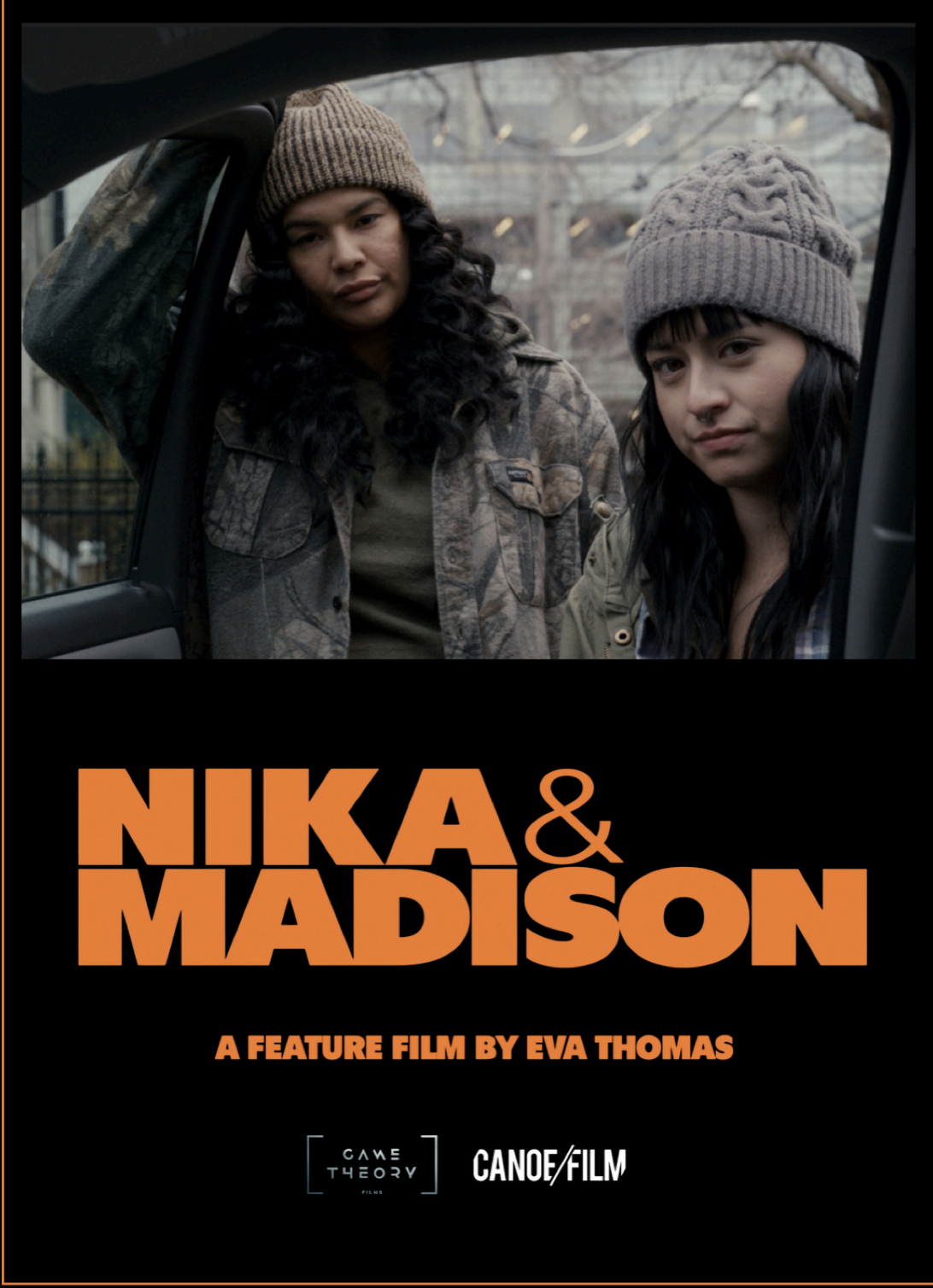
Nika & Madison is a Canadian feature film, shot and set in Ontario. It’s a crime thriller that takes on the all too common issue of authoritarian abuse against Indigenous women. It was co-written, produced, and directed by Eva Thomas.
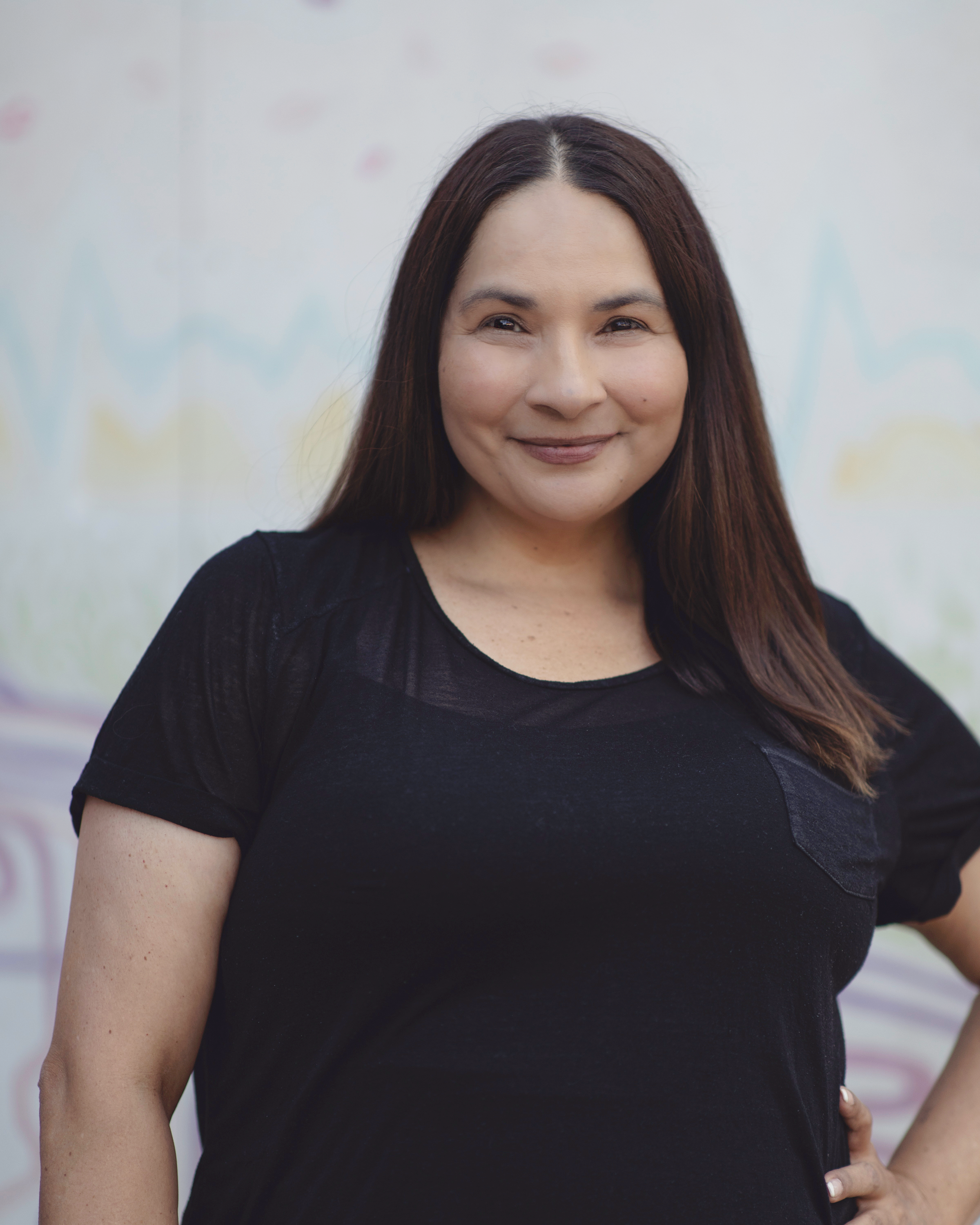
We subsequently had a chance to sit down with Eva Thomas at the Whistler Film Festival (WFF).
HNMAG: Have you been to Whistler before?
Eva Thomas: I have. In 2014, I was part of the then-Aboriginal Filmmaker Fellowship, now the Indigenous Filmmaker Fellowship. It took ten years until I had a film screened here. Last year, my movie Aberdeen screened, which is a feature film that I co-wrote and co-directed. Now I’m back with my first solo directorial project.
HNMAG: How was the experience of co-directing Aberdeen?
Eva Thomas: I enjoyed co-directing. Ryan Cooper wrote a script and sent it to me for notes. He then asked me to co-write it, and then he asked me to direct it. I said no because it was his story, and it was very personal. I did agree to co-direct it. It’s a tragic family story, and I was able to add my skills while Ryan kept his initial vision. We came up in the industry together and knew each other. I had a great time.
HNMAG: Are you from Toronto?
Eva Thomas: My dad is from Ontario, my mother is from the States.
HNMAG: So you’re dual.
Eva Thomas: Yes, and I live in Ontario.
HNMAG: Have you ever lived in the US?
Eva Thomas: Oh yeah, sure.
HNMAG: What do you think of the difference?
Eva Thomas: (laughs) There are a lot of differences. I went to school primarily in the States. I came home to Canada every Christmas and summer. I did my undergraduate at Arizona State University. I did my Master’s at UCLA. I trained to be an actress, but it was frustrating for the types of roles available to an Indigenous woman at the time. It wasn’t going to change until someone learns to right it. It took a few years to learn how to write, and then I became a director. Living in LA, there were so many Canadian Indigenous actors. They were allowed to build a career in Canada and then moved down to work in the States. At the time, I wanted to see what was happening in Canada. It was a good thing that I did because that was when the Indigenous Screen Office was emerging. They have been fundamental and have given me opportunities. They helped with development and funding for my projects and films. Coming home and the Indigenous Screen Office allowed me to build my career.
HNMAG: How did the idea behind Nika & Madison come to you?
Eva Thomas: I always reference Thelma & Louise as a major inspiration. When I watched it as a little kid, my thought was that they should go to the cops and tell them what happened, and their problems would be solved. I didn’t understand the nuances, the history around trauma and rape. I didn’t understand the Texas of it all. There is a lot more going on than what was in my little kid’s mind. As an adult, I rewatched the film and thought to myself: if these two women couldn’t go to the police, what if it were two Indigenous women? Then they really couldn’t go to the police. That was the spark of the idea. So I did some research: how do people get to direct a feature film and I read about how many great directors got their first feature by first making shorts, so I thought, Ok, I’ll do that. That put me on a seven-year journey of short to features. Before I made the feature, I wrote and directed the short film Redlights (2023).
HNMAG: Nika & Madison was with you before Redlights?
Eva Thomas: The concept of the feature, an Indigenous Thelma & Louise, yes.
HNMAG: What’s something audiences can take away as a way to move forward?
Eva Thomas: I first thought the spark of the idea was going to be around domestic violence. It could have been that one of the girls would have an abusive partner, and the other would save her. COVID happened, George Floyd happened, and all these things around law enforcement were happening. I had something to say about that. That was where I made the switch in which the police force meets Indigenous people. For a lot of people, the cops are a place of safety. For Indigenous people, they are often not. There is a history of distrust and a history of violence. They are not seen as safe or protected places. That is something I wanted to emphasize. In the Indigenous world, the cops are not seen as a place of safety. I wanted to create two strong female characters that the audience can go on a journey with. They would learn about them, empathize with them, and even root and cheer for them. Through that they can empathize with the life dynamics that these women have gone through. That way, the audience can walk away with more understanding in general.
HNMAG: That leads to the abuse of power that the dynamics bring.
Eva Thomas: Absolutely. There were opportunities where the characters had the choice of going to the police for help, but did not feel safe to proceed. When you read about Indigenous bodies found in landfills and Indigenous women being raped and murdered, while the police don’t take those crimes very seriously. It feels like a very unsafe place to be. How do you survive in a world that doesn’t protect you? The way you service is through the relationships you build with other people and other women. The abuse and the unsafe dynamics are all there, but what people are really drawn to is the relationship between the two girls. You get to know them, go on their journey, and at the end, you really care about them. That was you really care about the issue because you care about them.
HNMAG: The trauma on top of the assault is the victim’s isolation, where people won’t understand what they are going through, and then they are made to feel at fault.
Eva Thomas: You see that a little bit in the feature, but what I didn’t expect was the number of audience members who would tell me that this happened to me, I had an encounter with the police. I’ve attended seventeen film festival screenings around the world with Nika & Madison, and the issue is universal. We had a couple of audience members in St. John’s who had to leave the theatre after the screening because they were so impacted.
HNMAG: They were triggered.
Eva Thomas: It triggered them because it’s happening to them in their community. Many Indigenous people say that this speaks to them and their story. I kind of expected that, but what was surprising was how many women would wait until they could speak with me in private and tell me how they were sexually assaulted, and they had never seen how it was depicted in this way. They really appreciated it, and they had really felt that they were seen. We see so much about the abuse of power and the assault that has come forward in society as of late. We don’t see the impact on the people who have been assaulted. There are long term effects; it changes how you see the world. It changes how you look at yourself. It changes who you can trust. Sometimes it fundamentally shifts who you are. You don’t want to talk about it because people look at you and treat you differently. There is a shame that is always there. Then you sit with it, and your world gets smaller.
HNMAG: How was the experience of making Nika & Madison?
Eva Thomas: There were a lot of Indigenous performers on camera, but we had a lot of Indigenous people behind the camera as well. Many of the top crew positions and most of the music were created by Indigenous artists. We were also nominated for an award in direction by the Directors Guild of Canada (DGC). We won five awards at the Red Nation Film Festival in LA. Nika & Madison also won awards in several of the Film Festivals where it was screened. I am so pleased with how audiences are responding to the film.
Nika & Madison will be screening starting March 20th at the Tillicum Twin Theatre in Terrace, BC, and then will be at the VIFF Centre in Vancouver starting March 27th.
Movies have a huge influence on society. People often dismiss real issues as separate from their lives because the terrible tragedies and injustices are not framed as something personal. We focus on our own lives and direct daily challenges. Once we get to know characters and feel what they’re going through, then the issues start to hit home. Nika & Madison is fictional, but the sexual abuse, violence, and abuse of power are very real. This is an important movie that needs to be seen, so we can make room for a much-needed dialogue to change society for the better.
Some people post about very hypothetical and highly unlikely issues, such as a homeowner’s future property rights. Maybe it’s time to focus on what is real and going on around sexual assault and helping victims regain their dignity?