
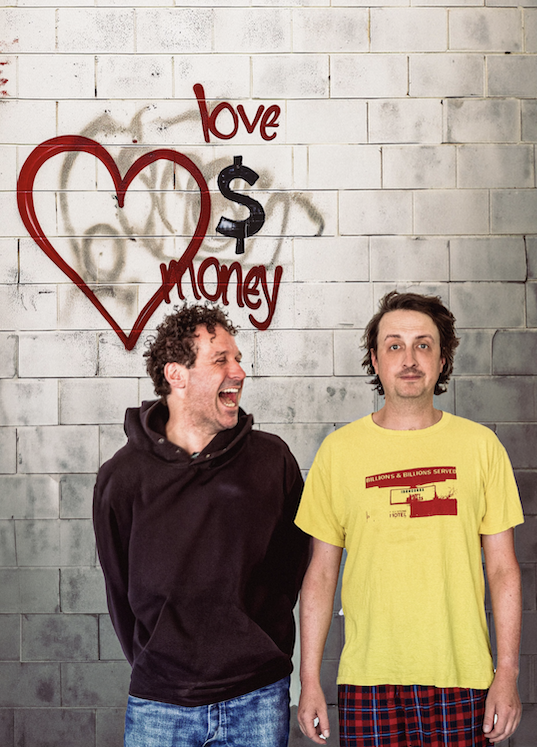
A lot of people say that Vancouver has very talented performers, but David Ray really put it to the test with his new feature comedy film, Love And Money. All the dialogue was improvised, and there were even more surprises during the shoot, as explained below.
Here is our conversation with actor Scott Bellis and director David Ray.
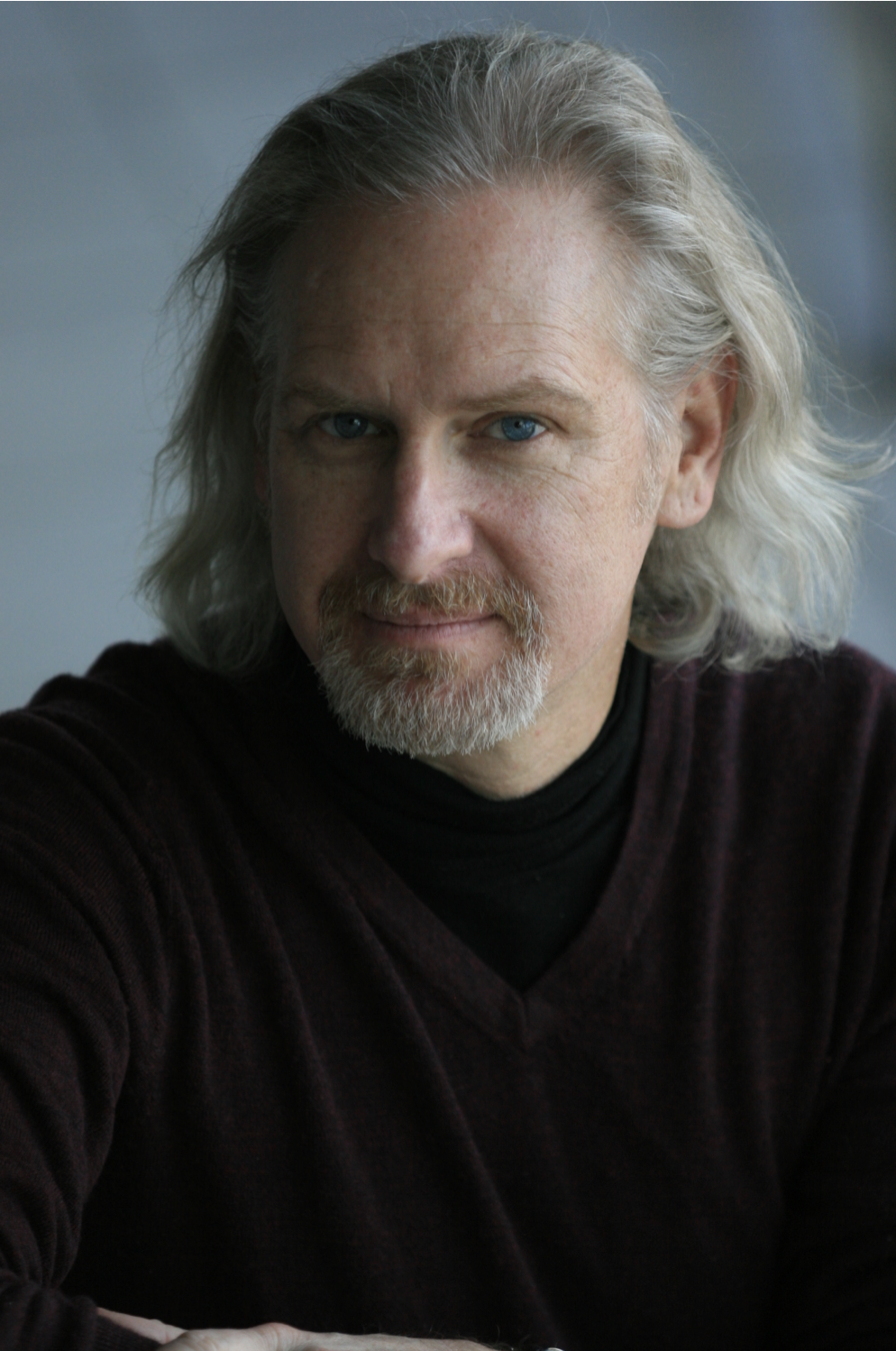
HNMAG: Scott, where are you originally from?
Scott Bellis: I grew up here in Vancouver.
HNMAG: You’re local. Wow, that’s rare. When did you get interested in performing?
Scott Bellis: Probably as a teen. I actually remember my, my first public performance reciting in Flanders Fields.
HNMAG: The poem?
Scott Bellis: The Remembrance Day poem.
HNMAG: It’s an important one.
Scott Bellis: In front of my elementary school, when I was in the second grade.
HNMAG: Were you nervous?
Scott Bellis: For some reason, my teacher got me up to do that. And that’s what I remember quite vividly. So that may have been the seed that got planted. It was a good experience.
HNMAG: Did that turn out to be the kernel to attend theater school?
Scott Bellis: Yes, I went to Langara’s Studio 58.
HNMAG: Studio 58 has a great reputation for theatre. Vancouver is more of a film and TV town. There is less work here on stage.
Scott Bellis: Not for me, though. The greatest portion of my work has been in live performance.
HNMAG: Are you able to make a living as a stage actor in Vancouver?
Scott Bellis: Opinions on that vary depending on how you define “making a living”, but we manage.
HNMAG: That’s nice.
Scott Bellis: I got a thing for Wild Cards today. So, you know, I do some film and TV auditions as well.
HNMAG: Wild Cards is a great comedy show set in Vancouver on CBC. Love and Money, like Curb Your Enthusiasm, Best In Show, and other Christopher Guest and Eugene Levy movies, was improvised.
Scott Bellis: Yeah.
HNMAG: Do you have a big improv background or comedy improv?
Scott Bellis: I haven’t done a lot of what you’d call improv the way Theatersports does it. But I’ve done a lot of improvisational material making. I’ve done a lot of new script workshops where you’re throwing stuff at the wall and seeing where that lands. I do a lot of it in my stage work. I tend to do a lot of comedy.
HNMAG: This movie was a little different because usually, if you’re working on a Christopher Guest movie, you’re going to talk about a character. You’re going to talk about a scenario or a pivotal moment in a scene that you’re going to want to try to hit. In terms of your improv experience in theater, not necessarily comedy, but when you’re improvising to create particular before and after moments. When you’re doing a theater piece, are the rules the same as short-form improv comedy, where it’s really based around Yes… and?
Scott Bellis: You’re really working to build off of what your partner is giving you in the scene. I’d say that the rules are very, very similar.
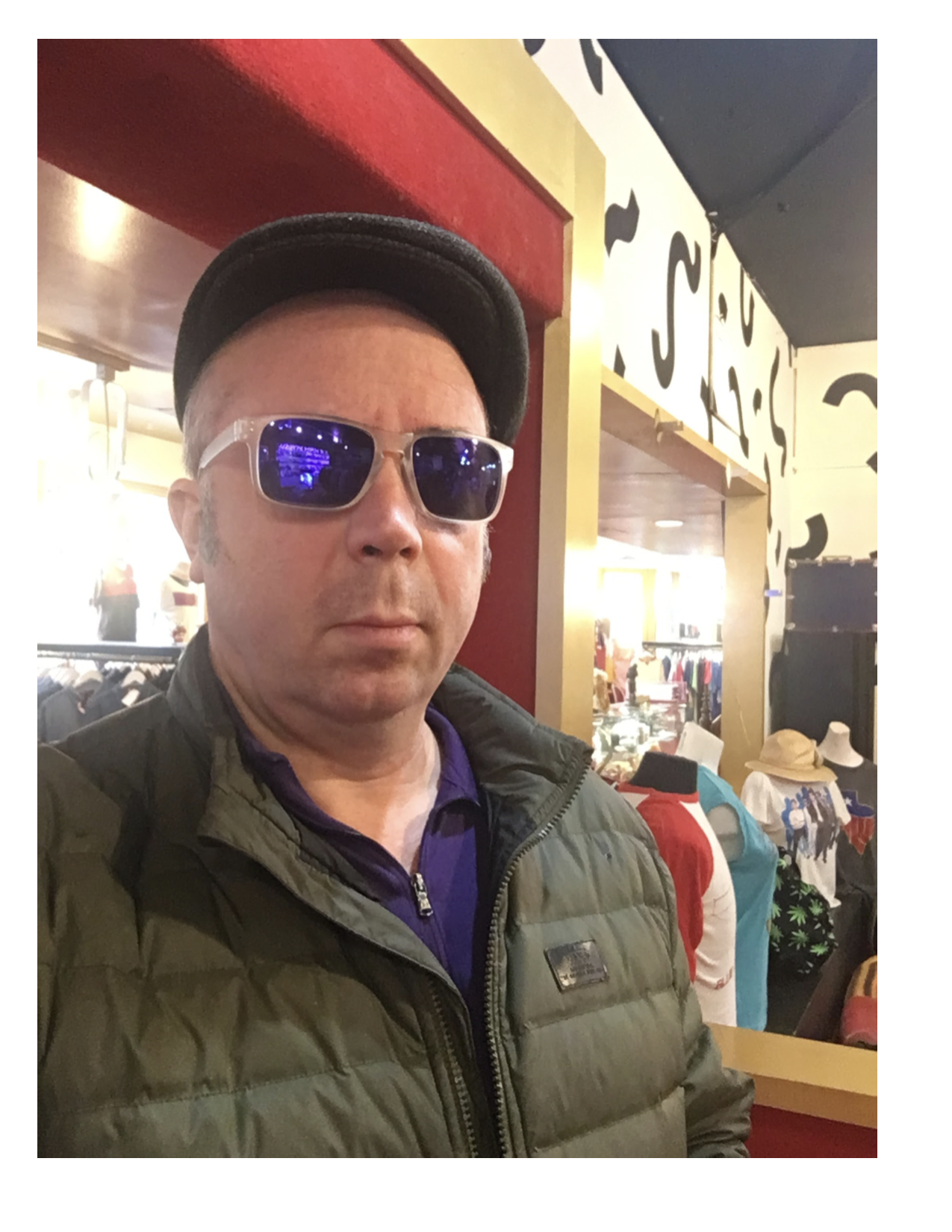
HNMAG: David, did you grow up in Vancouver as well?
David Ray: Yeah, I did. Not far.
HNMAG: You know the city really well. How did you get interested in film and television?
David Ray: My folks let me use their cameras. And it was an opportunity to really get together with friends, play social, and just monkey around.
HNMAG: What kind of camera did they have?
David Ray: I’m old enough to remember those first super eight video cameras. I remember when the video camera came out, it was an odd, heavy, handycam.
HNMAG: When did you start working in film and television?
David Ray: I went to film school. I ended up in Toronto for a few years.
HNMAG: Ryerson?
David Ray: Yeah, TMU (Toronto Metropolitan University)
HNMAG: Ryerson changed its name to TMU in the spring of 2022.
David Ray: Then I came back to Vancouver, and I’ve been working here as a writer, director, and teacher.
HNMAG: You teach filmmaking at Capilano University.
David Ray: I teach screenwriting, and I am a member of the Writer’s Guild of Canada.
HNMAG: You made a feature prior to this. Grand Unified Theory, right?
David Ray: Yeah, with Scott and Andrew as well.
HNMAG: That was not improvised.
David Ray: No, we had that scripted. Before that, Fetching Cody with Jay Baruchel, and that was scripted as well.
HNMAG: Does the colour of a used vehicle determine it’s value at all?
David Ray: You know, the Honda held its own. I think it’s the brand. It’s weird. It’s my dad’s old car, and I inherited it.
It’s surprising how many people offer to buy it. The car is in the movie.
HNMAG: Andrew was difficult to recognize in the second scene of the movie.
David Ray: The challenge we faced when we shot this, we shot one or two scenes a month. We had literally no money. Whenever you can get the chance to
have availability, we have to take it. Andrew had other work that required him to change his hair. That’s why he was wearing that cap as well as facial hair changes.
HNMAG: Was the structure the same as something like Spinal Tap, Waiting for Guffman, or working with Larry David on his HBO show? Did the actors know the beginning and end of the scene, but didn’t have any scripted dialogue?
David Ray: This was completely different. I’m not too aware of anyone else who made a film this way. On day one, we had zero preset story. When Scott showed up, we didn’t even know the name of his character, so we called his character Scott. The only note was when Andrew showed up in that first scene, he didn’t even know who else was going to show up, and the only note I gave to Scott was whoever it is, you have to ask them to marry you. Scott had no idea which character he would have to ask. Scott asked me why, and I had no answer for him.
HNMAG: The character Scott was played by Scott, and Andrew was played by Andrew. How did Ryan become Robin and Jeff, Mouse?
David Ray: Mouse, I think that was improvised. I didn’t have any idea about that. Robin was one thing we kind of figured out. At that point in the story, when Ryan showed up, he would be a bit of a monkey, and that was inspired by Puck or Robin. Scott, you know this. Who’s the character in Shakespeare’s play?
HNMAG: A Midsummers…
Scott Bellis: Robin is a different name for Puck, and it’s A Midsummer Night’s Dream. He’s the mischief character.
HNMAG: Yeah, okay. That makes sense. That’s the information that Ryan Beil had going in?
David Ray: Probably the most information anyone got. Some performers got a little bit, some characters would go a little bit here and there.
HNMAG: You found a lot of the movie just by improvising. That was really how this thing came together then.
David Ray: Completely. It was super fun. Couldn’t have done it without these great improv actors, like Jennifer Tong and Jeff Gladstone, as well as our creative team Brenda Smith, editor Chris Hooper, composer John Colins, and sound mixer Sparky Pitkethly. Small group, incredible talent.
HNMAG: Are you thinking about doing another improvised feature?
David Ray: Yeah, I’ve already started one. I want to make it my hobby. I get paid to work as a screenwriter, that’s my career, but I just love making these things. I’ve never had more fun. I want to share my insight into this process as much as possible, so other people can do it because it’s just, we need more creators here. We’ve got the best actors in the world and with the advancements in consumer technology, it’s free.
HNMAG: David, is there anything else you want to add?
David Ray: I want to ask Scott, why don’t we have a star system in Vancouver?
Scott Bellis: I can’t really speak to the film industry. There are some prominent Canadian film actors. In terms of the theater industry in this country, it’s a small business. There’s not a lot of money in play anywhere in the country. You might have a few places where an actor might earn a contract that would pay them, a few $1000 a week, but they would mostly be big musicals in Toronto or headliners at the Stratford Festival. You look at the largest theater we have in the city, The Stanley Theater on Granville.
It has 600 seats in it. In terms of earning power for actors, which is kind of what you’re talking about. Most theater in this country is created on a not-for-profit model. There’s very little commercial theater. It’s not a mass media format. The ability to earn revenue from it is much more limited. In terms of why actors aren’t promoted individually, is because it’s a very unstable industry. Sometimes you plan a show with an actor, and they can’t do it. So you don’t want to get all your publicity out there saying that Scott is in the show. When Scott, a month before the show’s supposed to start rehearsal, books five days on a Hallmark movie, and then he can’t do that show anymore.
HNMAG: How often does that happen with an equity play, that one of the lead actors is no longer available due to film and television work?
Scott Bellis: Presumably, if you signed a contract to do a play, you’ve got a contractual obligation to do that job. Sometimes what happens is somebody will sign on to do a play, something like nine hundred bucks a week. Then they book a recurring role on something, and there are conflicting dates. And then they break the contract, they have to pay a penalty to do that. It doesn’t happen very often.
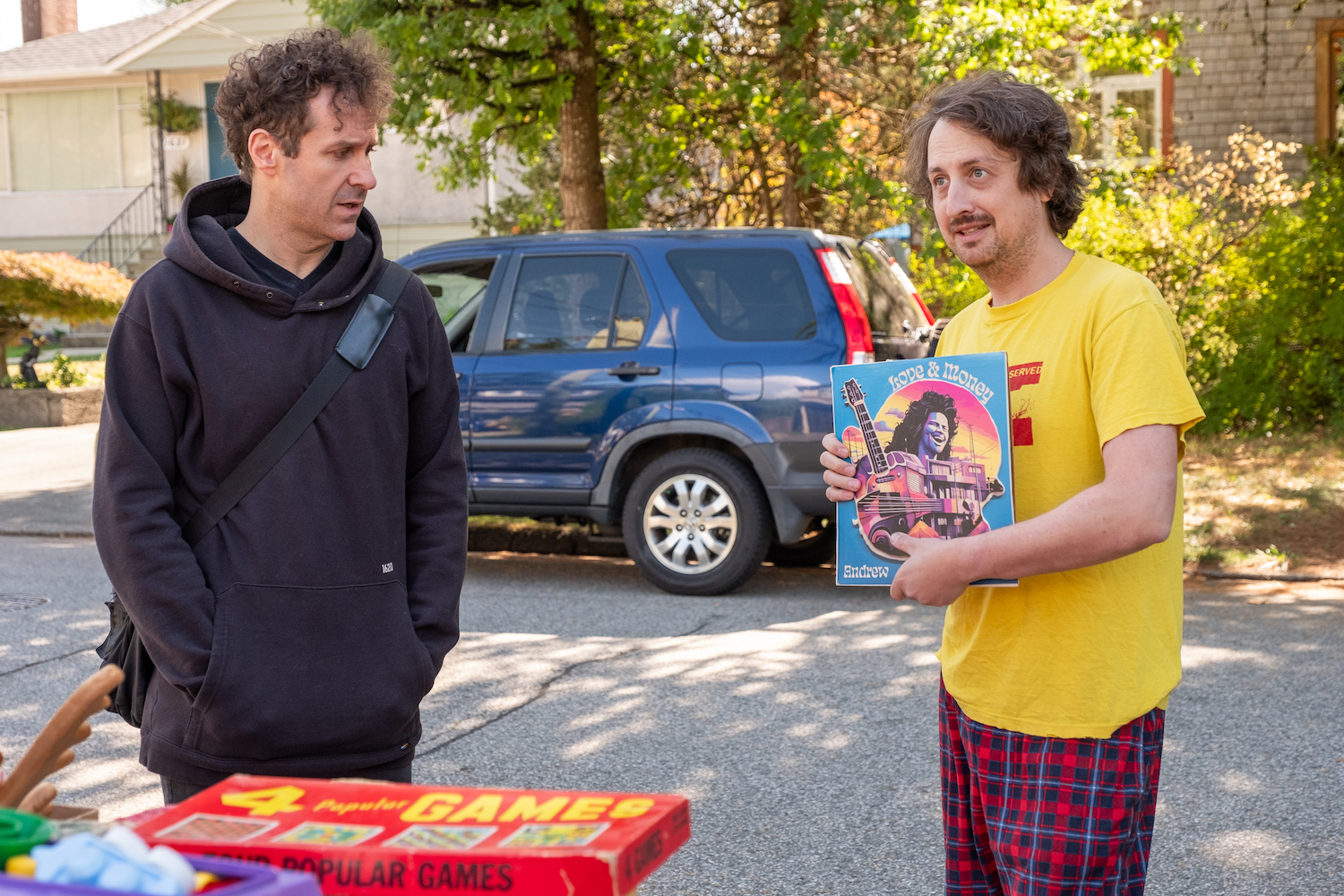
Love and Money has everything we love at Hollywood North. It’s shot and set in Vancouver. It’s entertaining and funny, and you can tell how much fun everyone had while making it. What makes Love and Money so unique is improvisation. The movie starts with actor Scott Bellis on a park bench. All anyone knows at this point is that whoever joins Scott will be asked for their hand in marriage. Scott does not know who that will be. He doesn’t know any character names or what the story is about. He’s not even given the reason why he wants to get married. Everything builds from the emotions, dialogue, and reactions in each scene. David Ray would take his footage, have composer John Collins add music, and then work with script consultant Brenda Smith to figure out information for the next scene, as it was all shot in sequence.
There have been fewer really funny movies made recently because too many takes have ruined the humour. Comedy is all about spontaneous reactions and timing. With the cost of film now being minimal, most movies can shoot take after take. Laughs go down exponentially in that model. It becomes rote. The authenticity and spontaneity are lost. When you have great improvisers, they actively listen to each other, add ideas, and the magic of the comedy just happens. It’s not preconceived, it’s mutually discovered.
We are very excited that David Ray will continue to make improvised movies, and we will be happy to share that will you. Maybe he’ll even make the next Best In Show, but it won’t only be filmed in Vancouver but set here as well. The film is set for an April 10th debut at VIFF Centre for a Canadian film showcase. Be ready to buy tickets!