


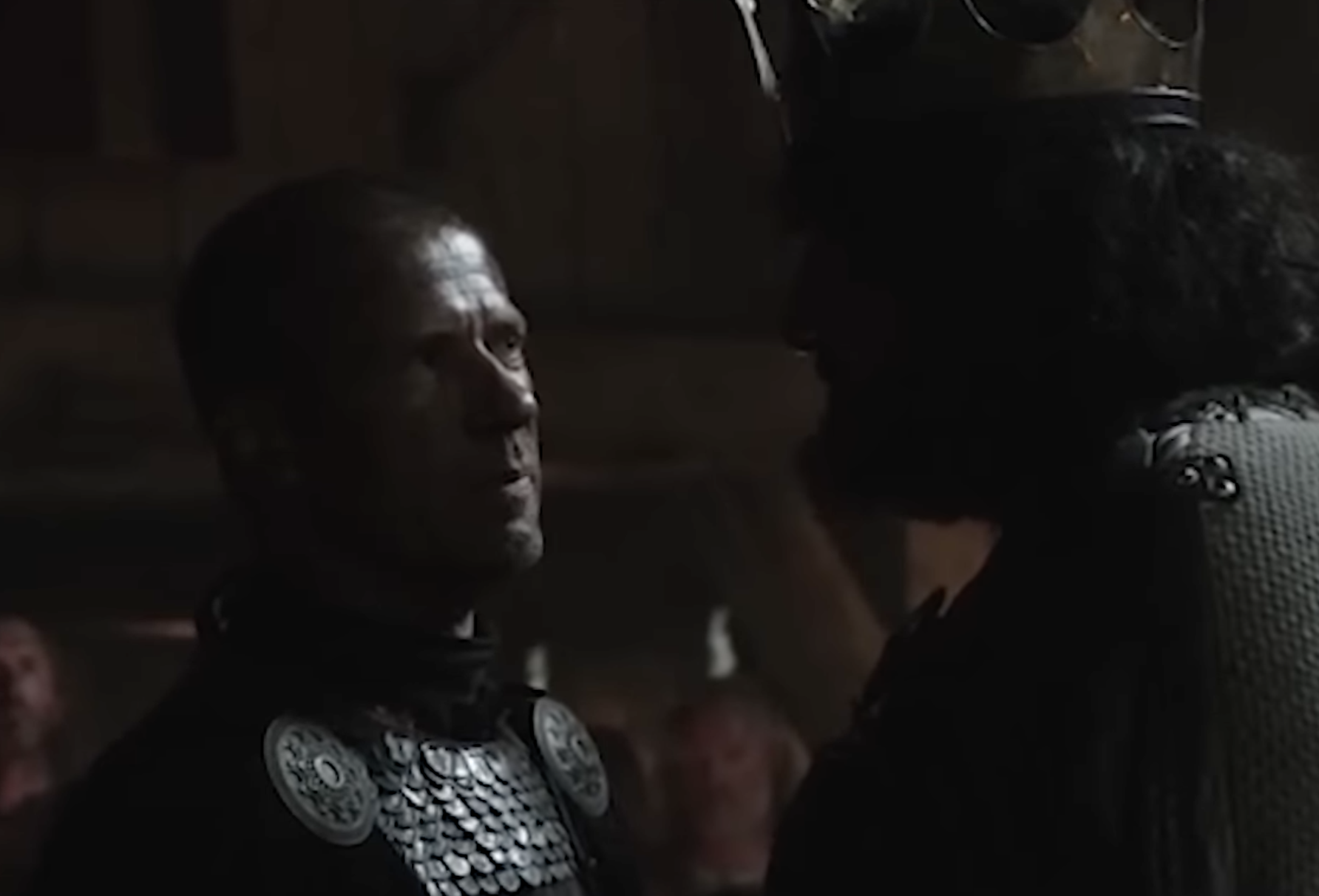
The series suggests that the early medieval world was not built from nothing. It was built from leftovers: ruined institutions, surviving beliefs, old trade routes, and political habits that never truly disappeared.
A Useful Lens for Reading Vikings
To understand why Vikings feel so closely connected to Roman heritage, it helps to clarify what historians usually mean by “post – Roman history.” It became a region filled with fragments. Roman administration weakened, but legal thinking survived in certain areas. Cities shrank, but many remained important as symbols of authority.
Law, Literacy, and the Prestige of Roman Order
Another reason Vikings feels Roman is its repeated focus on literacy. Writing in the series is not just a practical skill; it is also a valuable one. It is treated as a form of authority. This reflects the historical relationship between literacy and Roman governance. In Roman civilization, writing was central to administration. It survived primarily through religious institutions, and it remained closely tied to power.
In Vikings, written texts are portrayed as objects of prestige. Books appear almost sacred, not only for religious reasons, but because they represent knowledge that cannot be easily replaced. A monastery library is shown as a form of treasure. That does not make it intellectually weaker, but it produces a different type of society.
Kingship and the Roman Model of Power
One of the most revealing themes in Vikings is its obsession with authority. The series is not only about raids and battles. This is where the show begins to resemble Roman political history in a very direct way. Even when a ruler holds a title, the position can collapse quickly if the ruler’s reputation is damaged.
When the story moves toward England and Francia, power begins to look different. Kings rule through institutions. They rely on advisers, clerics, legal traditions, and long – term political planning. Their authority is supported by religion and written agreements. This is not simply “medieval culture.” It reflects the continuation of Roman political logic: the idea that leadership should be organized, centralized, and connected to systems rather than personal relationships alone.
In other words, Vikings does not present kingship as a natural and stable institution. It presents it as an idea that societies struggle to construct. That struggle is exactly what defines Roman Europe.
Trade Routes and the Roman Economic Ghost
Another way the series reflects post – Roman reality is through its attention to trade. Wealth in Vikings is not only created through conquest. It is also created through access to routes, markets, and long – distance connections. This economic worldview is deeply tied to Roman heritage.
Vikings repeatedly suggest that the world is divided between regions that are connected to older economic systems and regions that exist outside them. Their wealth depends on seasonal work, local production, and the occasional success of raids.
The series also highlights that trade is tied to political influence. Kings and nobles are not simply warriors. They are managers of wealth. Control over ports, markets, and taxes becomes a tool of authority. This is another element that connects the show to post – Roman history. After the collapse of imperial unity, European rulers competed to control what remained of the Roman economic world.
This economic imbalance is one of the strongest reasons why Rome feels present in the series even when it is not mentioned. The audience senses that the Vikings are moving toward a world built on an inherited imperial economy. They are entering the remains of a system that once connected Europe into something larger than regional kingdoms.
Rome as a Mythic Benchmark in the Viking Imagination
The series does not need Roman legions or imperial palaces to create a Roman presence. Instead, it uses a cultural contrast that makes Rome feel like an invisible standard.
In the worldview of many characters, the Christian South represents an older civilization. It has stone buildings, written texts, and formal religion. Even when these societies are weak in battle, they still carry cultural authority. They appear connected to a long chain of history. This sense of historical depth is one of the most powerful legacies of Rome.
This is where Roman heritage becomes relevant again. The Christian kingdoms the Vikings encounter are not simply “other.” They represent a culture shaped by Roman law, Roman literacy, and Roman institutional discipline. When Norse leaders interact with these kingdoms, they begin to absorb elements of that older tradition.
Over time, the series shows a clear shift. The Viking world becomes less centered on short – term raids and more focused on settlement. This resembles the real historical movement from mobile warrior culture toward territorial rule. It also resembles how Roman kingdoms tried to rebuild authority using inherited models of administration.
Closing Thoughts: Rome as an Absence That Shapes Everything
What the Vikings ultimately illustrate is that Rome did not vanish in the way people often imagine. Its political center collapsed, but its cultural habits remained active – carried through churches, laws, diplomacy, and the prestige attached to southern power. The series presents Europe as a space where the past still dictates the rules, even when the original empire is no longer present to enforce them. In the end, the most persuasive idea in Vikings is not that Rome is gone, but that Rome is everywhere in fragments. The empire exists as a memory built into religion, authority, and economic structure.