


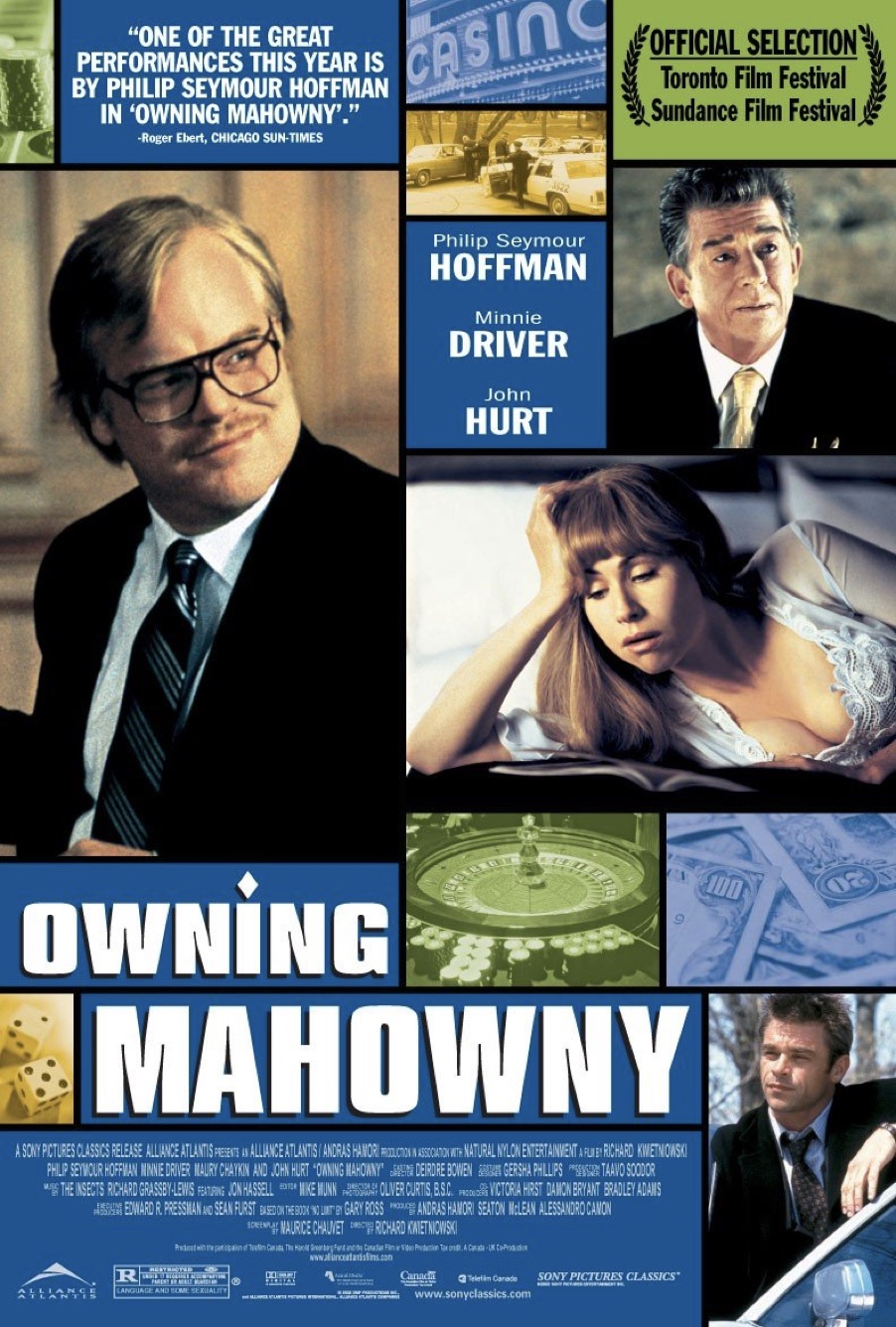
Owning Mahowny is a move which captured the subtle pull of the gambling market with remarkable honesty. It is considered one of Canada’s most underrated cinematic achievements.
Gambling has always been a popular pastime in Canada, as evidenced by the number of betting apps listed on BettingTop10 which offer their services to local citizens. Many of those bettors were inspired to dabble in gambling by watching Owning Mahowny.
The movie was set in Toronto in the early 1980s and focused on Dan Mahowny, an assistant bank manager whose life appeared unremarkable on the surface. However, beneath that calm exterior was a private world built around gambling activities that gradually began to dominate his existence.
The Plot
Mahowny’s gambling activities led to him living a roller-coaster life. He leveraged his access to large accounts to secretly siphon large amounts of cash from the credit line of one of his rich clients without their knowledge.
He plays down his actions to the people under him, claiming that the client approved the withdrawals. Mahowny then uses the cash to continue his gambling activities.
Another lightbulb moment takes Mahowny to the gambling tables of Atlantic City, where his activities catch the attention of casino manager Victor Foss.
Foss wants to advance his career and manage one of the casinos in Las Vegas, but needs high rollers to profit from. Mahowny fitted the description.
Mahowny’s situation continues to spiral out of control, and his life begins to fall apart. He even hides his secretive lifestyle from his girlfriend, Belinda, but she eventually discovers the truth.
Based on True Events
Owning Mahowny is based on a true story. It tells the story of Brian Molony, who worked as a clerk at the Canadian Imperial Bank of Commerce (CIBC).
Molony’s story was first told in a 1987 book called Stung, written by journalist Gary Ross. That book later became the basis for the film’s screenplay.
The Canadian had access to significant resources as manager of CIBC. When the bank discovered what Molony had done, he was taken to court in Canada.
Molony was defended by Edward Greenspan, but it hardly made a difference as the crown prosecutor won the case. However, he ended up serving only two years before being released.
In an interview with Stung publishers McClelland and Stewart, Ross claimed he kept in touch with Molony and updated what happened to him after the movie told his story.
Molony subsequently turned his life around. According to the author, he stopped gambling, married his girlfriend, had three children and began working as a financial consultant.
The bank tried to recover some of the lost money by suing casinos in Atlantic City, arguing that they had enabled his gambling. That legal case was eventually settled, although the amount paid was not made public.
Honours and Reception
Owning Mahowny received plenty of positive reviews from movie critics around the world.
It received rave reviews on Rotten Tomatoes, while 29 people scored the movie 70 out of 100 on Metacritic. That is positive news for a movie that had plenty to unpack.
Well-known film critic Roger Ebert was especially impressed. He named it one of the best films of 2003 and praised Philip Seymour Hoffman’s performance, calling it ‘extremely controlled and powerful’.
Ebert believed Hoffman avoided trying to make the audience feel sympathy, which made the performance more authentic.
However, some critics felt Hoffman’s understated acting made the main character hard to connect with. They thought he was emotionally distant, which left viewers feeling detached.
A journalist who knew the real-life person the film is based on said Hoffman portrayed him very accurately, both physically and psychologically.
Despite the praise, the film performed extremely poorly at the box office, earning only $1 million against a $10m budget.
Despite this, it was nominated for Best Motion Picture, Best Performance by an Actor in a leading role, Best Screenplay (Adapted) and Best Achievement in Music at the 24th Genie Awards.