


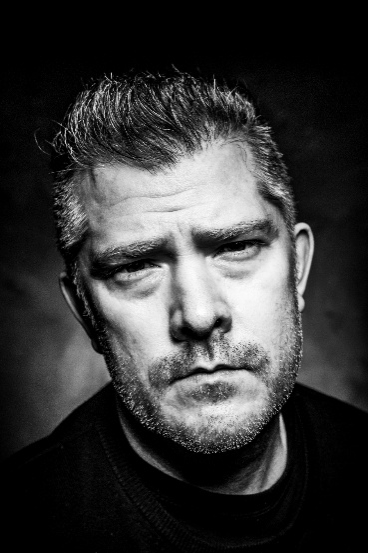
Canada boasts a wealth of talented actors, writers, directors, and other content creators. To help our industry grow, we would like to introduce you to some of those gifted folks who have managed to capture that magic on screen.
This week, we spoke with Vancouver musician, writer, director, producer, and performer Simon C. Hussey.
HNMAG: You grew up in Edmonton?
SIMON HUSSEY: I was born in Edmonton. I was born there but my family moved around a lot.
HNMAG: When did you become interested in film and television?
SIMON HUSSEY: Since I was a kid, I did drama all through school. I suppose I was interested in film and TV ever since, but I never really got into it, into making films until much later in life, actually, not till I was about thirty.
HNMAG: Did you become an actor first or did you become a filmmaker?
SIMON HUSSEY: I spent most of my twenties in the music industry. I worked for Nettwerk Records, and started my own band, Speedbuggy. I started my own label while I was working there, and Speedbuggy. released our own album on our own label. Then I got signed to some label in Toronto, and we did an album with them. We recorded a third album, and I just realized that I don’t want to do music, and then I got out of it. Yeah, and I didn’t know what to do with myself, so I ended up doing theatre with my brother. We did that for about twenty years. I’ve just been acting and auditioning since then.
HNMAG: Were you doing theatre in Toronto?
SIMON HUSSEY: Vancouver. I’ve been working in film and TV all the while, but also doing theatre on the side.
HNMAG: In Vancouver, it’s difficult to make money in theatre.
SIMON HUSSEY: My first full-length feature is a documentary about theatre in Vancouver.
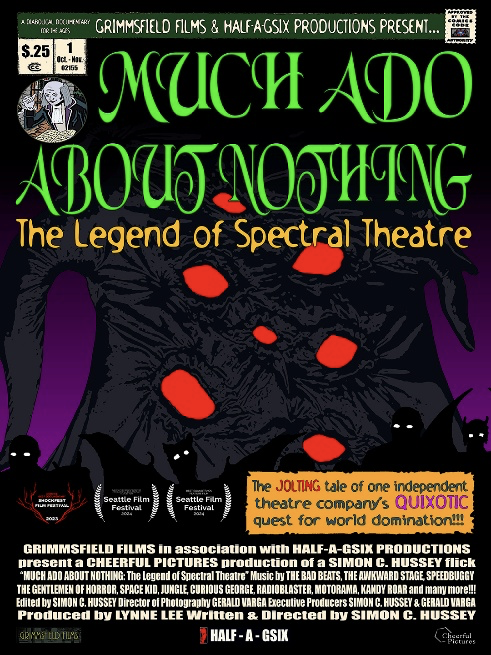
HNMAG: Much Ado About Nothing.
SIMON HUSSEY: It was basically a documentary about doing independent, community theatre in Vancouver. I had a lot of hope for it (theatre), but it’s not a theatre town, period.
HNMAG: You moved to Vancouver twenty years ago with your brother?
SIMON HUSSEY: No, I’ve been here since the eighties.
HNMAG: Okay, since you were young.
SIMON HUSSEY: Yeah.
HNMAG: Did you move here because of the music industry, the film industry, or both?
SIMON HUSSEY: I moved here because of Expo ’86. Vancouver looked so cool back then. It seemed that a lot of the music that was cool was coming out of Vancouver and Toronto, but mostly Vancouver. I think Nettwerk Records is what brought me here. I admired and wanted to become a part of it. Skinny Puppy was one of their big acts. And the Grapes of Wrath, Sarah McLaughlin, Mystery Machine was signed to them for a while.
HNMAG: You went to work with them, and you formed your band?
SIMON HUSSEY: Yeah, and then I formed a band out of that, then we won Shindig. Because of Shindig, we recorded some stuff and put out an album.
HNMAG: Shindig was a radio station band contest?
SIMON HUSSEY: It was through CITR.
HNMAG: CITR is the radio station at the University of British Columbia.
SIMON HUSSEY: Yes, UBC. When I was done with the music stuff, I threw myself back into theatre. I really was not enjoying being on the road. Being packed in an Econoline van with five people. I didn’t want to keep doing that.
HNMAG: After your music career, you worked with your brother in theatre.
SIMON HUSSEY: We started a theatre company together.
HNMAG: Do you still work with your brother?
SIMON HUSSEY: Towards the end of the theatre company, he had already left the company and moved out of town. A couple of us kept the company going. Finally, COVID pretty much put the nail in the coffin.
HNMAG: That experience led to making the feature documentary Much Ado about Nothing: The Legend of Spectral Theatre.
SIMON HUSSEY: Gerald Varga, who was involved in the theatre company, was doing film, and we wrote a script together. We were trying to figure out how we were going to finance this script. We figured we could make the film for half a million bucks. We’re like, “Oh, great, how are we going to raise that much money?”
HNMAG: Film financing is very difficult without government grants.
SIMON HUSSEY: We started spit balling ideas, right? Uh, and I was like, well, you know what? Why don’t we do a documentary for super cheap?
HNMAG: The mother of invention is necessity.
SIMON HUSSEY: I naively tackled the feature documentary. I had already made three shorts and a few music videos, so I had some experience. After running Spectral Theatre for twenty years, I felt we owed it to all the patrons, staff, and volunteers to honor their contributions. It was a shame that we could not survive the pandemic, but at least we could document the theatre’s achievements.
HNMAG: You continued to make films.
SIMON HUSSEY: I just finished my second feature film, and I still don’t really think of myself as a filmmaker.
HNMAG: Your new feature is in post production right now. How did that come about?
SIMON HUSSEY: I did a short film while editing the documentary because I was losing my mind. I hadn’t done anything creative for about a year while I was editing. I asked Aurora Chan, an actress I know, to shoot a little scene at this old train station across the street from building. It was surreal. It had no meaning to it. It was just cryptic and esoteric. I shot it, edited it, and tossed it into festivals, and it ended up winning an award.
HNMAG: Congrats.
SIMON HUSSEY: I was living with this short film in festivals, and I kept coming up with ideas, I would just pop out on the weekend and shoot scenes as the ideas came. I worked with whichever actors, props, and locations were handy. I didn’t have a set full script, but I did that for three years. Then the entire thing came together. It’s now a feature film that is currently being mixed.
HNMAG: What was the short called?
SIMON HUSSEY: The short was called Prologue: Thalassophilia – A Cryptograph in Three Acts. A lot of the players who were involved with Spectral are in the film. It’s a little bit of a carryover, but it’s also the first time I’ve done anything outside of that whole Spectral scene.
HNMAG: Thalassophilia, does that mean a love of deep water?
SIMON HUSSEY: That’s exactly what it means. Thalassophilia is a love of deep water. Of course, that’s metaphorical.
HNMAG: It’s not shot underwater.
SIMON HUSSEY: It’s not, but there’s a lot of water imagery in there. There’s definitely the sound of the ocean.
HNMAG: Is it set in Canada?
SIMON HUSSEY: Not really. It’s science fiction fantasy. It’s set in an alternate dimension. At the end of it, you realize that you’re in Canada. The best way to put it is that the characters end up in Canada, but it’s a fictionalized Canada. It’s an alternate dimension, Canada. That would be the best way to put it.
HNMAG: Are we moving in a direction where more local productions will have their projects set in Canada?
SIMON HUSSEY: During the most recent Union of British Columbia Performers (UBCP) meeting, the conversation came up; we’re looking at the United States and we don’t want to address the elephant in the room, but you can feel that that conversation’s coming down the pipeline. How are we going to build a future without America in the picture? What are we going to do? If America is going off the rails, we may no longer be able to depend on it as a source of income, maybe the stories America wants to tell are not even the stories that we want to be a part of anymore.
HNMAG: UBCP could pivot to focus more on their under forty (micro-budget) productions. Really, inform and educate all the union members on making our own projects.
SIMON HUSSEY: Thalassophilia is under forty, and after working in the under forty program, I am a strong advocate from an ideological standpoint. I’ve been doing independent stuff my entire life. I did it in music. I did it in theatre, and I’m doing it in film. So my approach to filmmaking will be the independent approach. It’s really important to me that the average person be able to look at any filmmaker or artist and be able to see someone that they themselves could be. That’s why I will always work with a small crew. I’ll shoot with whatever I can get my hands on. Tell big stories but keep it humble.
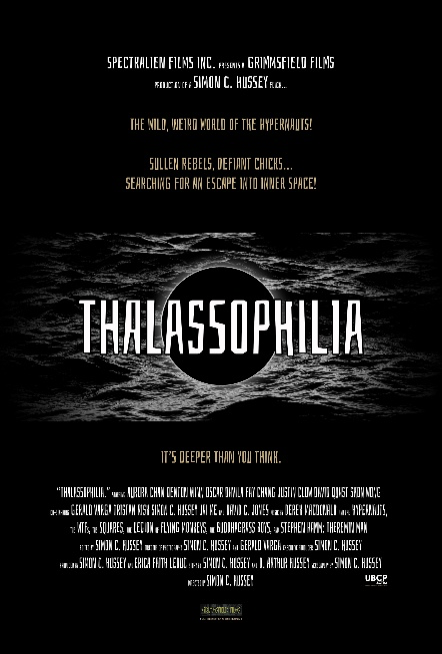
Simon C. Hussey studied audio engineering and got a job with Nettwerk Records in the 1980s. He formed the band Speedbuggy and won CITR’s Shindig. This led to a record contract, forming his own label, and two years of grueling road gigs across Canada. He gave up the music industry after a ten-year career to go back to his childhood love of theatre. As Vancouver is more of a Hollywood service town, film and TV acting work became a higher revenue source. His theatre company lasted for twenty years, and Simon was compelled to make a documentary about it. During post-production, his creative juices flowed again, which birthed his award-winning short. After that, Simon spent three years shooting impromptu scenes for what is now his next feature film, Thalassophilia. Simon will always follow his independent spirit and make films on the fly. We now have the technology to be creative and independent. You can shoot high-quality video on a smartphone, and it doesn’t even have to be an Apple product. We are looking forward to seeing Thalassophilia when it’s released, and we also hope to see more work from Simon C. Hussey that will inspire future Canadian filmmakers.