


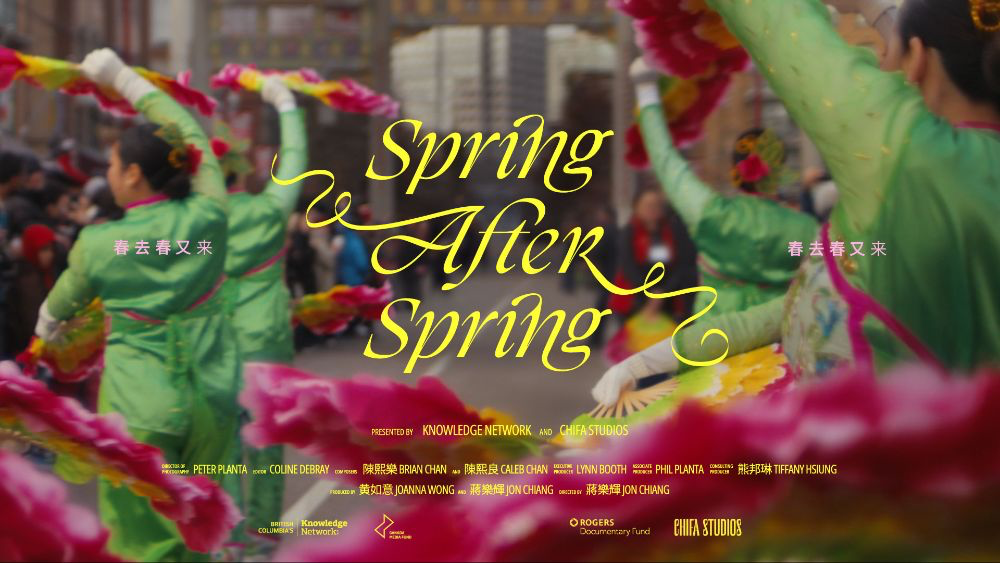
Coming up within weeks for Lunar New Year, it’s Spring After Spring. Directed by Jon Chiang as his very first documentary, Spring After Spring focuses on three sisters who are Chinese Canadian and went on to become dancers with a vast amount of skills, despite what their mother desired. When their mother dies, they come back together and lead Vancouver’s Chinatown Parade in her honour, but they’re also stuck with the dilemma of honouring their past or letting it all go. The feature did have a premiere at VAFF 2025 which I was unavailable to attend, but it managed to win Best Canadian Feature. The three sisters, Anabel, Val, and Lisa Ho all have interesting perspectives even sharing more about their mother Maria Mimie Ho than I could’ve ever expected. I enjoyed watching this documentary and then getting more information via interview afterwards. Get ready to dance as I talk to Jon.
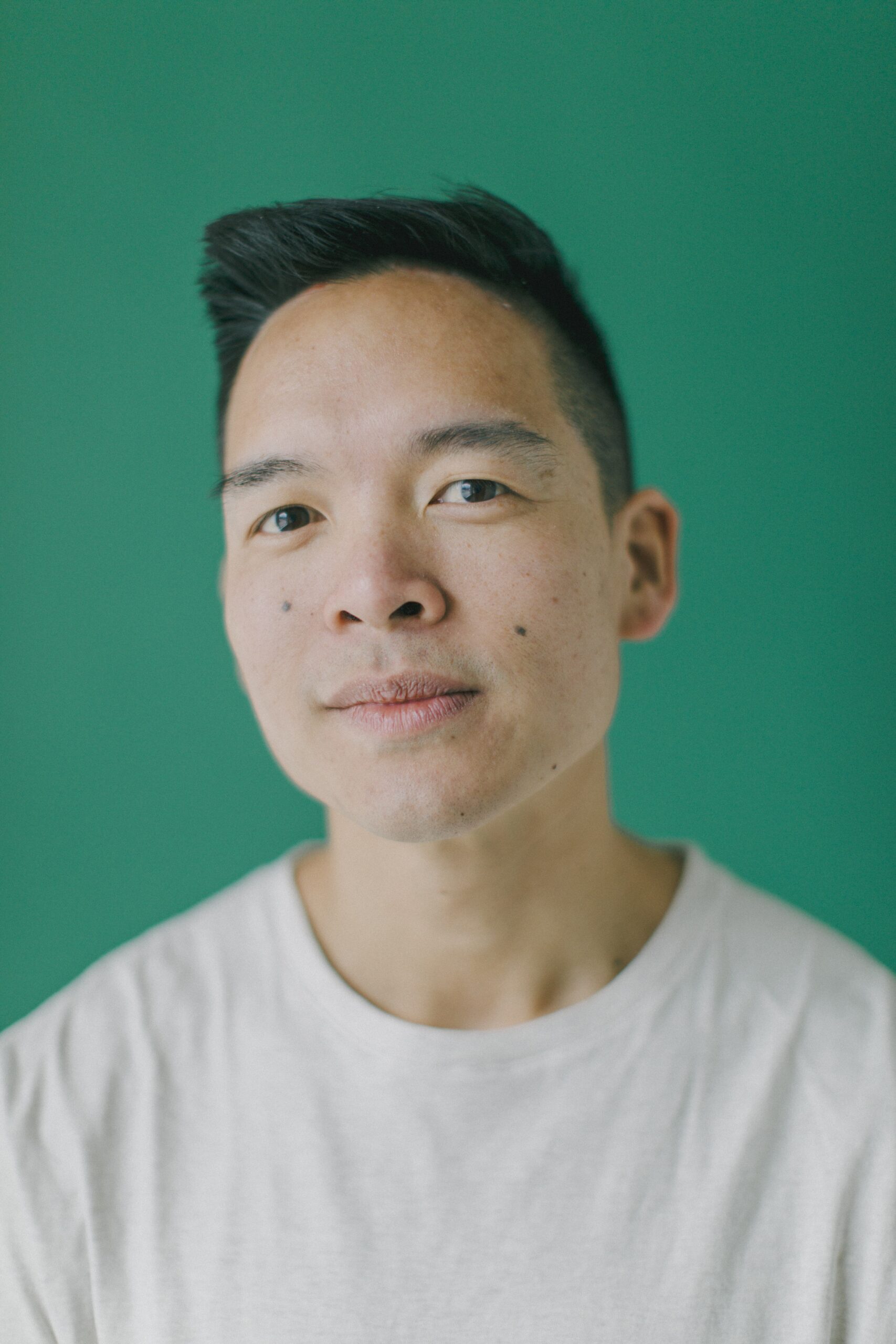
HNMAG: So Spring After Spring is having a limited theatrical run, but what other plans do you have in regards to release?
Jon Chiang: Yeah, this is kind of our big push for our local BC screenings leading up to the release on Knowledge Network. That’ll be on Lunar New Years, February 17. It will broadcast across Canada and be available for streaming on their app.
HNMAG: It focuses on three sisters who went on to become accomplished dancers. How did you know about them and their dreams?
Jon Chiang: I actually met the three sisters through Phil Planta, he’s cousins with Peter our cinematographer. We were talking about this project 5 years ago, and Phil explained his wife Annabelle had this incredible story in her family that hasn’t been told yet about this legendary figure in the community: Maria Mimie Ho. They brought this story to me and Joanna and we kind of decided to develop it. But really, I felt like the heart of it was Maria was this figure in Chinatown that did so much to the community and had a role in helping start the parade and was an iconic part of the parade that it was just an increidble story that hasn’t been told yet. I feel like if,for most people who live in Vancouver, the parade is so visible on news and media and has been for over the last 50+ years. When we talk about the parade and visual is made up of the dancers that Mimie Ho brought together and now her three daughters.
HNMAG: As you made this film, was there anything you discovered that really surprised you?
Jon Chiang: Yeah, I feel like the most surprising part was maybe something we didn’t go as deeply into as I wanted in the film, but it was the context of China in relation to the world during this era called The Bamboo Curtain. China was largely closed off to the rest of the world only until the late 80s, early 90s and that’s when Mimie and she took 40+ dancers from ages 5-18 with chaperones and she brought them to China to do a cultural exchange and learn to do Chinese dance. What I learned was just like how incredibly difficult that was bringing teenagers to China with three adults. The cultural context in this issue in bringing dance to the community in a time when there wasn’t readily available access to these kinds of cultural practices or information or learning how to do these dances. She had to teach herself through tape, books, so in Canada, she was a figure leading a lot of this cultural work.
HNMAG: WIth all the humour these sisters seemed to share, did you find yourself laughing at a lot of things while filming?
Jon Chiang: Yeah, I feel like sisters have a great sense of humour. They’re all so unique in their personality, like they all share a really strong sense of humour in their lightheartedness. There were just lots of laughs on set, amongst some other very emotional moments, but they were quite humourous.
HNMAG: What was something you wanted to include but couldn’t?
Jon Chiang: I feel like there was in relation to what I was talking about with the context of China being closed off for the last 50+ years and the cultural context in which Mimie’s dance school was operating in. Within that, there was actually a lot of interesting information that Val shared about Chinese dance and what we consider traditional Chinese dance. We had an interview where she was describing how Mao loved ballet and had wanted to incorporate ballet into national fabric so that became kind of part of the Communist Party of China’s cultural expression. Of course, ballet is not from China so all these nuances of integrating Chinese dance and its movement with ballet and really I think about the question ‘what is traditional?’ after so much has been fused and lost over years.
An interesting perspective to bring up. I’ve never thought about it myself, seeing a mix of ballet and Chinese dance together. It was certainly unique. Of course, a film about dancing must also obviously mean a film about movement, especially for the crew, so I had to ask about what moves the crew had to pull off given all the shots I saw.
HNMAG: Was it really hectic to film during the parade and dance classes?
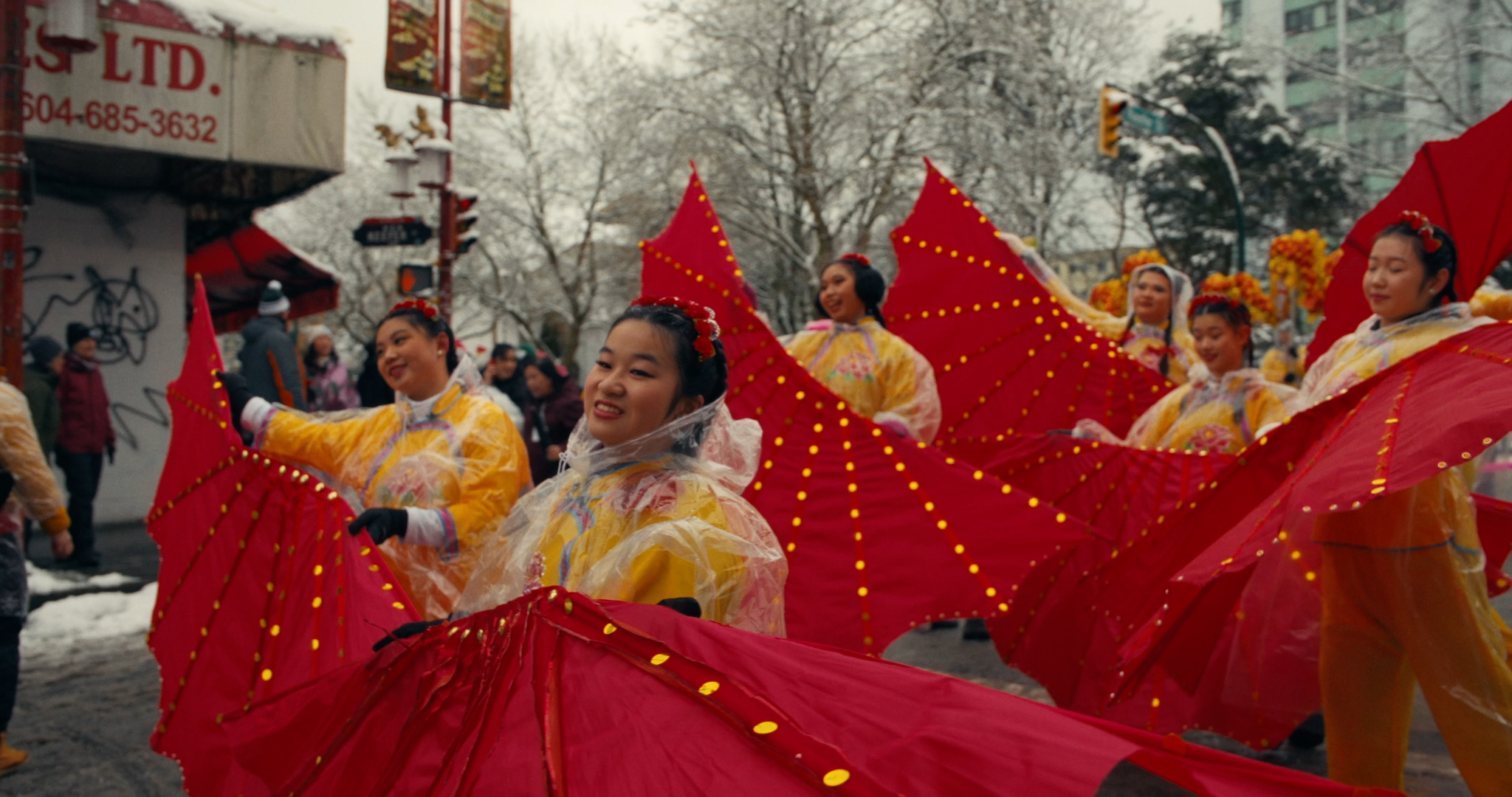
Jon Chiang: I would say during the dance classes, the students were so accomodating and they were so gracious with me being in the space. I think during the rehearsals, that was quite a bit of hecticness just being in tight spaces with our cameras and then of course, the parade was probably the most hectic of all the shoot dates. We technically filmed the parade 3 times, so we had 2 chances to figure out how we wanted to film it during our development process and when we were creating our sizzle reels. Then by the time it came for our actual parade capture which was last year in 2025 we had an amazing plan set out. We had 20+ crew, tons of support, we knew what we needed and then of course, it decided to have the first snowfall of the year but I believe it was one of the largest of the year as well. That day was hectic, and came with lots of curveballs.
HNMAG: With all the different perspectives from all the sisters, did you find things were kind of a mix?
Jon Chiang: That’s a great question, I would say that, Yeah, it was definitely mixed but I don’t think it was technically hard to put together because each of the sisters brought such a different perspective to both the relationship with their mom and each other, their siblings and also to the dance form. Each of them had such a unique lane of dance that they’re doing. I feel like it’s in those mixed perspectives of the system that I really do think a lot of the nuance and colour and story comes through.
HNMAG: And there was a lot of travel as well. Did you find that stressful?
Jon Chiang: (laughs) In some ways, yeah. We traveled to New York for this film, we got the chance to film at the Julliard which was amazing, one of the most prolific art schools, and that’s where Anabel teaches and it was a little bit stressful trying to get our permits and the carnet process had all these snafus. But I feel like we really got some beautiful and important parts of the story, that really helped share the bigger picture of what these sisters are doing beyond Vancouver.
HNMAG: There was a significant amount of ratio alterations with the pictures and old stock footage. Did you find it helped keep a certain level of authenticity?
Jon Chiang: Yeah, I feel like we were toying around with this, with our editor. We went through a couple different passes, should we keep the ratios the same? Should be matte-box things? We ended up matte-boxing some of them, I think most of the archival just to keep a consistent fill as we were cutting. Just to help really tie the sense of time and expanisveness of all the generations and of all the years that this family has been doing their work.
HNMAG: Are there any other interesting topics about Chinese culture that you’d like to cover in future documentaries?
Jon Chiang: Yeah, right now I’m kind of writing and in-development about more of my own family, our kind of own unique history. My parents were born in Peru, and my grandparents were born in China. I was born in Vancouver and identify as being Chinese-Peruvian with such a rich culture I was brought up with. But there’s so much that I want to explore with my own specific type of Chinese culture that I want to know many different mixed cultures. People of different disaporic backgrounds, who I find interesting as well. That’s in the works, and hopefully I could make another documentary about that.
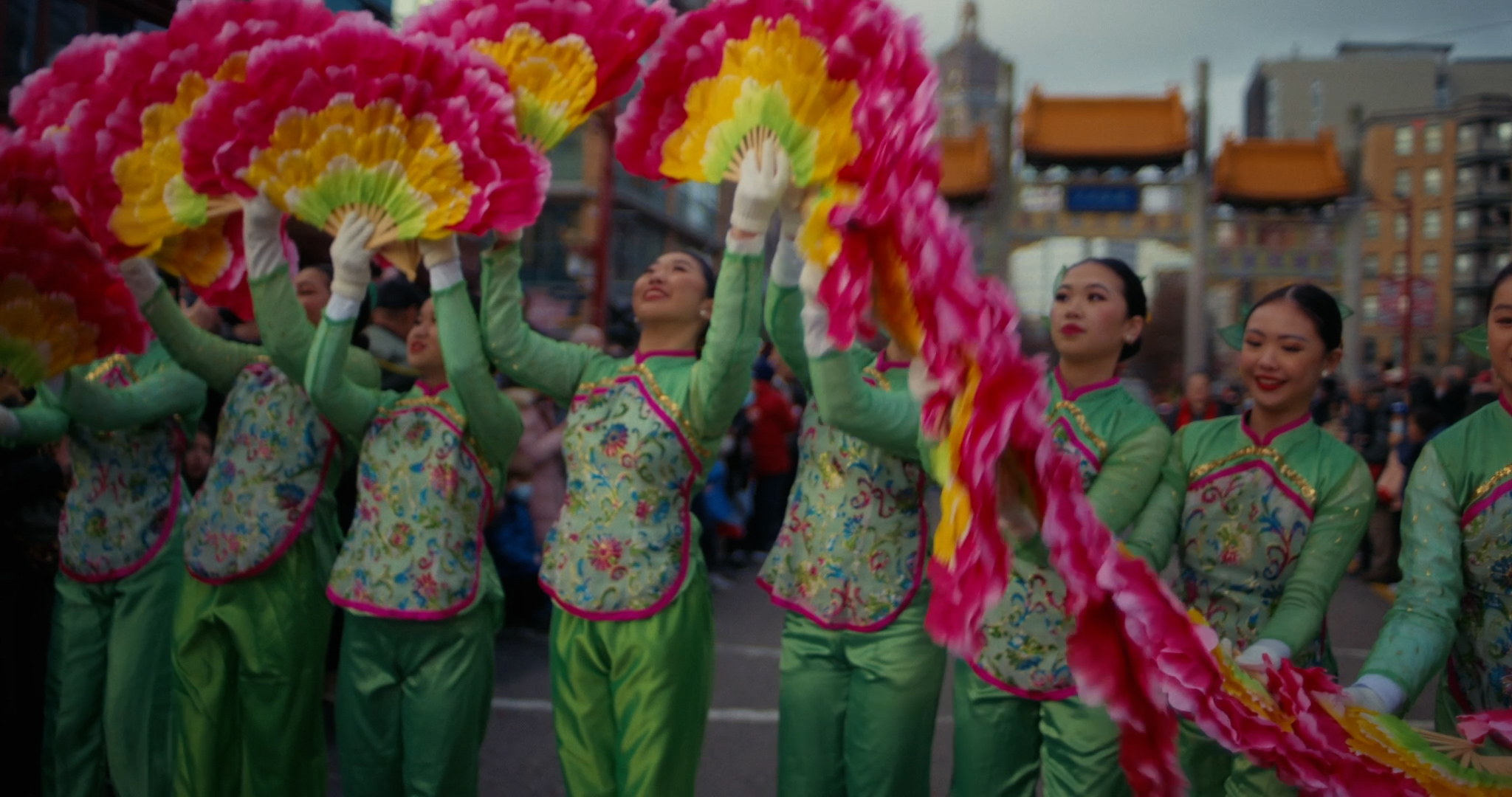
Until we see Jon’s next documentary, let’s tune into Spring After Spring which will be opening to the public on February 1st this year at the Chinatown Storytelling Centre with a panel and then go through a theatrical run at the VIFF Centre on February 6th, 8th, 9th, 15th and 17th. And if you’d like the stay-at-home experience, it’s launching across Canada on Knowledge Network on the 17th. Jon already has had a lot of chances in media working with CBC, Knowledge Network, TELUS, and more as his films have screened at WFF, VAFF, AIFF, Reel Asian, VIMFF, and NOWNESS. I hope one day we see him go even further than he already has with this. I say he’s already well on his way to the next step.
Buy some tickets today:
https://www.eventbrite.ca/e/spring-after-spring-community-film-screening-tickets-1979911102405
https://viff.org/whats-on/spring-after-spring/
And check out more info here as well: