


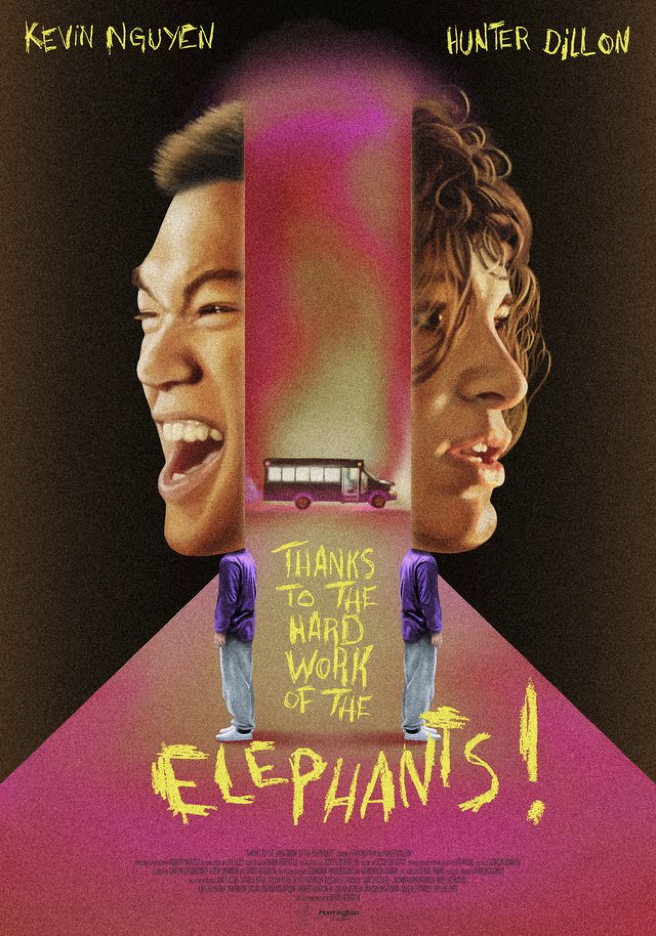
The Vancouver feature film Thanks to the Hard Work of the Elephants screened at the 44th Vancouver International Film Festival (VIFF)
Here is our conversation with the writer, director, and co-editor, Bryce Hodgson. Who is also a successful professional actor.
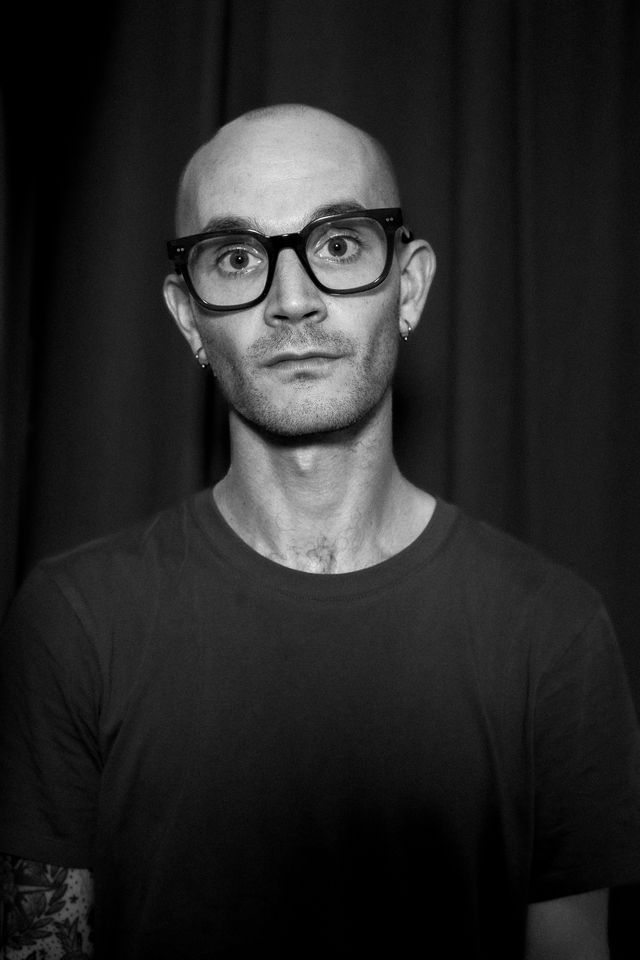
HNMAG: Bryce, you grew up in Vancouver, right? Are all your friends and family here too?
Bryce Hodgson: I have friends here. My cousins, aunt, and uncles are here, but my immediate family all live in Ontario. I was born here. In 2006, my folks moved to Saint Catherine’s. Then in 2013, my sister moved to Toronto.
HNMAG: They went East.
Bryce Hodgson: They went East, yeah. Then in 2016, I moved to Toronto.
HNMAG: Oh, you were there for a while, too.
Bryce Hodgson: I’m still there. I live in Toronto now, but I’m in Vancouver all the time. It can get confusing for my friends because I’ll come out here and do long, extended trips for work.
HNMAG: When did you first become interested in Film and TV?
Bryce Hodgson: I think I was nine. I was a child actor. I worked a lot when I was a little boy.
HNMAG: What did you first work on?
Bryce Hodgson: The very first thing I did was a short and the first TV show I worked on was Stargate.
HNMAG: When did you join the union?
Bryce Hodgson: I think at that time. I think around ten. I have a four-digit Union of British Columbia Performers (UBCP) number. I was doing it and loving doing it. It was fun to miss school. It was fun and wild to be on set.
HNMAG: Yeah, craft service.
Bryce Hodgson: Craft service! Then, when I was around twelve, I felt like I was missing events. I was totally missing life. I would miss trick-or-treating on Halloween.
HNMAG: Right, because you would be on set.
Bryce Hodgson: I would be on set, it was Halloween, and I felt like I didn’t want to be here…
HNMAG: You wanted to go out and get candy.
Bryce Hodgson: I wanted to go out and get candy. I want to shoot firecrackers. I was starting to get antsy with that. Then I went to Lyric Acting school in the early 2000s. I was in a class with other teens. The teacher treated us as real actors. We were doing things like Strasberg. We were doing serious stuff and really getting in there. It was the first time I was seeing reality on the stage. Things were coming to life emotionally. It was not presentational or hitting moments or beats. It was organic and raw. Authentic, and that blew my mind. That changed everything for me. When I was eighteen, I studied at a theatre school in New York. I earned some money from acting as a kid, and I was excited to live in another city. I started doing a lot of theatre there. I got really into theatre and writing plays. I moved back to Vancouver and worked with some friends. Then I moved to Toronto and worked more in theatre there.
HNMAG: Toronto is better for theatre than Vancouver.
Bryce Hodgson: Yes. In 2020, COVID killed theatre, but I was writing a play. My wife encouraged me to adapt it into a film as an exercise. That began the life of Thanks to the Hard Work of the Elephants.
HNMAG: Does your wife work in the industry as well?
Bryce Hodgson: Yeah. My wife is a producer. She has worked for years in casting. She worked at the CBC for a long time.
HNMAG: Before the pandemic, you had a significant recurring role on iZombie in Vancouver.
Bryce Hodgson: I was going back and forth. When the seasons were on, I was in Vancouver, and I would go back to Toronto in the offseason.
HNMAG: Looking at that show from an actor’s perspective, you can be really envious of Rose McIver because every week she was able to play a completely different character. That must have been a real joy for her.
Bryce Hodgson: The best! Eventually, as the show went on, all of us got to get in on that action because we all became zombies.
HNMAG: Right, and from that storyline, the Zombies were mostly indistinguishable from other people, but they craved brains. When they ate a person’s brain, they gained their memories and personality.
Bryce Hodgson: With Rose, it was next level because every nine days, it was an entirely new human that she created. You marvel at that work because you wonder where she had the time to do that. We did five seasons. Everyone mostly still keeps in touch. It was a tight group.
HNMAG: Where was the show set?
Bryce Hodgson: Seattle.
HNMAG: Often, Vancouver plays Seattle. Your Vancouver was set in Vancouver.
Bryce Hodgson: No.
HNMAG: They say Vancouver.
Bryce Hodgson: They say Vancouver but….
HNMAG: We don’t know what’s real.
Bryce Hodgson: That’s exactly it. That’s the point. Is it Vancouver? No. Is it outside Vancouver? No. Is it somewhere in Canada? I don’t know. I always set it as it’s probably somewhere close by to here. Where is it? It’s in space. It’s in the world. It’s out there. It’s not dedicated to one place; it’s all over. It’s happening everywhere.
HNMAG: Have you ever dropped acid?
Bryce Hodgson: Yeah, a ton.
HNMAG: Then you know that sometimes when you’re on an acid trip, it’s difficult to separate reality from hallucinations. With your movie, it’s similar. What is real in Thanks to the Hard Work of the Elephants?
Bryce Hodgson: That’s the kind of thing. There’s an argument for none of it’s real. There’s an argument that all of it is real. The origin story of the movie is about someone who dropped acid inside one of these centres. Him and his friend broke out by stealing the detention centre’s bus.
HNMAG: Oh, that’s a real thing that happened. Was it here?
Bryce Hodgson: No, it was in the States in the early 90s. They couldn’t figure out what to do, so they turned themselves in back to this horrible place. There is this crossover in terms of what our brains do while on acid and what our brains do with trauma from horrible things being done to us. The brain removes and adds parts of images. It plays with time. I spoke for long periods of time with my friend, who went through all that. That’s all in the movie.
HNMAG: It helps a lot to know that. Do you have any projects that you will work on after this?
Bryce Hodgson: Yeah! I’ve been developing a film for about a year. We’re hoping to shoot next year.
HNMAG: Where are you going to set that?
Bryce Hodgson: Here.
HNMAG: In Vancouver. That’s great. We need Vancouver to play itself more often. What is the biggest takeaway from Thanks to the Hard Work of the Elephants?
Bryce Hodgson: The acid information is a big part of it. Sure, there are ways your brain processes differently, and it is part of the original origin story. More importantly, it’s about the tangled brains of being on acid and the tangled brain of dealing with the trauma from horrible torture and abuse. We made a film that is also in service to that. It gives the audience an immersed feeling of that inside psychological experience of what these boys are going through. We are going moment to moment with them as it is with them. It’s an uncomfortable film to watch for a lot of reasons. On the other hand, it’s only ninety minutes of discomfort in comparison to thinking about doing that all the time. Think about living like that.
Bryce Hodgson has his own unique journey. His early success led him to a path of artistic study and implementation. He moved to Toronto, only to return home to Vancouver for work.
Often, movie reviews contain spoilers, which can diminish the experience of the movie, making it better to go in blind. That’s probably not the case with Thanks to the Hard Work of the Elephants. Audiences might appreciate knowing the origin story and how trauma plays similar tricks on the brain as acid does. The takeaway should be the real, horrible abuse that kids go through from systematic institutions.
Bryce Hodgson is a very talented and creative actor, director, writer, and filmmaker, and we look forward to his next project that will be made in Vancouver.