
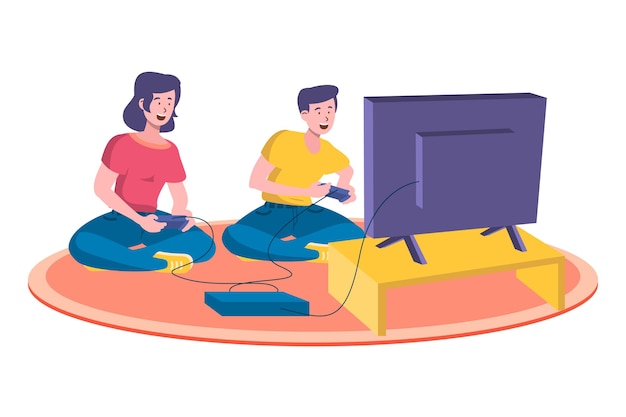
It is largely believed that watching TV and playing video games are the same thing. Both of them involve screens, entertainment, and sitting for extended periods of time. But are they really the same? Although they have some commonality, they differ substantially in terms of their effects on our brains, bodies, and daily lives. Let’s explore the differences.
Passive vs. Active Engagement
The main difference is engagement.
- Watching TV is passive. And you do not interact; you sit and watch.
- Playing video games is active. In the game, you can choose and respond to challenges.
Therefore, video games can help to develop hand-eye coordination and the ability to solve problems, and TV is used for relaxation.
Impact on the Brain
The two activities affect the brain in different ways.
- Watching TV is an easy way to stimulate one’s emotions, and imagination.
- Focus, quick decision-making and strategy are also needed for video games.
Playing video games does increase memory and build cognitive skills, according to studies. In contrast, too much TV can result in a lack of attention span.
Social Interaction
TV and video games also affect social life differently.
- Although watching TV is usually a solo thing, some people are able to watch it with their family.
- For some games, the social aspect is video games, where players speak and battle against each other in multiplayer games.
Games that people play online help them interact with friends or strangers all over the world.
Entertainment and Earning Opportunities
Where TV fails to offer, video games offer it—earning opportunities.
- Games that offer real money are available on platforms like https://www.teerwin.win/, where players can win while playing their favorite games.
- Unlike TV, where you just consume content, gaming provides players with a means to exercise their expertise and strategy in winning rewards.
This makes gaming both engaging and financially rewarding for players.
Physical and Mental Effects
Both activities have some negative effects if done to a fault.
- Watching too much TV can lead to laziness, weight gain, and being unfocused
- Gaming is a problem that can lead to eye strain, sleep issues, and addiction if it is excessive.
However, TV can help with educational benefits, and video games can improve reflexes and coordination.
Learning Potential
Each learning experience is different in TV and video games.
- History, science, and language can be taught through educational TV programs.
- Problems are solved better, things are more creative, and decisions are made more successfully through video games.
Games are better in a way that they are more educational, but with games you get something hands-on while with TV, you just get to take in what you hear or see.
Time Consumption
Despite the fact that both of them take up time, they do so in different ways.
- TV follows a fixed schedule or on-demand streaming.
- Video games can take hours of playing and have no real ending unless the player quits.
Gaming is an interactive medium that leads you to lose your time, whereas TV has a defined format where you can take a break.
While watching TV and playing video games may look similar at first, they are quite opposite. Gaming gives you interaction, while TV is passive. TV is mostly for relaxing, but games can help improve skills. However, both have pros and cons, and therefore they need to be balanced to ensure a healthy lifestyle.